1 hr ago
Gandhi, Ambedkar and India’s Unresolved Right to Vote
Mahatma Gandhi believed every adult should be able to vote, whether rich or poor.
He said people should not lose voting rights because they cannot read or because they have little money.
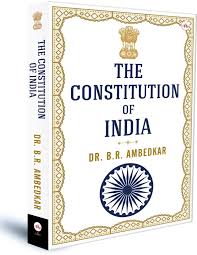
Years later, Dr. B R Ambedkar and others suggested making voting a fundamental right in India’s Constitution.
That proposal was not accepted.
Instead, India gave eligible adults the right to vote through universal adult suffrage.
Today, voting is protected by law but is not listed as a fundamental right.
A review of voter lists has raised concerns because many names have reportedly been removed.
Some leaders want stronger protection so eligible voters cannot be removed unfairly.
Others say managing such a large electorate and preventing fraudulent voting can be difficult.

Mahatma Gandhi argued in 1931 that poverty, illiteracy, or social status should not prevent people from voting.
B R Ambedkar and other leaders proposed making voting a fundamental right during Constitution-making in 1947, but the proposal was rejected.
India instead adopted universal adult suffrage, while voting remains legally a statutory right and constitutionally protected entitlement.
The Election Commission’s Special Intensive Review of voter lists has intensified concerns over large-scale deletions and possible voter exclusion.
Supporters want stronger constitutional protection, while experts warn that administering elections for India’s huge electorate creates practical challenges.
- Who
- Mahatma Gandhi, B R Ambedkar, constitutional experts, political leaders, and the Election Commission of India are central to the debate.
- What
- The debate concerns whether voting should become a fundamental right and how to protect eligible citizens from removal from voter lists.
- Where
- The debate concerns India and its voter lists, with the constitutional discussion taking place during the framing of India’s Constitution.
- When
- Gandhi wrote about universal voting in Young India on October 8, 1931; the Constituent Assembly debated the issue in April 1947, and it has resurfaced during the current SIR process.
- Why
- Supporters seek stronger safeguards against voter suppression and arbitrary disqualification, while critics cite the size of India’s electorate and election-administration challenges.
Supporters of Fundamental Voting Rights
Those Citing Administrative Concerns
Legal status of voting
Supporters of Fundamental Voting Rights
Supporters argue that voting is the core democratic right and should receive fundamental-right protection and stronger judicial review.
Those Citing Administrative Concerns
Constitutional experts cited in the report say the Supreme Court has treated voting as a statutory right, although it remains fundamental to democracy and constitutionally protected.
Voter-list deletions
Supporters of Fundamental Voting Rights
Jairam Ramesh and others argue that stronger protection is needed against voter suppression and arbitrary disqualifications during the SIR process.
Those Citing Administrative Concerns
PDT Achary said ensuring that all eligible citizens can vote has become difficult amid the complications created by the SIR and voter-list administration.
Practical administration
Supporters of Fundamental Voting Rights
Gandhi argued that poor and less-literate citizens should not be excluded merely because registering everyone is difficult.
Those Citing Administrative Concerns
K F Wilfred said India’s enormous electorate creates challenges, including managing voter lists and preventing one person from voting in another’s name.
Key facts
- Gandhi’s position
- Voting should not depend on wealth, literacy, or social status.
- Constituent Assembly debate
- Ambedkar and other leaders supported making voting a fundamental right in April 1947, but the proposal was rejected.
- Current legal position
- Voting is described as a statutory right and a constitutional entitlement under Article 326.
- Election review
- The Election Commission’s Special Intensive Review has led to concerns about large-scale voter-list deletions.
- Universal adult suffrage
- Every eligible adult may vote without discrimination based on race, gender, religion, wealth, or social status.
- Gandhi’s proposed solution
- People who wanted to vote could be included, helping keep voter lists manageable.
- Political demand
- Jairam Ramesh argued that voting should be elevated to a fundamental right with stronger judicial protection.
Quotes

Mahatma Gandhi
Indian independence leader writing in Young India in 1931
“Under Article 326, every citizen of India, unless he is disqualified under some law, is entitled to be registered, that is what the Constitution says. It is not the Election Commission's charity or anything. They are entitled under the Constitution. Constitution gives you this entitlement. That is the thing.”
 theprint.in
 deccanchronicle.com
“A man who works honestly by the sweat of his brow day in and day out should not have the vote for the crime of being a poor man, it is an unbearable thing.”
theprint.in
Sources
Related news

Kharge Calls Election Chief a BJP ‘Puppet’ Over Vote Deletions

Rahul Gandhi Says Vote Deletions Will Bring Accountability
Rahul Gandhi Challenges Maharashtra Roll After 2.07 Crore Exclusions

Bhatti Says Rahul Gandhi’s Vote Theft Warnings Have Come True
BJP Demands Rahul Gandhi Explain Sonia Gandhi Electoral Roll Case
Congress Accuses Modi of Threatening Gen Z Voting Rights
Supreme Court Refuses TMC Relief Over Four Frozen Accounts

Form 6 Dispute Tests Legal Limits of Electoral Roll Revision
Karnataka, Delhi Voter Roll Revision Raises Bulk Deletion Concerns
Andhra High Court Rejects Naidu’s 34% Local Poll Quota