

1 hr ago
Maharashtra FDA Flags Huge Markups on Hospital Consumables

A government official in Maharashtra found that some hospital supplies may have much higher printed prices than the prices hospitals pay.
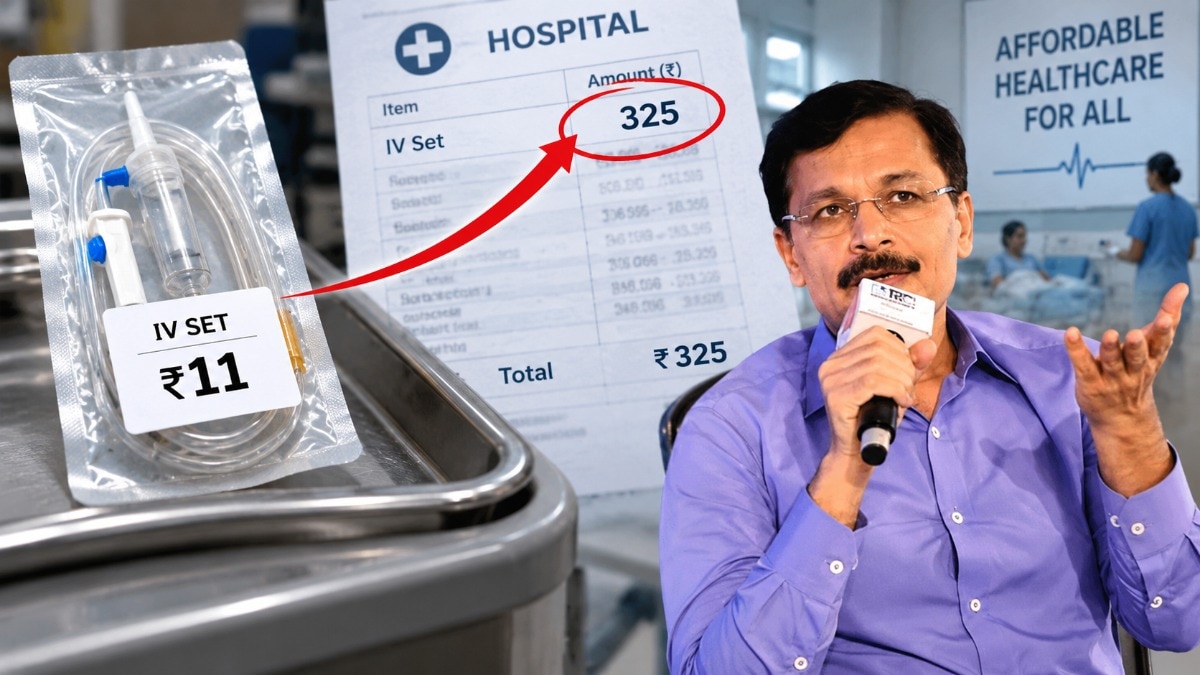
For example, an IV set bought for Rs 11.05 had an MRP of Rs 325.
A syringe and catheter also had much higher MRPs than their purchase prices.
Patients usually cannot shop around or compare prices while receiving urgent medical care.
Tukaram Mundhe said this makes it difficult for patients to know whether they are paying a fair amount.
He asked national authorities to examine the findings.
He also suggested rules for how large the difference between purchase prices and MRPs should be.
Some medical products already have price controls, but many consumables do not have one common price ceiling.
A hospital industry representative said regulation should improve transparency without hurting hospitals’ ability to fund staff, equipment, and patient safety.

Maharashtra FDA Commissioner Tukaram Mundhe flagged large gaps between hospital consumable procurement prices and printed MRPs.
An IV infusion set bought for Rs 11.05 carried an MRP of Rs 325, representing a 2,841% markup.
A syringe purchased for Rs 6.75 had an MRP of Rs 57.20, while a catheter bought for Rs 29.41 had an MRP of Rs 310.
Mundhe said patients often cannot compare prices or question charges during treatment, creating a transparency and public-health concern.
He recommended reviews, permissible-margin guidelines, and possible price monitoring or caps for essential medical devices.
- Who
- Maharashtra Food and Drug Administration Commissioner Tukaram Mundhe, the Department of Pharmaceuticals, the National Pharmaceutical Pricing Authority, and hospital-sector representatives.
- What
- A survey found substantial differences between procurement prices and MRPs for hospital consumables, including a reported 2,841% markup on an IV infusion set.
- Where
- Maharashtra, India, involving consumables used in private hospitals.
- When
- The findings were publicly discussed on September 15-16, 2026.
- Why
- Mundhe sought greater pricing transparency and possible regulation because patients often cannot compare prices or question charges during treatment.
Stronger Price Oversight
Transparency With Hospital Sustainability
Price controls
Stronger Price Oversight
Tukaram Mundhe recommended clear limits on the difference between procurement prices and declared MRPs, along with rationalised margins and possible price caps for essential devices.
Transparency With Hospital Sustainability
Dr Aashish Chaudhry said regulation should improve transparency and accountability while allowing hospitals to remain financially sustainable.
Patient information
Stronger Price Oversight
Mundhe said patients bear the cost while having little information, few opportunities to compare alternatives, and limited ability to question prices during treatment.
Transparency With Hospital Sustainability
The hospital-sector position presented in the report emphasised continued investment in infrastructure, technology, and patient safety alongside any new regulation.
Key facts
- Highest reported markup
- 2,841% on an IV infusion set
- IV infusion set
- Procurement price Rs 11.05; MRP Rs 325
- Syringe
- Procurement price Rs 6.75; MRP Rs 57.20
- Catheter
- Procurement price Rs 29.41; MRP Rs 310
- Proposed response
- Review of findings, permissible-margin guidelines, and possible price monitoring or caps
- Existing framework
- The Drugs (Prices Control) Order, 2013, sets ceiling prices for scheduled formulations and specified medical devices
- Non-scheduled products
- Paragraph 20 limits MRP increases to 10% over 12 months but does not create a uniform ceiling for every device or consumable
Quotes

Tukaram Mundhe
Maharashtra Food and Drug Administration chief and IAS officer
“The most expensive part of a hospital bill may never touch the hospital at all.”
 thestatesman.com
“These are not elective purchases.”
thestatesman.com
Sources

Related news
Maharashtra official flags steep medical-device markups, seeks pricing oversight

Medical Device Industry Seeks Overhaul of Pricing Rules
Parliament Panel Urges Deadline For Medicine Trade Margin Caps

Delhi Warns Pharmacies Over Misleading Medicine Discount Advertisements
How to Check Hospital Bills for Hidden or Incorrect Charges
Hyderabad Medical Associations Reject Generalized Private Hospital Fee Allegations

Drought-Like Conditions Threaten Dharashiv Crops After 80 Rainless Days

Bhagyashree’s Ganesh Aarti Sparks Feud Over Sangli Temple Tradition

Four Navi Mumbai Couples Reconcile After Lok Adalat Counselling

Pune Man's Lifelike Ajit Pawar Idol Draws Mixed Reactions
