

2 weeks ago
UPSC Economy Quiz: UPI Merchant Fees, Mission Vatsalya, Labour Data
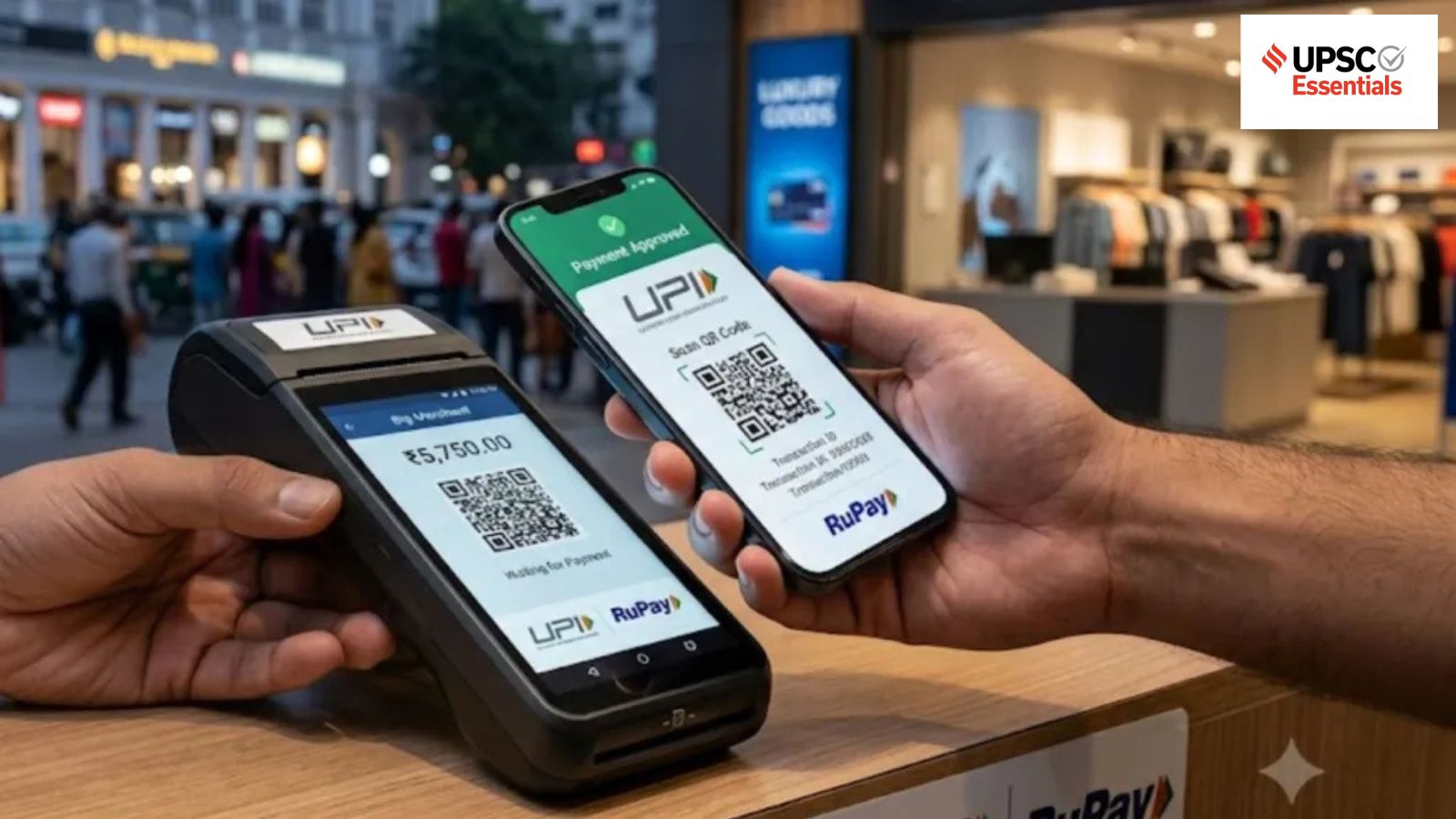
This article is a practice quiz for students getting ready for a big government exam in India called the UPSC.
The quiz teaches about how shops pay banks a small fee when customers pay with cards or phones.
Until now, paying with UPI on a phone was completely free in India.
A new law says the government can now decide to start charging this fee, but it has promised to only charge big shops, not normal people.
The quiz also talks about a plan to study children in India who need extra help and protection.
It shares numbers showing which cities have the most women working or looking for jobs.
In Coimbatore, about 41 out of every 100 women participate in the workforce, which is higher than the average for Indian cities.
There is also information about small village banks that lend money to farmers.
Overall, the quiz helps students learn about money, jobs, and keeping children safe.

The Taxation and Other Laws (Amendment) Bill, 2026 repeals the statutory ban, in place since January 2020, on levying a merchant discount rate (MDR) on UPI payments.
The Bill sets no fee itself but empowers the government to notify which payment modes remain free, with assurances that only large merchants and never consumers will be charged.
A National Child Survey is planned to map the needs of children under Mission Vatsalya, covering children in need of care and protection and juveniles requiring legal and social rehabilitation.
MoSPI data ranks Coimbatore (41.3%), Surat (40.6%) and Madurai (37%) top among India's most populous cities for female Labour Force Participation Rate, above the 27.7% urban average.
The Bill proposes removing 8 of 13 tax-exemption conditions for offshore funds, extending contract manufacturing tax breaks to 2040-41, and a 15-year tax holiday for rough diamond sector entities.
- Who
- The Indian government, including the Ministry of Statistics and Programme Implementation (MoSPI) and the Ministry of Women and Child Development, along with UPSC aspirants preparing for the exam.
- What
- An economy-focused UPSC quiz covering the repeal of the UPI merchant discount rate ban, Mission Vatsalya, female labour force data, Primary Agricultural Credit Societies and offshore fund tax exemptions.
- Where
- India, including cities such as Coimbatore, Surat and Madurai.
- When
- Week 175 quiz, published around July 2026; the Taxation and Other Laws (Amendment) Bill, 2026 has been circulated with Parliament members.
- Why
- To help UPSC aspirants revise important economy topics, including financial inclusion, government schemes, labour statistics and tax policy.
Free UPI for all
End the UPI subsidy
UPI merchant discount rate
Free UPI for all
The law removes the statutory guarantee of free UPI without specifying rates, thresholds or exemptions for small merchants and ordinary users, so the government's assurances are not guaranteed by law.
End the UPI subsidy
UPI was never costless; banks, payment apps and the government paid for the infrastructure, and budget reimbursements were uneven and unreliable, so ending the prohibition relieves the exchequer and permits a fee in its place.
Key facts
- Bill
- Taxation and Other Laws (Amendment) Bill, 2026
- UPI MDR prohibition
- In place since January 2020; repealed by the Bill
- Typical MDR fees
- 1% to 3% of card transactions
- Top female LFPR cities
- Coimbatore 41.3%, Surat 40.6%, Madurai 37%
- Urban India female LFPR average
- 27.7%
- Mission Vatsalya
- Formerly the Integrated Child Protection Scheme; focuses on child rights and juvenile justice
- Offshore fund conditions removed
- 8 of 13 conditions for tax exemption on global income
- PACS supervision
- Registered under State Cooperative Societies Act; supervised by state Registrar of Cooperative Societies
Sources
Related news
Lok Sabha Passes Bill Enabling Future UPI MDR, Sitharaman Clarifies

UPI MDR Above ₹2,000 May Begin Within Two Weeks

Keep UPI Free by Funding It From Savings

UPI Remains Free for Users, Nominal Merchant Fee Possible: Govt

Lok Sabha passes bill allowing UPI merchant discount rate charges

Government Defends Revised GDP Estimates Amid Growth Manipulation Claims
Goyal Defends India’s 7.8% GDP Growth Amid Data Debate
Government Defends India’s 7.8% Q1 Growth Amid GDP Debate
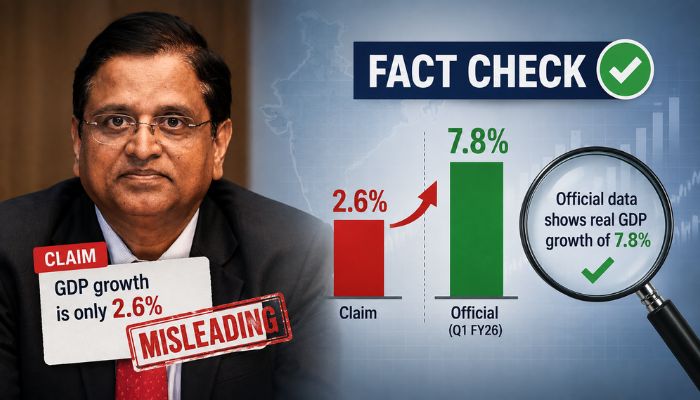
Government Rejects 2.6% Claim, Defends India’s 7.8% GDP Growth
Modi Hails 7.8% Q1 GDP Growth, Urges Swadeshi Amid Criticism
