3 weeks ago
Koraput's Adivasi festivals help preserve indigenous seed varieties
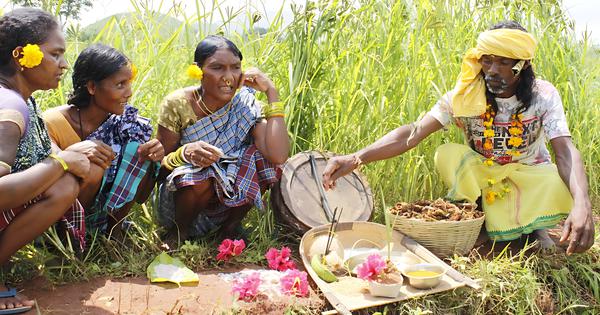
In a part of India called Koraput, many different kinds of rice and other plants are grown.
The people who live there are called Adivasis, and their families have farmed the land for a very long time.
They grow many different crops, not just one, so there is still food even if the rain is late.
The people hold festivals for almost every part of farming.
Before eating new rice, they share some with village gods, ancestors and cows.
These festivals help special seeds stay alive because they are used for festive food and weddings.
Mothers and grandmothers are very important in these traditions.
They make the special food, keep the seeds and teach children what they know.
But the weather is changing, and new kinds of crops are taking the place of old ones.
This is why the festivals matter - they help protect both the special plants and the people who grow them.

Koraput, in the Eastern Ghats of southern Odisha, is home to hundreds of locally adapted crop varieties cultivated by Adivasi communities including the Paroja, Gadaba, Kondh, Bhumia, Bhottada, Durua and Saura.
Every stage of farming is marked by festivals such as Chaithi Parab, Asadha Jatra, Puni Parab, Dussehra, Diali Parab and Pandu Parab.
Heritage rice varieties like Bodikaburi, umriachudi, machhakanta and tiki chudi are cooked for rituals and offered to village deities, ancestors and cattle.
Women are central to these traditions, preparing ritual foods, saving seeds and passing Indigenous food knowledge to younger generations.
Erratic rainfall, extreme temperatures, hybrid and high-yielding varieties and commercial agriculture are putting traditional seed systems under pressure.
- Who
- Adivasi communities of Koraput, including the Paroja, Gadaba, Kondh, Bhumia, Bhottada, Durua and Saura people
- What
- Agricultural festivals and rituals that keep hundreds of locally adapted crop varieties and Indigenous seed knowledge alive
- Where
- Koraput in the Eastern Ghats of southern Odisha, India
- When
- Throughout the farming year, with the story shared around the International Day of the World's Indigenous Peoples observed on August 9
- Why
- Because agriculture is woven into the culinary heritage and faith of the communities, and cultural practices help conserve agricultural biodiversity and reduce climate-related farming risks
Traditional seed systems
Commercial agriculture
Choice of crop varieties
Traditional seed systems
Indigenous varieties are valued for taste, cultural importance, drought tolerance, flood resilience and pest resistance, and are kept in cultivation through festivals and family seed-saving.
Commercial agriculture
Hybrid and high-yielding varieties are gradually replacing traditional seeds as farmers respond to changing food and grain markets, government programmes and the pressure for higher yields.
Farming approach
Traditional seed systems
Planting a diverse mix of crops that ripen at different times supports the fields, spreads risk and provides food throughout the year.
Commercial agriculture
Monoculture-style commercial farming and exposure to changing food habits push farmers away from diverse traditional cultivation.
Key facts
- Location
- Koraput, Eastern Ghats, southern Odisha, India
- Communities
- Paroja, Gadaba, Kondh, Bhumia, Bhottada, Durua and Saura
- Key crops
- Indigenous paddy, finger millet, little millet, pigeon pea, black gram, horse gram, niger, sesame, traditional vegetables, tubers and wild edible plants
- Festivals
- Chaithi Parab, Asadha Jatra, Puni Parab, Dussehra, Diali Parab, Pandu Parab, Pusha and Magha Parab
- Heritage rice varieties
- Bodikaburi, umriachudi, machhakanta, tiki chudi, Pathanguda, Karkoli and Kandulakathi
- Observance
- International Day of the World's Indigenous Peoples, August 9
- Threats
- Erratic rainfall, extreme temperatures, hybrid and high-yielding varieties, commercial agriculture
- Contributors
- Susanta Sekhar Choudhury, Pritesh Sundar Roy, Abhijit Mohanty and Pulak Ranjan Nayak of the Watershed Support Services and Activities Network, Bhubaneswar
Sources
Related news
Adivasis Celebrate Navvong Puja With First Harvest Offerings

Nuakhai: Odisha's Age-Old Festival Honouring New Rice Harvest

Mumbai Prepares for Week of Onam, Eid-e-Milad and Festivals

India’s Sacred Groves Preserve Nature Through Ancient Community Rules
Onam Sadya: Kerala Feast Reflects History, Culture and Community
Devotees Gather for Centuries-Old Scorpion Festival in Kodumur

Three Arrested After Alleged Gang-Rape During Odisha Photoshoot

Koraput Police Book History-Sheeter Under National Security Act

Biriguda Families Await Displacement Status After 19-Year Rehabilitation Dispute
Telangana Police Bust Alleged Multi-State Drug Network, Detain 100

Odisha Intensifies Crackdown on Illegal Ganja Cultivation on Government Land