

1 week ago
Onam Sadya: Kerala Feast Reflects History, Culture and Community
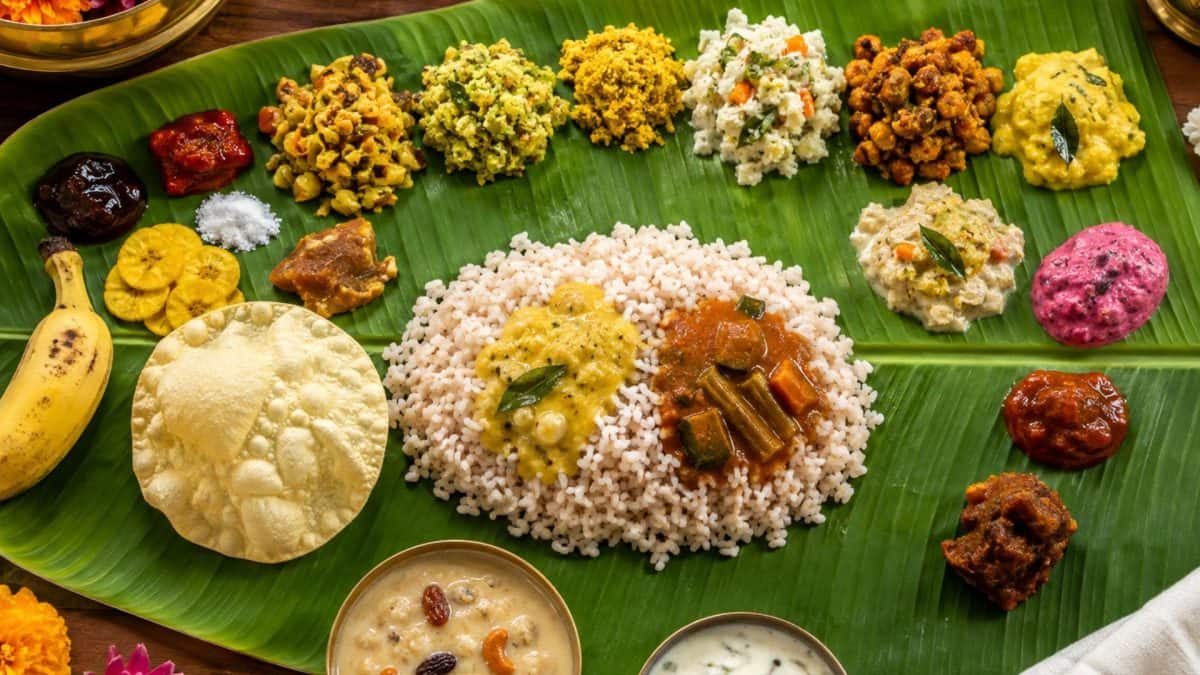
Onam Sadya is a special vegetarian meal from Kerala.
People usually eat it from a banana leaf.
Rice is placed in the middle, with many vegetables, curries, pickles, chips and desserts around it.
The food is served in a traditional order, ending with payasam.
Coconut, rice, plantains and local vegetables are important ingredients.
The feast is connected to the Onam story of King Mahabali.
People sit and eat together, making the meal a symbol of community.
Malayalis living outside Kerala also prepare it to stay connected to their culture.

Onam Sadya is a traditional Kerala vegetarian feast served on a banana leaf.
A typical Sadya may include more than 20 dishes centered around rice.
Its serving order includes parippu and ghee, sambar, gravies, buttermilk dishes and payasam.
The feast draws on Kerala’s temple, royal and agrarian traditions, including communal feeding customs.
Today, Sadya is prepared in homes, temples, restaurants and community gatherings in Kerala and abroad.
- Who
- People in Kerala and Malayalis around the world prepare and eat the Onam Sadya.
- What
- It is a traditional vegetarian feast featuring rice, vegetables, curries, pickles, fried foods and desserts served on a banana leaf.
- Where
- The feast is served in Kerala homes, temples, restaurants and community gatherings, as well as among Malayalis outside Kerala.
- When
- It is especially prepared during Onam; traditional accounts say Mahabali returns once a year to visit his people.
- Why
- It celebrates Onam, preserves Kerala’s food traditions and supports communal and cultural connection.
Key facts
- Cuisine
- Traditional Kerala vegetarian feast
- Serving vessel
- Banana leaf, traditionally placed with its narrow end toward the left
- Typical variety
- A Sadya can include more than 20 dishes, depending on the household, region and occasion
- Main food
- Rice is served at the center of the meal
- Serving order
- Parippu and ghee come first, followed by sambar and gravies; buttermilk-based dishes come later
- Dessert
- Payasam is served at the end, sometimes in multiple varieties
- Cultural development
- The feast reflects Kerala’s temple, royal and agrarian traditions and became more broadly accessible through twentieth-century social and economic changes
Sources
Related news

Onam 2026: Kerala Sadya’s Banana Leaf Feast, Serving Order

Onam 2026: A Guide to 15+ Onasadya Dishes

Onam Sadhya Keeps Kerala’s Secular Festival and Families Together
Mazzo Onam Sadhya Brings Authentic Kerala Flavours to Hyderabad

Nagaland Minister’s Banana Joke At Onam Sadya Goes Viral

Seven Budget-Friendly Onam Sadyas Coming to Mumbai in 2026

Retired Air Marshal Calls Ram Temple Trust Role Blessing

Aja Ekadashi: Tithi, Shubh Muhurat and Spiritual Significance

Rakul Preet Singh Explores Surpanakha in Upcoming Ramayana Film

Kerala Celebrates Onam With Traditional Fervour, Feasts And Prayers
Onam Brings Kerala Families Home for Food and Traditions
