2 hrs ago
Why Aging Can Affect Balance and Five Exercises May Help
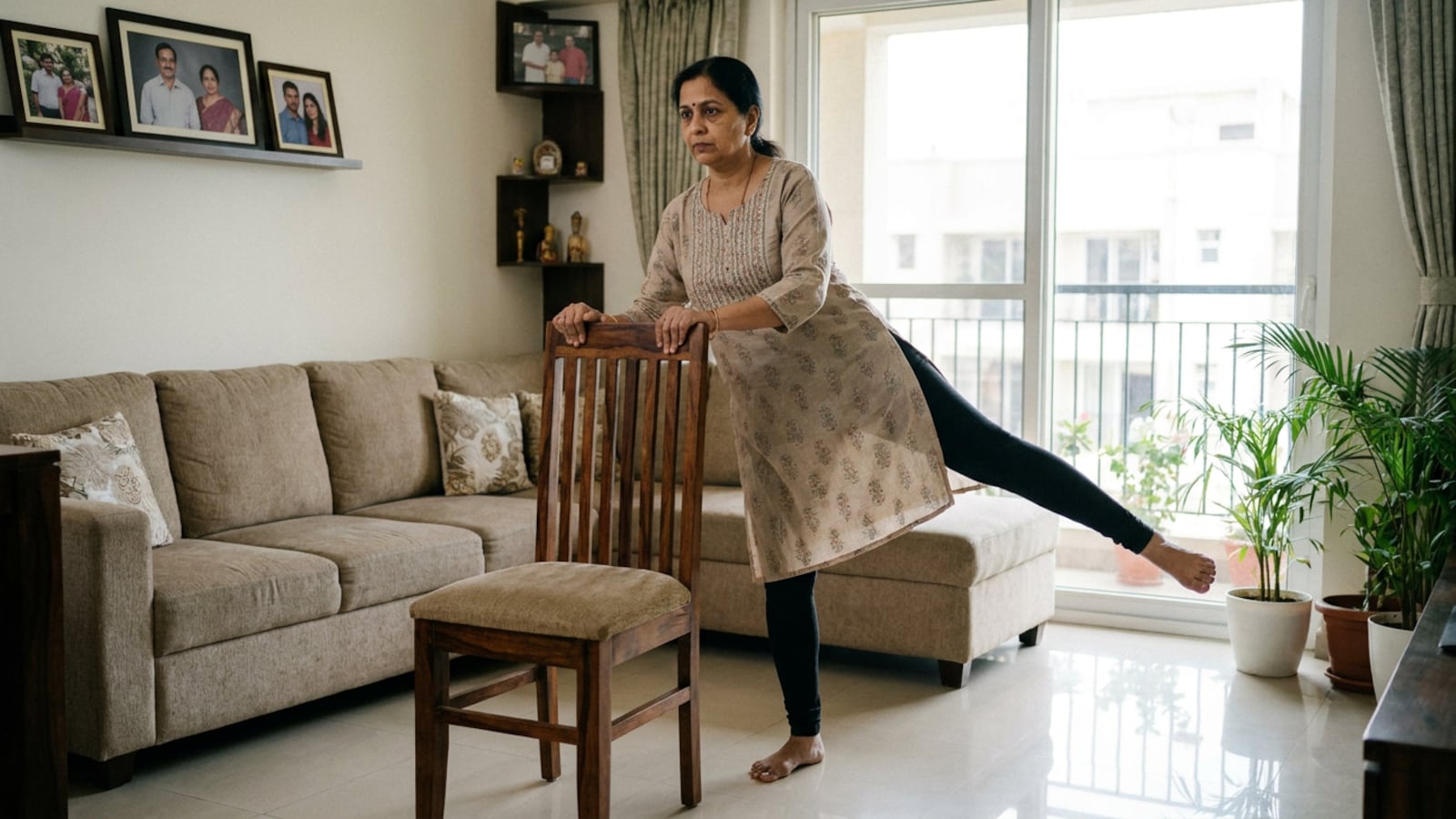
Balance helps you stay upright when you walk or stand.
As people get older, their muscles may get weaker and their bodies may react more slowly.
Changes in eyesight, the inner ear, joints and how the brain uses information can also make balance harder.
Practicing certain exercises may help build strength and coordination.
These include standing on one leg, walking heel to toe, and standing up from a chair.
Side leg raises and heel raises are also suggested.
Use a sturdy support if needed and begin slowly.
Talk to a doctor about sudden or worsening balance problems, frequent falls, dizziness or unexplained weakness.

Balance can become harder with age as muscles, reflexes, vision, the inner ear and brain processes change.
Joint stiffness and reduced flexibility may also affect posture, walking and stability.
The article recommends single-leg stands, heel-to-toe walking, sit-to-stands, side leg raises and heel raises.
A sturdy chair, countertop or wall can provide support while exercising; start slowly and avoid exercising when tired or dizzy.
Frequent falls, dizziness, unexplained weakness or sudden balance changes warrant medical advice.
- Who
- Older adults experiencing changes in balance.
- What
- The article describes age-related factors that can affect balance and five exercises intended to help improve it.
- Where
- Not specified.
- When
- As people age; no publication date is provided.
- Why
- Age-related changes in muscles, reflexes, vision, the inner ear, brain processing, joints and flexibility can affect stability.
Key facts
- Possible contributors
- Reduced muscle strength, slower reflexes, vision changes, inner-ear changes, differences in brain processing, joint stiffness and reduced flexibility.
- Exercise 1
- Single-leg stand, using a sturdy chair for support.
- Exercise 2
- Heel-to-toe walking, with support nearby if needed.
- Exercise 3
- Sit-to-stand from a sturdy chair.
- Exercise 4
- Side leg raises while holding a sturdy chair.
- Exercise 5
- Heel raises while holding a chair lightly.
- When to seek advice
- Consult a doctor for frequent falls, dizziness, unexplained weakness or a sudden change in balance.
Sources
Related news

65-Year-Old Wins World Powerlifting Title, Highlighting Strength Training
Manisha Koirala Combines Mobility Exercises With Strength Training
Why the Deep Squat Matters More as You Age
Janhvi Kapoor Shares Leg Workout Routine
75-Year-Old Grandmother Amazes Internet With Daily Yoga Flexibility

Doctors urge balanced exercise to support healthier ageing

Harleen Sethi Says Audience Love Helped Her Embrace Beauty

Rajpal Yadav Vows to Follow Supreme Court Directions

What Research Says About Cycling and Male Fertility

Ashoka Graduate Wins Chevening Scholarship on First Application