3 weeks ago
New rural jobs law sees nearly 50% employment dip
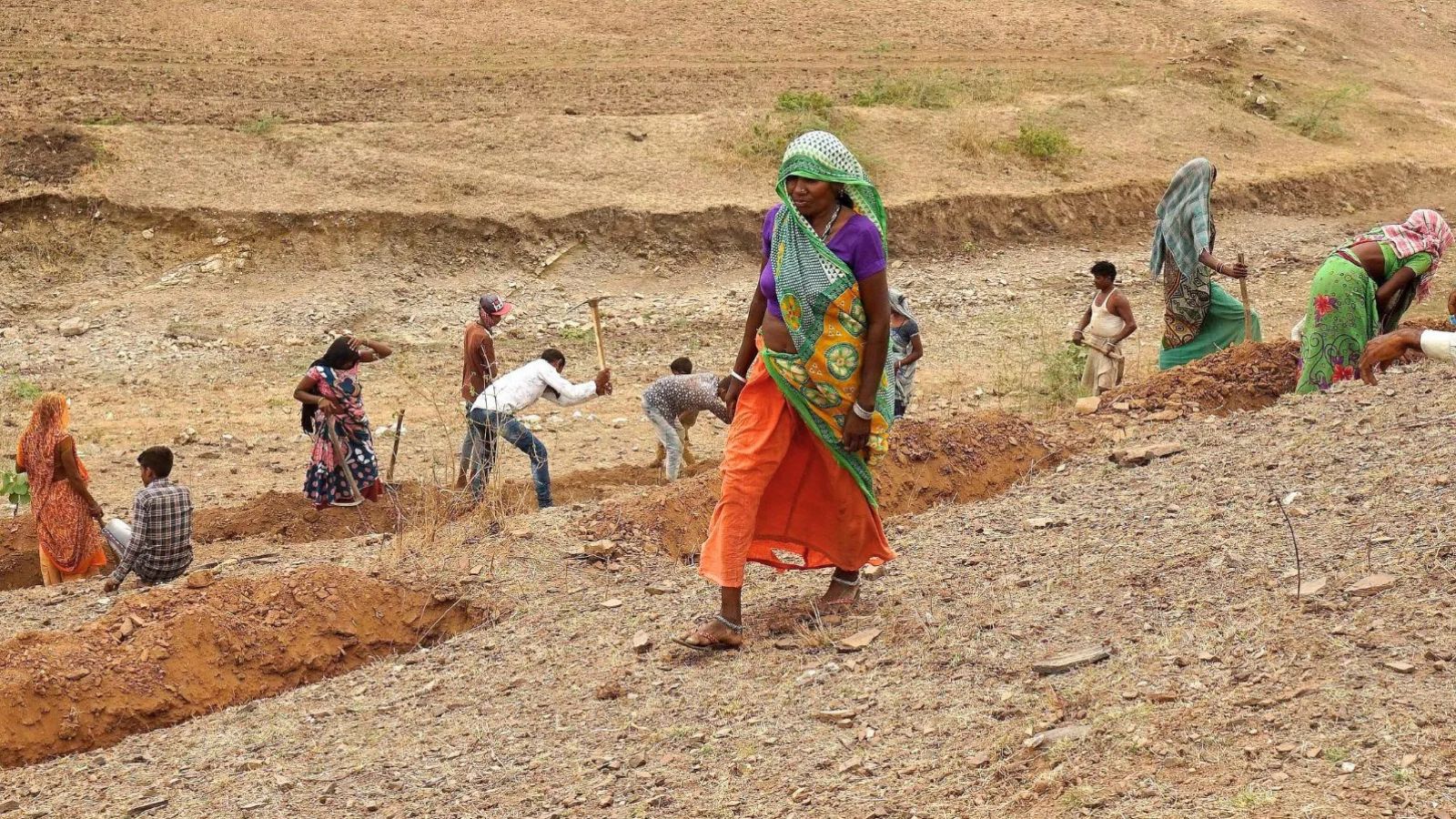
In India, there is a program that promises work to people in villages who need it.
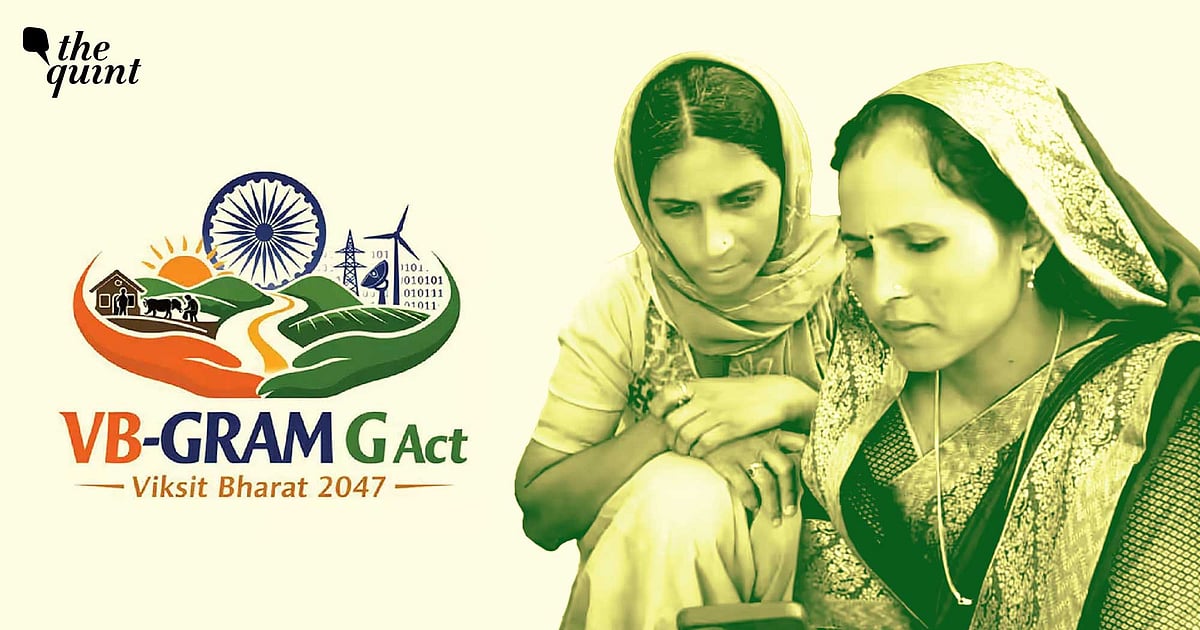
The government stopped the old program, called MGNREGA, and started a new one called VB-G RAM G. The government said the new program would be better and would give more days of work.
But numbers from the first month show that almost half as many people got jobs as in the same month last year.
The government says it is spending a lot of money on the program.
Some people who help workers say the new rules are unfair.
For example, workers must now prove they showed up using special digital photo checks.
Many workers' cards were removed because of these checks, so they cannot get work.
This is a big problem because many village families need this work to earn money and survive.

Rural employment under the new VB-G RAM G law fell almost 50% year-on-year in its first month, according to an Indian Express report.
Person-days of work from January to June 2026 fell 35.8% to 215.2 million from 335.4 million in the same period of 2025.
The government says VB-G RAM G is an enhanced successor to MGNREGA, offering 125 days of guaranteed work with record funding.
The Centre allocated Rs 95,000 crore, with a mandatory 40% state contribution bringing total claimed resources to Rs 1,55,000 crore.
Critics say E-KYC checks and NMMS facial recognition have deleted crores of job cards and excluded workers from the scheme.
- Who
- The BJP-led central government, rural workers in India, and activists from the Mazdoor Kisan Shakti Sangathan (MKSS), including article authors Dey and Roy.
- What
- The first month of the new VB-G RAM G employment law showed a nearly 50% year-on-year decline in rural jobs and household participation.
- Where
- Rural areas across India.
- When
- MGNREGA was repealed on December 19 and VB-G RAM G was implemented from July 1; first-month data was reported on August 10.
- Why
- Critics attribute the decline to E-KYC and facial recognition exclusions, allegedly inadequate and conditional funding, and the law being passed without worker or state consultation.
Government's Position
Critics' Position
Employment delivery
Government's Position
The government says VB-G RAM G is an enhanced version of MGNREGA providing 125 days of guaranteed work with universal rollout across rural India.
Critics' Position
Critics cite official data showing nearly 50% fewer person-days in the first month and halved household participation, calling the 125-day promise a myth.
Funding and wages
Government's Position
The government highlights its 'highest ever' Rs 95,000 crore allocation, a 40% state contribution, and a Rs 300 per day wage floor.
Critics' Position
Critics say the allocation is notional without guaranteed funds and that the wage floor is below the Satpathy Committee's recommended Rs 375 per day.
Digital monitoring
Government's Position
The government says tech-based E-KYC and NMMS facial recognition improve delivery, transparency, and monitoring.
Critics' Position
Critics say these checks have deleted crores of job cards and excluded workers, calling the system harassment that steals wages.
Key facts
- New law
- Viksit Bharat–Guarantee for Rozgar and Ajeevika Mission Gramin (VB-G RAM G)
- Replaced law
- Mahatma Gandhi National Rural Employment Guarantee Act (MGNREGA), repealed December 19
- Implementation date
- July 1
- First-month employment change
- Nearly 50% year-on-year fall; household participation also down about 50%
- Person-days (Jan–Jun 2026)
- 215.2 million, down 35.8% from 335.4 million in Jan–Jun 2025
- Central allocation
- Rs 95,000 crore; with 40% state share, total claimed Rs 1,55,000 crore
- Wage floor
- Rs 300 per day, below the Satpathy Committee recommendation of Rs 375 per day (June 2018 prices)
- Registered active workers
- About 11 crore
Sources
Related news
VB-G RAM G sees nearly 50% drop in rural jobs

States' Fiscal Burden to Quadruple Under VB G RAM G

India’s Rural Employment Guarantee Scheme Shows Signs of Weakening
VB-GRAM G Changes India’s Rural Job Guarantee Scheme
Congress Accuses Modi Government of Destroying Rural Job Guarantee
Ayodhya Temple CEO Appointment Faces Opposition Donation Allegations

Telangana BJP Alleges Congress, BRS Avoid Hyderabad Liberation Day
Haryana sanitation workers’ strike puts BJP government under pressure

Rival NC-BJP Protests Roil J&K as Police Halt Marches
Shivakumar Calls BJP Padayatra Cover-Up for Internal Crisis