

2 hrs ago
Strait of Hormuz Ship Traffic Falls as Regional Tensions Persist

The Strait of Hormuz is a very important sea route for oil and gas ships.
Fewer ships are using it while tensions continue between the United States and Iran.
About 12 commodity ships crossed during the reported weekend, compared with 35 the weekend before.
Before the conflict, about 125 large commercial ships crossed each day.
Some oil is still being shipped, even when tracking signals are turned off.
Saudi Arabia has increased some exports through the strait.
Its exports rose above 4 million barrels per day in September after dropping sharply in August.
The data shows that ship traffic is much quieter, but oil exports have not stopped.

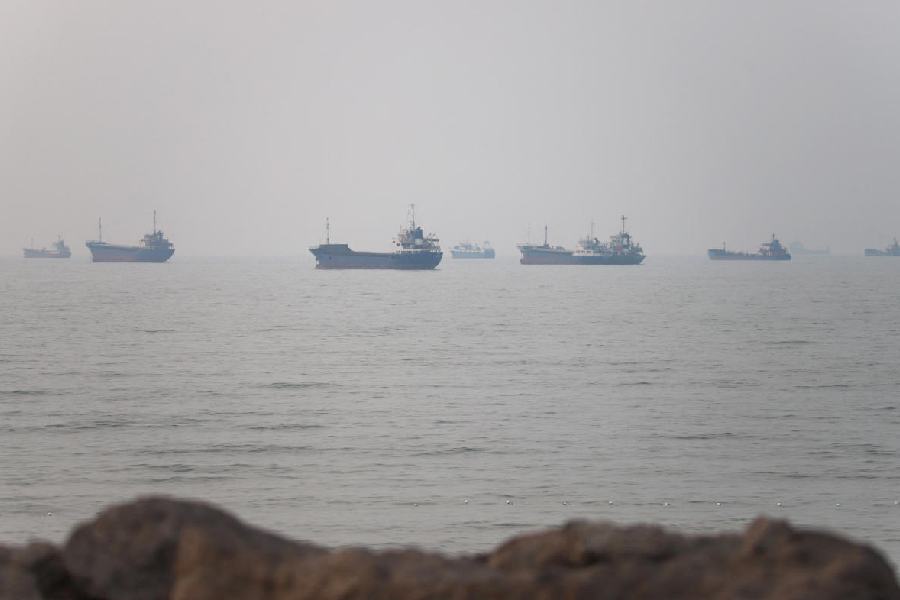
A dozen commodity vessels crossed the Strait of Hormuz over the weekend, down from 35 the previous weekend.
Four trackable vessels exited on Sunday, while two small oil tankers entered the Gulf, according to Kpler data.
Visible traffic is far below the roughly 125 large commercial vessels that crossed daily before the conflict began.
Middle Eastern producers are still exporting oil, including on tankers with their transponders switched off.
Saudi oil exports recovered to more than 4 million barrels per day in September after falling to 2.4 million in August.
- Who
- Commodity vessels, Middle Eastern oil producers, Saudi Arabia, the United States and Iran are involved in the reported developments.
- What
- Traffic through the Strait of Hormuz has sharply decreased, while oil exports continue and Saudi shipments have increased.
- Where
- The Strait of Hormuz and the Gulf, with Saudi oil exports also affected through the Yanbu route.
- When
- The report was dated September 21 and described traffic over the preceding weekend; the conflict was reported to have begun on February 28.
- Why
- Regional tensions and disruptions to Saudi Aramco’s East-West pipeline have changed shipping patterns and encouraged more Saudi exports through the strait.
Key facts
- Weekend vessel traffic
- A dozen commodity vessels transited the strait, down from 35 the previous weekend.
- Typical pre-conflict traffic
- About 125 large commercial vessels crossed daily before the conflict began.
- Energy significance
- The strait previously carried about one-fifth of the world’s oil and liquefied natural gas.
- Saudi exports in September
- More than 4 million barrels per day so far in September, according to provisional Kpler data.
- Saudi exports in August
- 2.4 million barrels per day, described as the lowest level since at least 2013.
- Recent oil flows
- JPMorgan analysts said Middle East oil flows averaged 17.1 million barrels per day over the previous 10 days.
- Tracked crude departures
- Thirteen tankers carrying about 34 million barrels of crude exited the strait during the week of September 13.
Quotes
JPMorgan analysts
Analysts who assessed regional oil flows in a September 18 note
“Middle East oil flows remain surprisingly strong despite the disruption to Saudi Arabia’s East-West pipeline”
 theprint.in
“The most notable pivot has come from Saudi Arabia”
theprint.in
Sources
Related news
Hormuz Shipping Traffic Falls to Seven Vessels, Data Shows
Hormuz Traffic Falls Below 20 Ships Amid Blockades

Oil Exports Through Hormuz Rise Despite Middle East Turmoil

US Navy Says Hormuz Oil Flows Recover Amid Security Risks
Hormuz Vessel Transits Remain Low as Tanker Is Stopped

Hormuz Shipping Traffic Plunges 95% Amid Iran War

Iran Sets Conditions for Talks, Reopening Strait of Hormuz

Iran Threatens Painful Regional Attacks If US Resumes Action

Qatar Says US Seeks Iran Deal Amid Talks Effort

US Warns Americans to Leave Iran as Tehran Threatens Retaliation
