

3 weeks ago
India's freight sector: cleaner vehicles, smarter operations, richer drivers
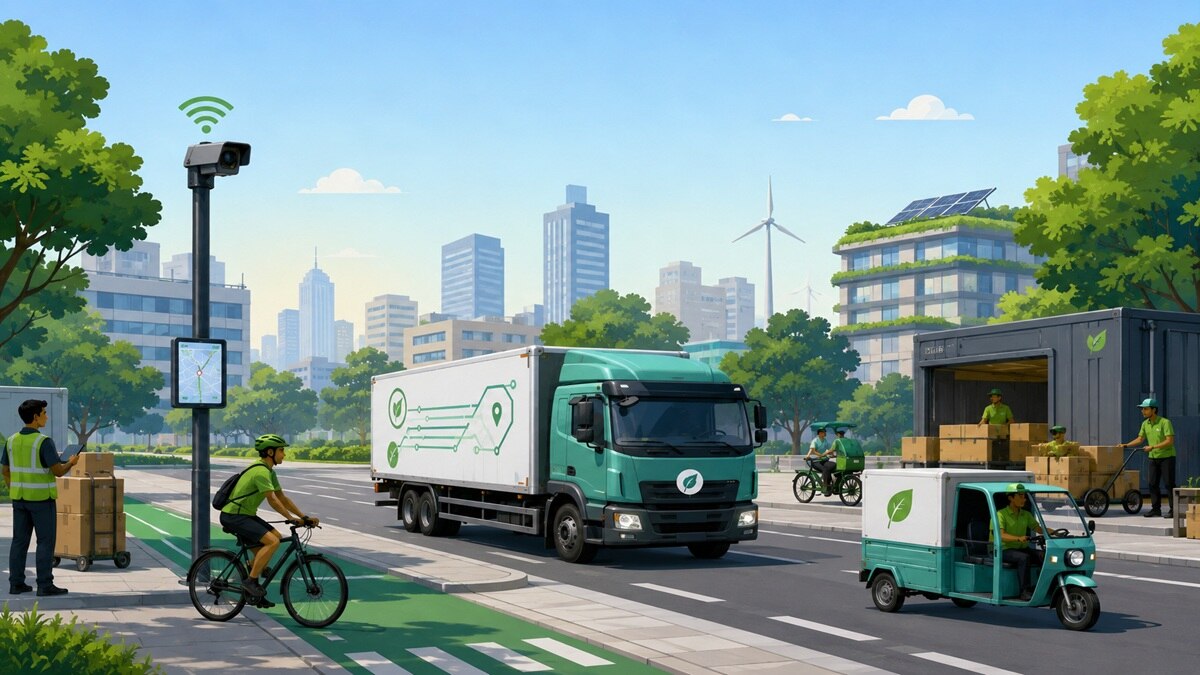
Trucks and vans that carry goods and packages are a very important part of how cities work and survive.
But these freight vehicles use a lot of diesel and create a lot of pollution, even though there are not many of them compared to other vehicles.
The Indian government started a big programme in 2024 called PM E-DRIVE to help buy and build more electric vehicles.
However, experts say just switching to electric trucks is not enough.
Many trucks and vans drive around empty or take bad routes, which wastes fuel and pollutes more.
Clever computer tools can help drivers plan better routes and pack vehicles more fully.
Autorickshaws in India often sit idle during the middle of the day, waiting for passengers.
Research shows they could carry packages weighing up to 300 kilograms during that time, earning drivers extra money.
This could increase driver incomes by 15 per cent and make better use of vehicles already on the road.
The goal is cleaner roads and richer, more secure livelihoods for drivers and small operators.

Freight vehicles account for less than 3 per cent of India's vehicle population but consume 64 per cent of national diesel and produce 34 per cent of road transport emissions.
The Government of India launched the PM E-DRIVE Scheme in 2024 with an outlay of Rs 10,900 crore to support electric vehicle adoption, charging infrastructure and domestic manufacturing.
WRI India research shows passenger autorickshaws can carry goods weighing 30–300 kg during idle midday hours, potentially raising driver incomes by 15 per cent.
Experts, including Dr OP Agarwal and Pawan Mulukutla, argue electrification alone will not fix inefficiencies such as empty return trips, poor route planning and low load utilisation.
Digital solutions such as route optimisation, data-enabled trip planning, dynamic load matching and demand forecasting can improve efficiency without waiting for full fleet electrification.
- Who
- India's freight drivers and small fleet operators, along with experts Dr OP Agarwal of the Indian School of Public Policy and Pawan Mulukutla of WRI India, and the Government of India, which launched the PM E-DRIVE Scheme.
- What
- A push to reform India's urban freight sector through a dual strategy of cleaner electric vehicles and smarter, more efficient operations, including dual-use autorickshaws that carry passengers and goods.
- Where
- India.
- When
- Discussed in the current context, with the PM E-DRIVE Scheme launched in 2024.
- Why
- Freight vehicles consume 64 per cent of the nation's diesel and cause 34 per cent of road transport emissions, while growing e-commerce and quick-commerce demand is expected to increase freight trips significantly.
Key facts
- Freight share of vehicle population
- Less than 3%
- Share of national diesel consumption
- 64%
- Share of road transport emissions
- 34%
- PM E-DRIVE scheme outlay
- Rs 10,900 crore
- PM E-DRIVE launch year
- 2024
- Autorickshaw cargo capacity
- 30–300 kg
- Potential driver income gain
- 15%
- Vehicle utilisation improvement
- From 30–35% to nearly 60%
Quotes
Pawan Mulukutla
Executive Director of Integrated Transport, Clean Air and Hydrogen, WRI India
“"Freight vehicles account for less than 3 per cent of India’s total vehicular population, yet they consume a disproportionate 64 per cent of the nation’s diesel and are responsible for 34 per cent of road transport emissions."”
 financialexpress.com
“"With the rapid growth of e-commerce and quick-commerce platforms, the number of freight trips is expected to increase significantly, putting additional strain on urban roads, air quality and energy infrastructure."”
financialexpress.com
Sources
Related news
Panel urges Indian Railways to diversify freight into autos, FMCG

Maharashtra Showcases 7-55 Tonne Electric Trucks for Green Transport
Indian Railways Moves 360 TEUs in First Double-Stack Long-Haul Train
Maharashtra proposes EV fleet, welfare fund norms for delivery apps

Eternal Reconsiders 2030 Target for Fully Electric Deliveries

DFCCIL launches rapid parcel train linking NCR to Gujarat
Sahakar Panel Wins Mumbai Cooperative Board Election Unopposed

Andhra Pradesh Sanctions 17,912 Urban Houses Under PMAY-U 2.0
NBCC and NHPC Sign Pan-India Infrastructure Projects MoU
NBCC, NHPC Partner on Pan-India Infrastructure Projects
PARIVARTAN Scheme Gains Momentum With 1,300 Applicants, 15 Automakers
