

2 weeks ago
Why Akbar’s Din-i-Ilahi Failed as a State-Building Strategy
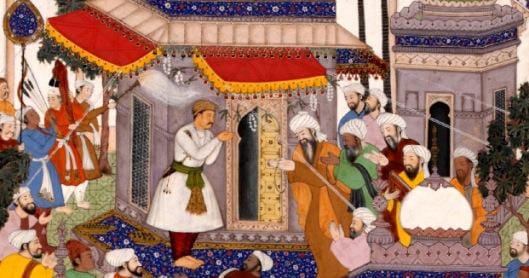
The article presents Akbar’s Din-i-Ilahi as a plan to strengthen his government.
It says Akbar wanted important soldiers and officials to be loyal to the emperor above other group identities.
The goal was to reduce fights among different groups of nobles.
The plan was not designed to convert ordinary people, according to the article.
It depended too much on Akbar himself and did not create lasting rules or training.
Some powerful leaders did not join, and Akbar still allowed them to keep their jobs.
After Akbar died, the order quickly disappeared.
The article argues that later Mughal rulers again faced rebellions and succession struggles.
It uses this example to say that strong institutions are more lasting than one leader’s personal authority.

The article interprets Din-i-Ilahi as an elite political loyalty order rather than a mass religious movement.
It argues that Akbar sought to reduce factionalism among Turani, Irani, Rajput, and Indian Muslim nobles.
The proposed system depended heavily on Akbar’s personal authority and lacked written laws or succession mechanisms.
Its limited enforcement and resistance from figures such as Raja Man Singh weakened the initiative.
The article contends that Din-i-Ilahi disappeared after Akbar’s death in 1605, leaving Mughal factional divisions unresolved.
- Who
- The article focuses on Mughal Emperor Akbar, his political elite, and later Mughal rulers including Jahangir, Shah Jahan, and Aurangzeb.
- What
- It analyzes Din-i-Ilahi as a proposed political and administrative strategy intended to unify the Mughal ruling class.
- Where
- The discussion concerns the Mughal Empire and the Indian subcontinent.
- When
- The initiative was associated with Akbar and disappeared after his death in 1605; the article also discusses later Mughal developments and 18th-century European expansion.
- Why
- The article argues that Akbar sought to counter factionalism, succession conflicts, and religious and regional divisions within the Mughal state.
Key facts
- Subject
- Din-i-Ilahi and Akbar’s statecraft
- Interpretation
- The article describes Din-i-Ilahi as an elite political contract rather than a mass conversion effort.
- Target group
- Military commanders, regional governors, and court administrators
- Intended purpose
- To create shared loyalty to the emperor and reduce factional conflict.
- Main weakness
- The system relied on Akbar’s personal authority and lacked formal institutional mechanisms.
- Resistance
- The article says Raja Man Singh declined to join while retaining his high position.
- Outcome
- The order vanished after Akbar’s death in 1605, according to the article.
- Publication caveat
- ThePrint states that the subscriber submission was published as received and was not edited or fact-checked.
Sources
Related news
Omar Abdullah laments lost political capital over J-K statehood delay
Nepal’s Communal Violence Tests Balendra Shah’s New Government
Subscriber Essay Challenges Selective Obedience to Akal Takht Sahib
UPSC Key: Tribunals bill, alcohol policy, Mecca Agreement and more
Restoring J&K's statehood key to political stability
