2 days ago
Nepal’s Communal Violence Tests Balendra Shah’s New Government
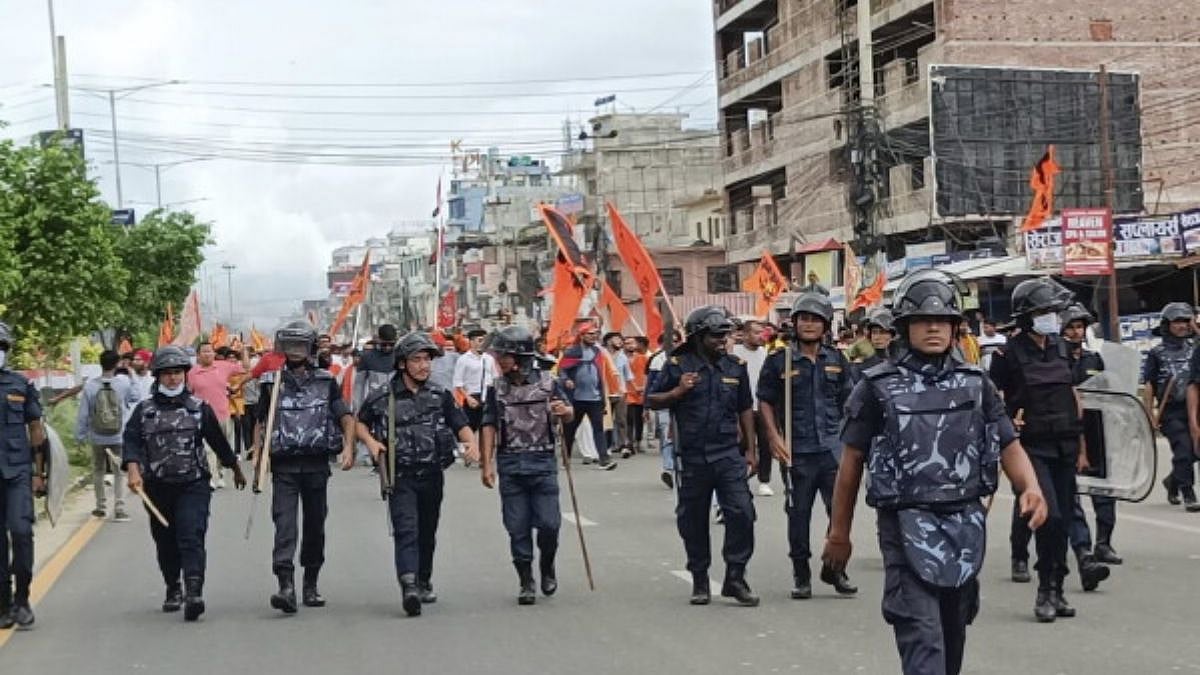
Violence broke out in parts of southern Nepal after a disagreement during a Hindu religious event.
The dispute involved religious flags and loud music.
Hindu and Muslim groups became involved, and at least three people died.
Around 25 people were hurt, although some reports described the number as scores.
Authorities used curfews and security forces to stop the fighting.
Critics say Prime Minister Balendra Shah’s government reacted too slowly.
They also worry that rumors and angry social media posts could make similar disputes worse.
Some groups want Nepal to become a Hindu state again, while others want it to remain a secular republic.
The government must protect all communities and rebuild trust.

Clashes between Hindu and Muslim groups in Sunsari and Siraha killed at least three people and injured around 25.
The violence began on July 26 after a dispute involving religious flags, loud music and a Hindu religious event.
Curfews and security deployments eventually contained the unrest, but the government initially faced criticism for a delayed response.
The clashes have intensified debate between Hindu nationalist calls for a Hindu Rashtra and secular forces defending Nepal’s republican system.
The crisis has raised concerns about social cohesion, institutional weakness and Prime Minister Balendra Shah’s ability to govern effectively.
- Who
- Hindu and Muslim groups, Nepal’s security authorities, and Prime Minister Balendra Shah’s government.
- What
- Communal clashes that caused deaths, injuries, curfews and a political debate over Nepal’s secular identity.
- Where
- Sunsari and Siraha in Nepal’s southern plains, with tensions spreading into parts of the Madhesh region.
- When
- The violence began on July 26; Shah became prime minister on March 27 after the March 2026 election.
- Why
- A dispute over religious flags, loud music and a procession escalated amid deeper mistrust, identity politics and inflammatory rumors.
Secular and Republican Forces
Hindu Nationalist Groups
Nepal’s national identity
Secular and Republican Forces
Nepal should remain a secular republic that guarantees equal citizenship and constitutional pluralism.
Hindu Nationalist Groups
Nepal should restore its earlier status as a Hindu Rashtra, with greater emphasis on protecting majority Hindu traditions.
Meaning of the violence
Secular and Republican Forces
The clashes demonstrate the danger of majoritarian politics and the need to protect Muslims and other minorities.
Hindu Nationalist Groups
The clashes may be presented as evidence that the secular state is failing to adequately protect Hindu religious practices.
Government response
Secular and Republican Forces
The state should address mistrust, misinformation and unequal security concerns rather than relying only on curfews.
Hindu Nationalist Groups
Rapid security deployment and protection of religious events are necessary to prevent disorder and defend Hindu freedoms.
Key facts
- Deaths
- At least three people were killed.
- Injuries
- Around 25 people were injured; another description in the article says scores were hurt.
- Reported tensions
- At least 17 Hindu-Muslim tension incidents reportedly occurred in the Tarai belt over eight years.
- Government response
- Authorities imposed curfews and deployed security forces to restore order.
- Political mandate
- The Rastriya Swatantra Party won 182 of Nepal’s 275 parliamentary seats in the March 2026 election.
- Prime minister
- Balendra Shah became prime minister on March 27.
- Regional implications
- The unrest could affect cross-border movement, trade and border management with India.
Sources
Related news
Nepal Child Rape-Murder Sparks Protests Against PM Balen Shah

ISI accused of fuelling radicalisation in Nepal; India on high alert
Nepal’s New Populist Government Faces Doubts Five Months On
Nepal's Gen Z Protests Offer India Lessons, Journalist Argues

Nepal Opposition Leader Warns Gen Z Anger Was Long-Building
BJP Leader Calls Youth Protests Democratic, Champions India-Nepal Ties

Nepal Flood Death Toll Tops 1,200 as Climate Risks Rise
Bihar on Alert as Rivers Swell, Sone Barrage Gates Open
Satellite Radar May Strengthen Nepal's Flood Warning Systems
Nepal Plans New Landslide Warning System Along China Border

Nepal Thanks India as Glacial Disaster Rescue Efforts Continue