2 hrs ago
Khajuraho Bazaars Blend Erotic Souvenirs With Heritage Crafts
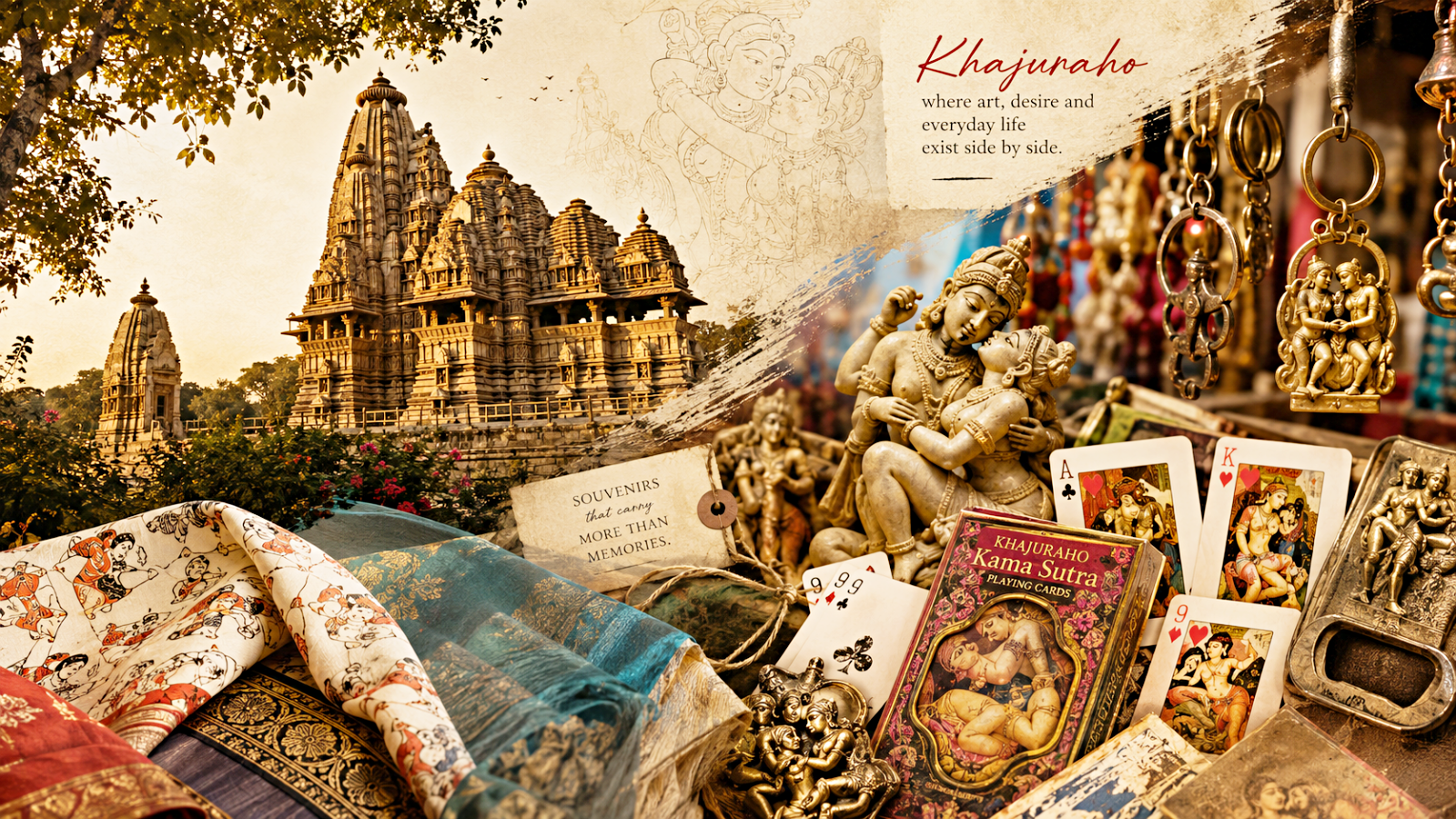
Khajuraho is an Indian town famous for its old temples and sculptures.
Some of the sculptures show people being intimate, so shops sell souvenirs inspired by them.
These souvenirs include magnets, keychains, cards, sculptures and bottle openers.
The markets also sell ordinary crafts such as sarees, jewellery and metalwork.
Shopkeepers usually keep the more explicit items away from the front so families do not feel uncomfortable.
Some visitors see the items as part of the town’s history, while others still feel shy about them.
Guides explain that only a small part of the temple artwork is erotic.
They also say the market grew because tourists wanted reminders of Khajuraho.
Many visitors experience the town as safe, quiet and welcoming.

Khajuraho’s markets sell erotic temple-inspired souvenirs alongside sarees, jewellery, textiles, gemstones and handicrafts.
Sellers offer keychains, magnets, playing cards, bottle openers and sculptures, often presenting them casually and discreetly.
The erotic imagery reflects only a small part of Khajuraho’s temple art, according to tourism experts and guides.
Guides say the souvenir trade developed from tourist interest in antiques and expanded into affordable plaster, stone, brass and bronze items.
Visitors also describe Khajuraho as a calm, welcoming destination for family trips, weddings and cultural tourism.
- Who
- Khajuraho’s shopkeepers, guides, artisans and visitors, including families, tourists and wedding guests.
- What
- A souvenir market sells erotic temple-inspired items alongside traditional crafts and other keepsakes.
- Where
- Khajuraho, Madhya Pradesh, India, around its historic temple complex and local bazaars.
- When
- The temples were built between the 10th and 11th centuries; smaller erotic souvenirs became especially common during the last four to five years.
- Why
- Sellers developed and expanded the products in response to tourists’ interest in Khajuraho’s temples and imagery.
Historical Context
Social Sensitivity
Should erotic souvenirs define Khajuraho?
Historical Context
Tourism figures and guides say the souvenirs are a natural commercial extension of the temple’s history, and visitors often become more comfortable after learning the artwork’s context.
Social Sensitivity
Hemant Joshi says erotic imagery represents only a small part of the temple art and should not become the defining identity of Khajuraho or its markets.
Are the markets suitable for families?
Historical Context
Ananya Srivastava argues that visiting Khajuraho can help parents discuss age-appropriate sex education rather than leaving children to learn from misinformation.
Social Sensitivity
Some visitors remain concerned about social taboos and elders’ reactions, leading sellers to display explicit items discreetly and handle them with extra sensitivity.
Key facts
- Historic site
- Khajuraho’s temple complex was built between the 10th and 11th centuries CE.
- Erotic artwork
- Guide Anurag Shukla says about 10% of the sculptures are erotic.
- Souvenir types
- Markets sell keychains, sculptures, bottle openers, fridge magnets, playing cards and books.
- Other products
- The bazaars also offer Chanderi and bamboo sarees, gemstones, jewellery, textiles and metal crafts.
- Recent market shift
- Smaller, more affordable souvenirs have gained popularity over the last four to five years.
- Selling practices
- Some shops keep erotic products out of front displays and seek permission before showing them to women customers.
- Historical interpretation
- Anurag Shukla says Khajuraho’s interpretation shifted from primarily erotic explanations toward more spiritual and historical accounts.
Quotes
Anurag Shukla
Khajuraho tour guide, scholar, and author
“It’s a space where you can buy an authentic Chanderi saree in one shop, a piece of ancient-style metal craft in the next, and a unique temple-inspired souvenir right after all while sipping chai with vendors who double as local history storytellers.”
 indianexpress.com
“The erotic imagery represents only a small part of the temple art and should not become the defining identity of either the market or the destination.”
indianexpress.com
Sources
Related news

Indore Family Creates Giant Vande Mataram Rakhi for Ganesh

Sikar Surpasses Jaipur as Rajasthan's Domestic Tourism Leader

Swadeshi Rakhis Boost India’s Festive Trade Ahead of Raksha Bandhan
Rakhi Sellers Embrace Functional Designs While Traditional Threads Remain Popular
PM Modi Gifts Indian Heritage To Uzbekistan, Kyrgyzstan Leaders
Kalamandir Jewellers Opens Grand Flagship Showroom in Vadodara
Madhya Pradesh Institute Launches Hindi-Medium Civil Engineering Course With Incentive
Bhopal Janmashtami Celebrations Feature 101 Children at CM Residence
Deepak Pandey Gets Additional Charge As TT Nagar SDM
Locals Charge ₹50 To Help Commuters Cross Overflowing Urmil River

MP TET 2026 Deadline Extended, Offline Exam Option Added