5 days ago
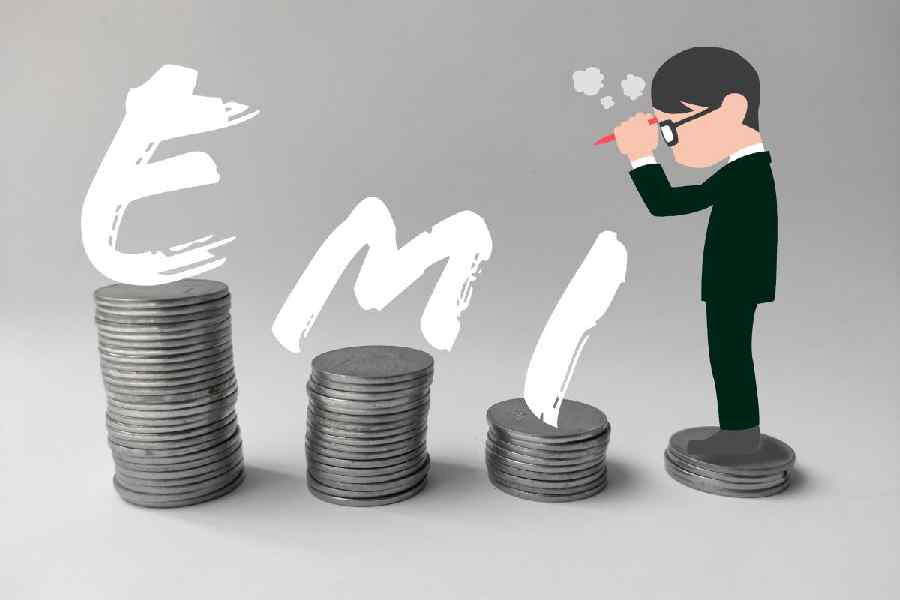
Experts Explain When Affordable EMIs Become Financially Unaffordable

An EMI is the fixed amount a person pays each month for a loan.
A payment may look small but still be difficult if the person has several loans.
Experts say all monthly loan payments together should usually stay below about 30% of take-home income.
This leaves money for food, housing, bills, savings and emergencies.
For someone earning ₹50,000 a month, that means keeping total EMIs around ₹12,000 to ₹15,000.
If EMIs take too much money, there is less room for unexpected expenses.
Some people may then borrow more money to pay older loans.
A loan is affordable only when it does not harm a household’s financial security and peace of mind.

Experts say an EMI is affordable only when it leaves room for essential household expenses, savings and emergencies.
Borrowers should assess total monthly debt obligations rather than judging one loan payment in isolation.
A commonly recommended benchmark is keeping combined EMIs below 30% of net monthly income.
For a monthly income of ₹50,000, total EMIs should generally remain within ₹12,000 to ₹15,000.
Excessive EMI commitments can reduce financial resilience and lead borrowers to take new loans to service existing debt.
- Who
- Borrowers and household finances experts, including Vijendra Singh Shekhawat and Yudhajit Baul.
- What
- The article explains how to judge whether monthly loan instalments, or EMIs, are truly affordable.
- Where
- Across the country, with specific reference to urban India.
- When
- The guidance applies when taking or managing loans; no specific event date is stated.
- Why
- To help borrowers preserve savings, handle emergencies and avoid excessive debt obligations.
Key facts
- Recommended EMI limit
- Keep total EMI obligations below about 30% of net monthly income.
- Illustrative income
- For monthly income of ₹50,000, suggested total EMIs are ₹12,000 to ₹15,000.
- Loans to include
- Personal, home, car and other credit-related loan payments should be combined.
- Affordability test
- An EMI is affordable when it leaves room for essential expenses, savings and future commitments.
- Potential danger
- High EMI commitments can reduce emergency funds, investments and long-term financial flexibility.
- Debt warning sign
- Taking a second or third loan to service an earlier loan may indicate rising financial stress.
Quotes
Vijendra Singh Shekhawat
CEO of Choice Finserv Private Limited
“In personal finance, we recommend distributing income in different components such as fixed expenses, variable expenses and savings. EMI on loans forms an integral part of the fixed expenditure of a household. Ideally, EMI should be contained to less than 30% of net income to keep harmony with other commitments and, most importantly, with savings.”
 livemint.com
“An EMI stops being affordable the moment it stops leaving room for everything else the household has to fund. The real number is not the instalment on paper; it is the borrower’s total monthly obligations set against a realistic, stable income.”
livemint.com
Sources
Related news
How Smart Borrowing Can Build Wealth Without Straining Budgets

Choosing the Right Home Loan Tenure

High Earners Feel Broke? Five-Step Audit Reveals Why

Maharashtra Family Deaths Highlight Risks of iPhone Consumer Debt
Before Buying a House, Ask These Five Financial Questions

Personal Loan EMI Calculators Help Borrowers Assess Repayment Affordability

Bank Branches to Close in Jaipur and Festival Cities

India Has Opportunity to Shape Future of Global Finance

Delhi Hotels Prepare Indian Hospitality for BRICS Leaders

SBI Chairman Calls for Know Your Agent Framework

Xi Jinping’s India Visit Puts Border, Trade Ties Under Spotlight