

1 month ago
Smart Umbrellas Combine Tech and Durability
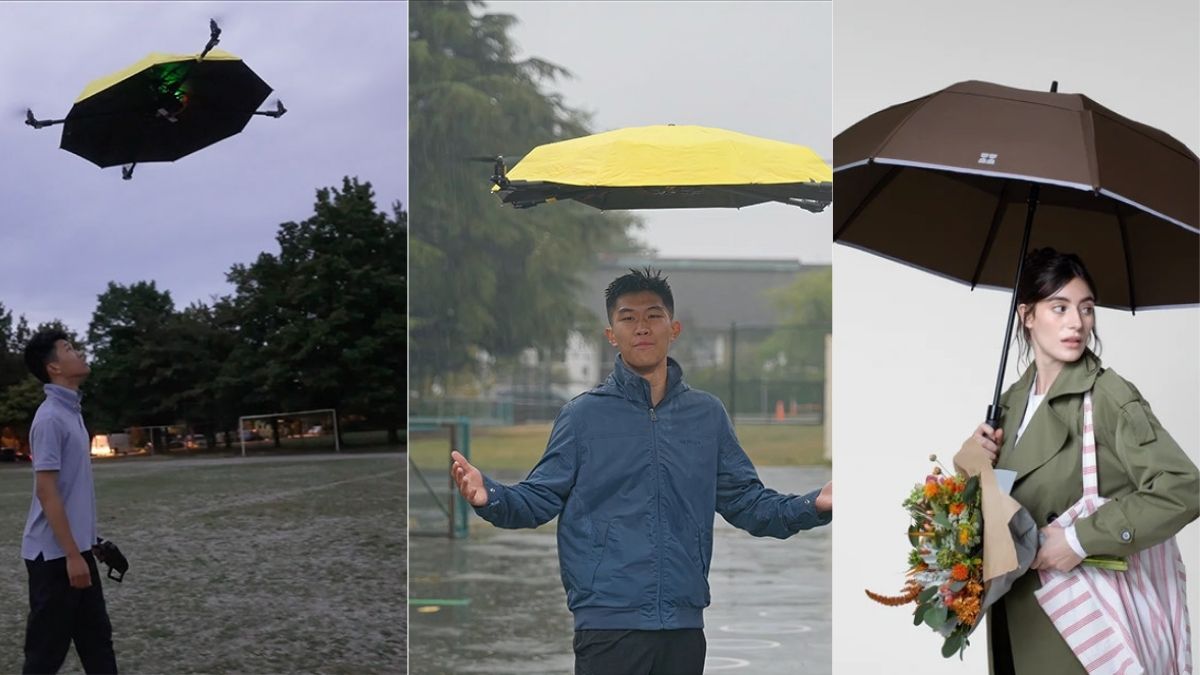
Smart umbrellas are a new type of umbrella that use technology to make them more useful.
They can connect to your phone to help you find them if you leave them behind.
They are also made with stronger materials to withstand strong winds and have features like built-in flashlights.
Some futuristic designs, like the Flying Umbrella 2.0, can even fly and follow you around without you holding them.
These umbrellas show how everyday objects are becoming smarter and more connected.

Smart umbrellas use Bluetooth connectivity to help users track and locate them.
Advanced materials like carbon fiber and Teflon enhance durability and wind resistance.
Reverse-folding mechanisms prevent water from dripping onto clothing or car interiors.
Some umbrellas integrate features like LED flashlights for added convenience.
Futuristic designs, such as the Flying Umbrella 2.0, use quadcopters to follow users autonomously.
- Who
- Manufacturers and engineers like Rick Reichmuth and John Tse.
- What
- Smart umbrellas with advanced features like Bluetooth tracking, durable materials, and autonomous flight.
- Where
- Developed and marketed globally, with notable examples from companies like Xiaomi and individual engineers.
- When
- The trend is part of the broader movement towards connected everyday objects.
- Why
- To address common issues like losing umbrellas, improve durability, and enhance user convenience.
Practical Innovations
Futuristic Concepts
Bluetooth Tracking
Practical Innovations
Bluetooth connectivity helps users track and locate their umbrellas, preventing loss.
Futuristic Concepts
Futuristic umbrellas like the Flying Umbrella 2.0 use advanced tracking technology to follow users autonomously.
Durability
Practical Innovations
Modern umbrellas use advanced materials like carbon fiber and Teflon to enhance durability and resistance to wind.
Futuristic Concepts
Futuristic umbrellas incorporate complex electronics and sensors, which may compromise durability.
User Convenience
Practical Innovations
Features like reverse-folding mechanisms and LED flashlights address everyday user needs.
Futuristic Concepts
Autonomous flying umbrellas offer novel convenience but are not yet practical for everyday use.
Key facts
- Bluetooth Connectivity
- Pairs with smartphone apps to alert users if the umbrella is left behind.
- Materials
- Industrial-grade fibreglass ribs, Teflon-coated fabric, carbon fiber shafts, and fluoropolymer coatings.
- Wind Resistance
- Designed to withstand winds of up to 55 mph.
- Reverse-Folding Mechanism
- Prevents water from dripping onto clothing or car interiors.
- LED Flashlight
- Integrated into the handle for illumination during late-night walks.
- Flying Umbrella 2.0
- A prototype that uses a quadcopter to follow users autonomously.
- Tracking Technology
- Uses a downward-facing Time-of-Flight depth camera and a Raspberry Pi computer for precise tracking.
Sources
Related news

Parul University, IIT Palakkad Patent E-Waste Innovation

Jharsuguda Students Shine Through Rapid District Hockey Development

IIT Bombay Launches E-PG Diploma In Computer Science And AI

SSC JE 2025 Final Answer Key Released, Access Details

Trump-Pardoned Bank Robber Jon Ponder Charged With Inmate Assault
IIT Kharagpur Programme Transforms Teaching Through NEP, Technology and GenAI

Engineer Educates 15,000 Rural Kids Through Free Coding
Techie Builds AI-Powered Helmet to Report Traffic Violations
Surat Students Build India's First AI-Powered Driverless Electric Motorcycle
