8 months ago
Surat Students Build India's First AI-Powered Driverless Electric Motorcycle
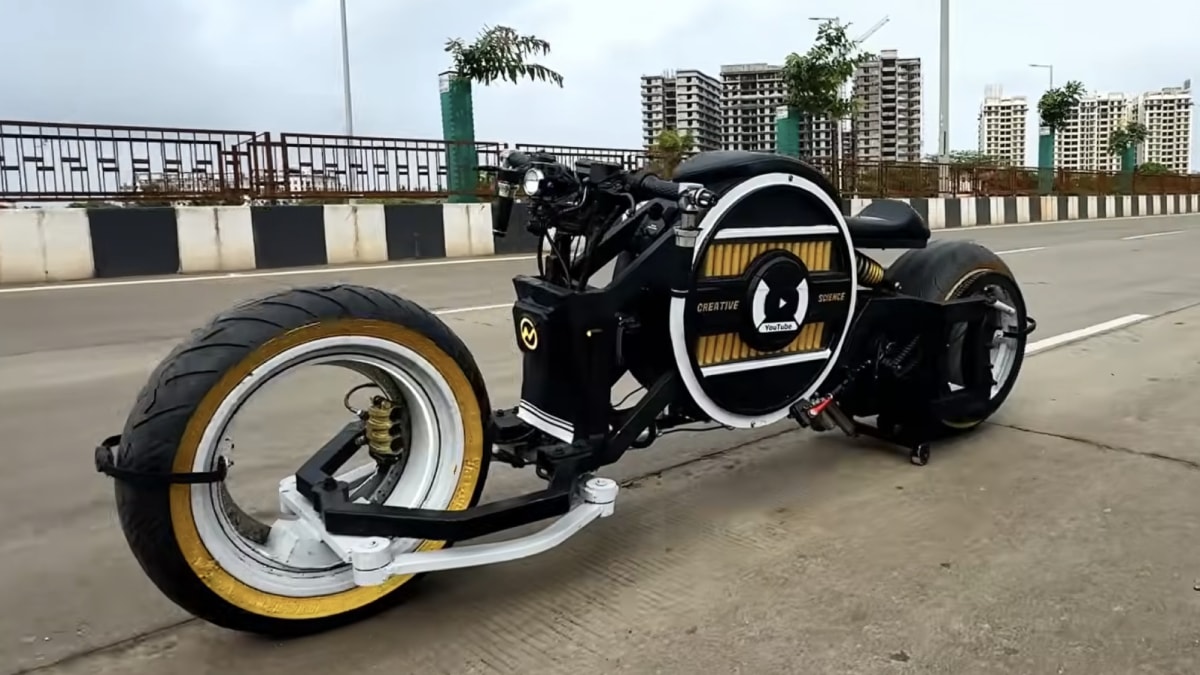
Three students from Surat, India, built a special electric motorcycle called Garuda.
It's the first of its kind in India because it can drive itself using AI.
They used a lot of recycled materials and a small computer called Raspberry Pi to make it work.
The motorcycle can understand voice commands, has special wheels without hubs, and can even charge your phone wirelessly.
It's very safe because it has sensors that help it stop automatically if there's something in its way.
The battery lasts a long time and can be fully charged in just two hours.
The students spent about a year and some money to build it, and it's a great example of how you can make cool things with recycled materials.

Three students from Surat built 'Garuda,' India's first AI-powered driverless electric superbike using 50% scrap materials.
The motorcycle is equipped with a Raspberry Pi module for voice command interpretation and autonomous driving.
Garuda features hubless wheels, a touchscreen dashboard with GPS, and wireless mobile charging.
The bike has advanced safety features, including automatic speed reduction and braking based on obstacle proximity.
Garuda has a battery range of up to 220 km in Eco mode and 160 km in Sport mode, with a full charge time of 2 hours.
- Who
- Shivam Maurya, Gurpreet Arora, Ganesh Patil (students from Bhagwan Mahavir University, Surat)
- What
- Developed 'Garuda,' India's first AI-powered driverless electric superbike
- Where
- Surat, India
- When
- Development took approximately one year
- Why
- To prove that futuristic mobility could be developed affordably using local resources and recycled components
Key facts
- Developers
- Shivam Maurya, Gurpreet Arora, Ganesh Patil
- University
- Bhagwan Mahavir University
- Development Time
- 1 year
- Development Cost
- Rs 1.8 lakh
- Materials Used
- 50% scrap materials
- Central Processing Unit
- Raspberry Pi module
- Battery Range (Eco Mode)
- 220 km
- Battery Range (Sport Mode)
- 160 km
- Charging Time
- 2 hours