4 days ago
RBI FX Swaps Could Lift India’s BoP Surplus
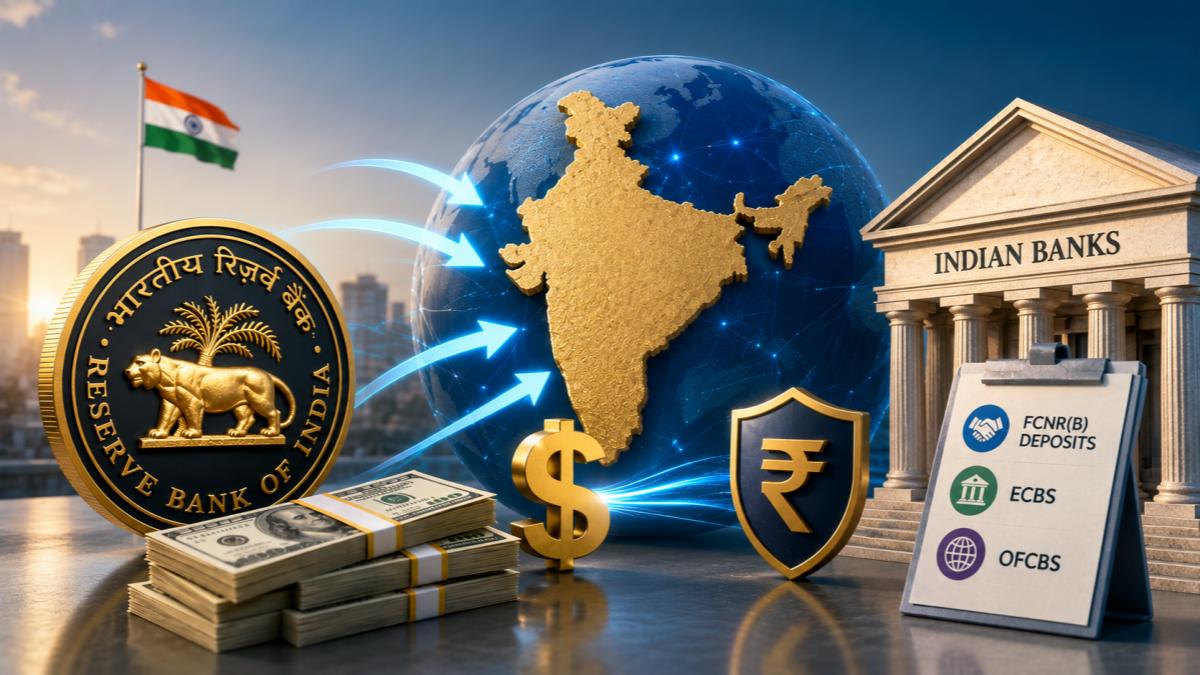
The Reserve Bank of India created temporary programs that help banks bring dollars into India.
By August 21, banks had brought in $72.85 billion through these programs.
Most of the money came from deposits made by Indians living abroad.
This has made researchers think India could have a $60 billion balance-of-payments surplus in the 2026-27 financial year.
A surplus means more money is coming into the country than is leaving through measured international transactions.
However, the dollars are mostly borrowed or deposited money, not permanent earnings from exports.
India still buys more goods from other countries than it sells to them.
The loans and deposits will eventually have to be repaid in dollars.
The RBI must also manage the extra rupees created when it receives the dollars.

Banks reported $72.85 billion in foreign-currency inflows through RBI swap windows by August 21.
FCNR(B) deposits accounted for $65.40 billion, or nearly 90% of the reported inflows.
IDFC FIRST Bank Economics Research raised its FY2026-27 BoP-surplus forecast to $60 billion from $40 billion.
India’s foreign-exchange reserves rose $38.22 billion from end-March to $729.33 billion on August 21.
The funding improves near-term liquidity but creates future dollar repayment obligations and does not eliminate the trade deficit.
- Who
- The Reserve Bank of India, Indian banks, non-resident depositors, and eligible borrowers are involved.
- What
- Temporary foreign-exchange swap windows have attracted $72.85 billion and could help produce a $60 billion balance-of-payments surplus in FY2026-27.
- Where
- The transactions bring foreign currency into India through the Indian banking system.
- When
- The windows opened on June 8, and the reported inflows were measured through August 21; eligible funding can be raised until December 31.
- Why
- The RBI designed the swaps to improve foreign-currency funding, support reserves, and reduce pressure from financial outflows and the trade deficit.
Optimistic assessment
Cautious assessment
Balance-of-payments outlook
Optimistic assessment
The large inflows could help India achieve a $60 billion BoP surplus in FY2026-27 and allow the RBI to build reserves.
Cautious assessment
The $60 billion figure is only a forecast because some inflows may replace existing funding or reflect deposits that would have entered India anyway.
External financial strength
Optimistic assessment
The swaps provide a substantial near-term external buffer against portfolio outflows and a widening goods deficit.
Cautious assessment
The money is borrowed or deposited rather than permanent capital, creating future dollar repayment obligations.
Economic impact
Optimistic assessment
The facilities give banks stable multi-year funding and improve foreign-currency availability.
Cautious assessment
The RBI’s dollar purchases inject rupees into the banking system, potentially creating excess liquidity and complicating monetary-policy transmission.
Key facts
- Reported inflows
- $72.85 billion by August 21
- FCNR(B) contribution
- $65.40 billion, nearly 90% of total reported inflows
- Projected FY2026-27 BoP surplus
- $60 billion, according to IDFC FIRST Bank Economics Research
- Foreign-exchange reserves
- $729.33 billion on August 21, up $38.22 billion from end-March
- April-June overall BoP
- Deficit of $8.1 billion
- April-July merchandise deficit
- $118.60 billion, compared with $96.66 billion a year earlier
- RBI swap maturity
- Swaps are available for up to five years; FCNR(B) deposits generally run for three to five years
Sources
Related news
India's FY27 Balance of Payments Set for Large Surplus
RBI Measures Set to Pull $90-95 Billion into India

RBI expects healthy balance-of-payments surplus in FY27
RBI Forex Swap Facility Draws $72.85 Billion in Inflows

FCNR(B) Inflows Cross $100 Billion as RBI Closes Window
RBI Expects $80 Billion Forex Inflows to Bolster Reserves
Rising US Yields Threaten India’s Foreign Investment Appeal

India Faces Double Squeeze on Food Prices

Personal Loan Types in India: Medical, Wedding, Travel, Debt Consolidation

Indian Bank Stocks Show Record Exchange Price Gaps