3 weeks ago
Data Centre Cooling Evolves from Water Towers to Liquid Systems
Computers in big data centres get very hot, just like a strong heater left on all day.
If they get too hot, they can stop working or get damaged.
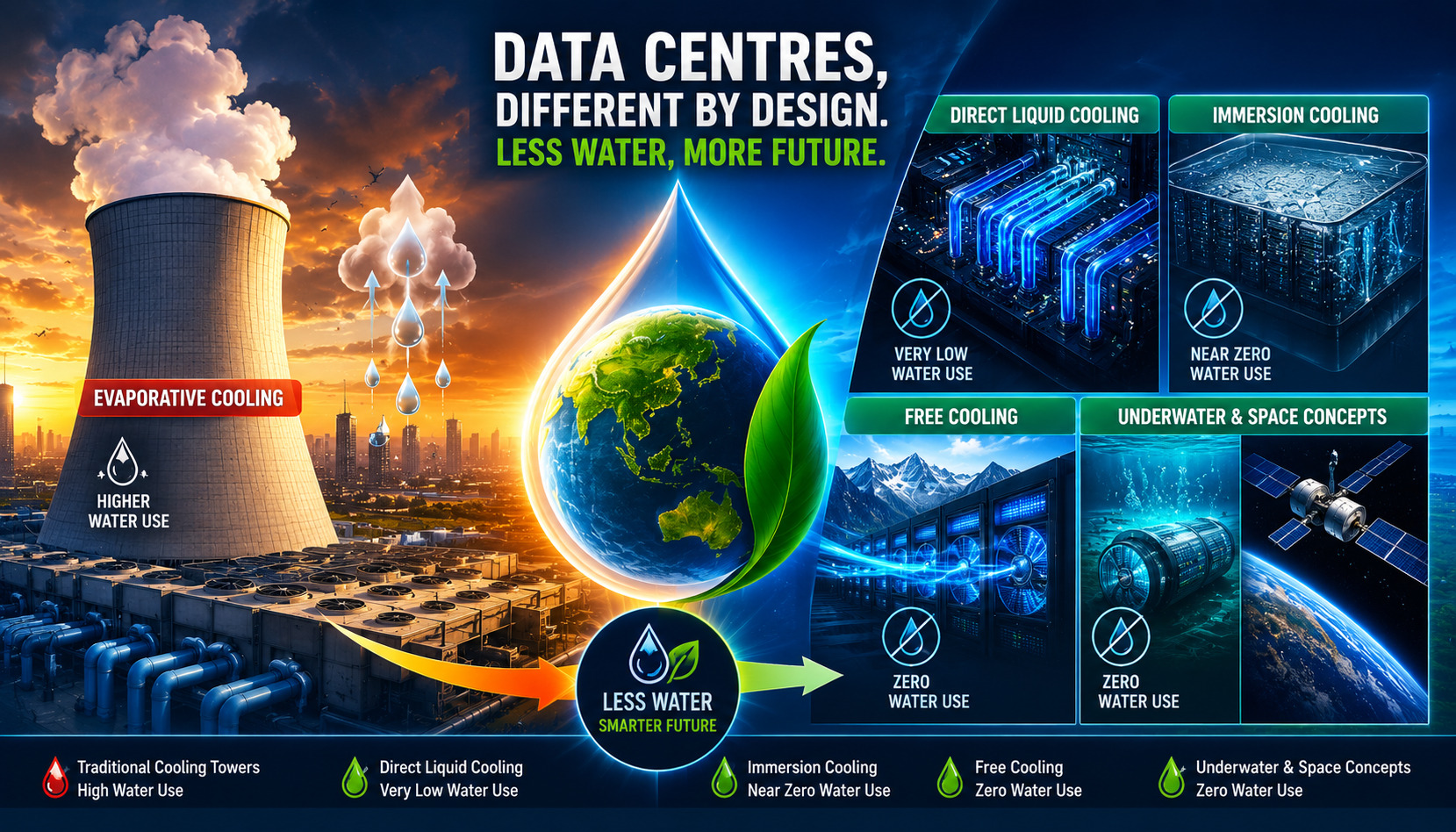
For a long time, buildings were kept cool with huge machines called cooling towers that used water.
The water evaporates like sweat on your skin, and that evaporation carries the heat away.
But that uses a lot of water, and some places do not have enough.
New computers that run artificial intelligence get even hotter, so air alone can no longer cool them.
Now engineers use special liquids that flow right over the hot computer parts to take heat away.
Some even dip whole computers into tanks of liquid that does not conduct electricity.
Other ideas use cold outside air, the deep ocean, or even space to stay cool.
These methods save water, which matters a lot for countries like India.

Cooling is among the most vital data centre support systems because servers produce heat continuously and can suffer irreversible damage if they overheat.
Traditional cooling towers work by evaporating water, and water-cooled facilities use roughly 25 million litres per MW per year, with India's current use estimated at about 150 billion litres annually.
Around 70 to 80 percent of water loss in an open evaporative system comes from evaporation, while the remainder leaves through a controlled process known as blow down.
Modern AI chips can draw up to 700 watts each, and a single rack of them can consume 100 kilowatts or more, making air cooling physically insufficient.
Direct liquid cooling, immersion cooling, and free cooling can drastically cut water use, and Microsoft's Project Natick trial found underwater servers failed eight times less often than identical land-based setups.
- Who
- Data centre operators and technology companies such as Microsoft, Lenovo, HP, Dell, LiquidStack, and Submer, along with Indian operators building new facilities.
- What
- The evolution of data centre server cooling from water-intensive evaporative cooling towers toward direct liquid cooling, immersion cooling, and free cooling methods.
- Where
- Globally, with particular emphasis on India (including Rajasthan), Microsoft facilities in Ireland, Finland, and the Pacific Northwest, and Scotland's coast for Project Natick.
- When
- The article describes a shift accelerating over the last five years, with the Project Natick experiment running from 2018 to 2020.
- Why
- Rising AI workloads generate heat that air cooling cannot remove, while water scarcity in places like India makes efficient low-water cooling essential.
Key facts
- Cooling water benchmark
- About 25 million litres per MW per year for water-cooled facilities
- India's annual cooling water use
- Roughly 150 billion litres, with projections rising sharply by 2030
- Water loss via evaporation
- 70-80 percent of water loss in open evaporative systems
- AI chip power draw
- Up to 700 watts per chip; 100 kW or more per rack
- WUE metric
- Litres of water per kWh; well-designed facilities achieve 1.0-2.0
- Project Natick
- 864 servers in a steel tube sunk 117 feet deep off Scotland for two years; eight times fewer failures
- Two-phase immersion boiling point
- Around 50 degrees Celsius
- Drift loss
- Less than 0.01 percent of recirculation rate with modern eliminators
Sources
Related news
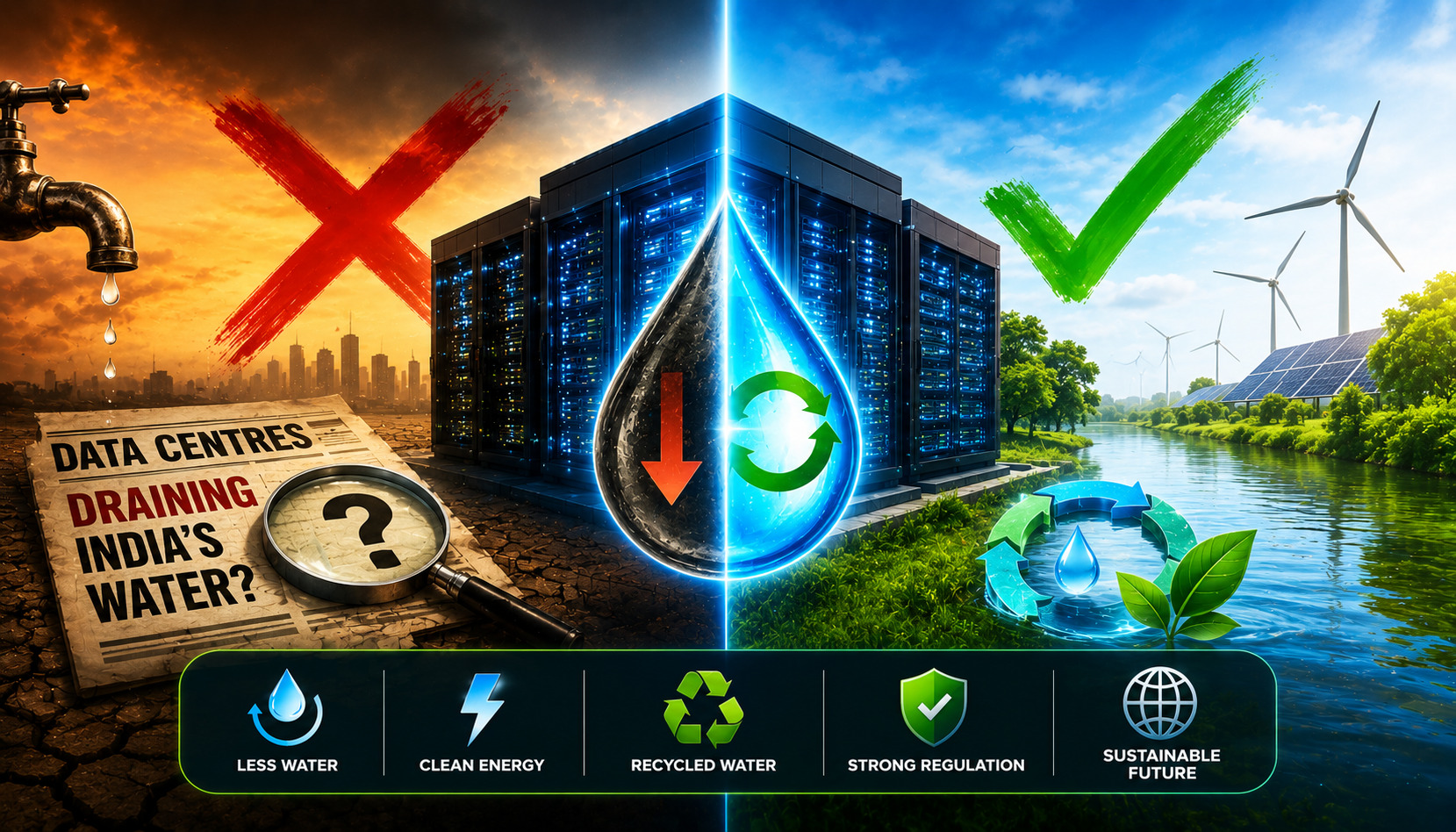
Data centres and India's water: claims versus the evidence

AI Expansion Puts Jamnagar and Thane Under Water Stress

Lokesh Defends Vizag Data Centres Amid Water Concerns

India's data centre capacity surges four-fold to 1,575 MW
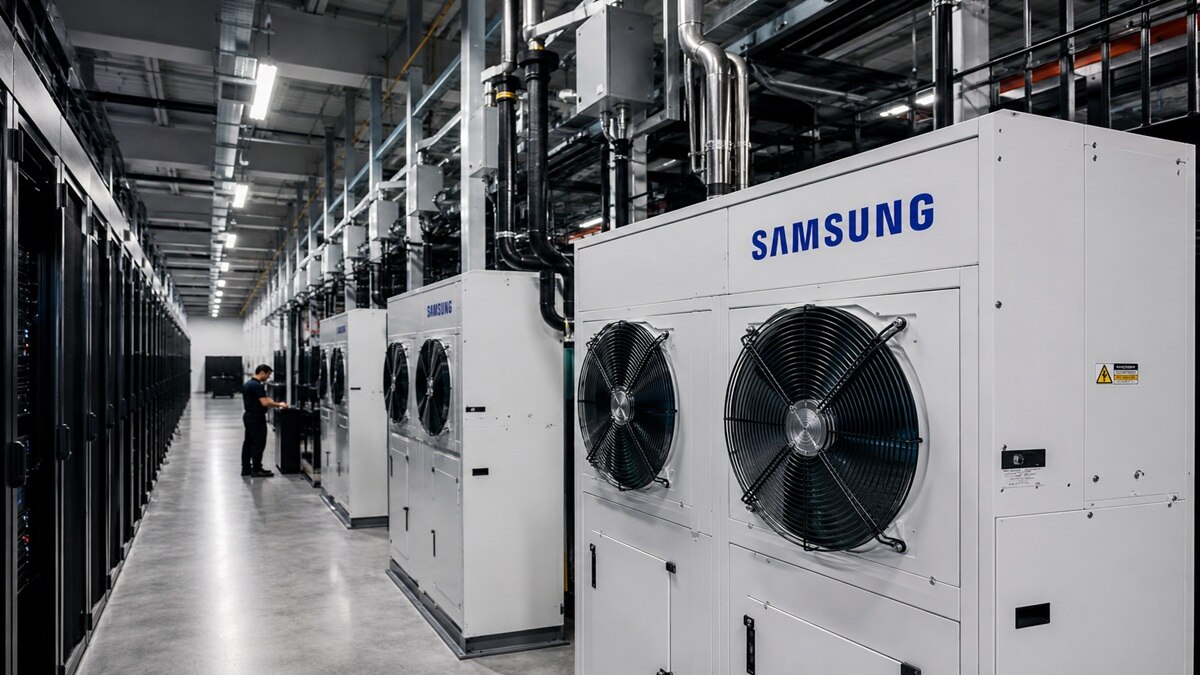
Samsung's Pune cooling hub targets India's expanding AI data-centre market

South Korea Plans Underwater Data Centres to Tackle AI Demand