3 hrs ago
Mumbai Entry Toll Hike May Raise Vegetable and Fruit Prices
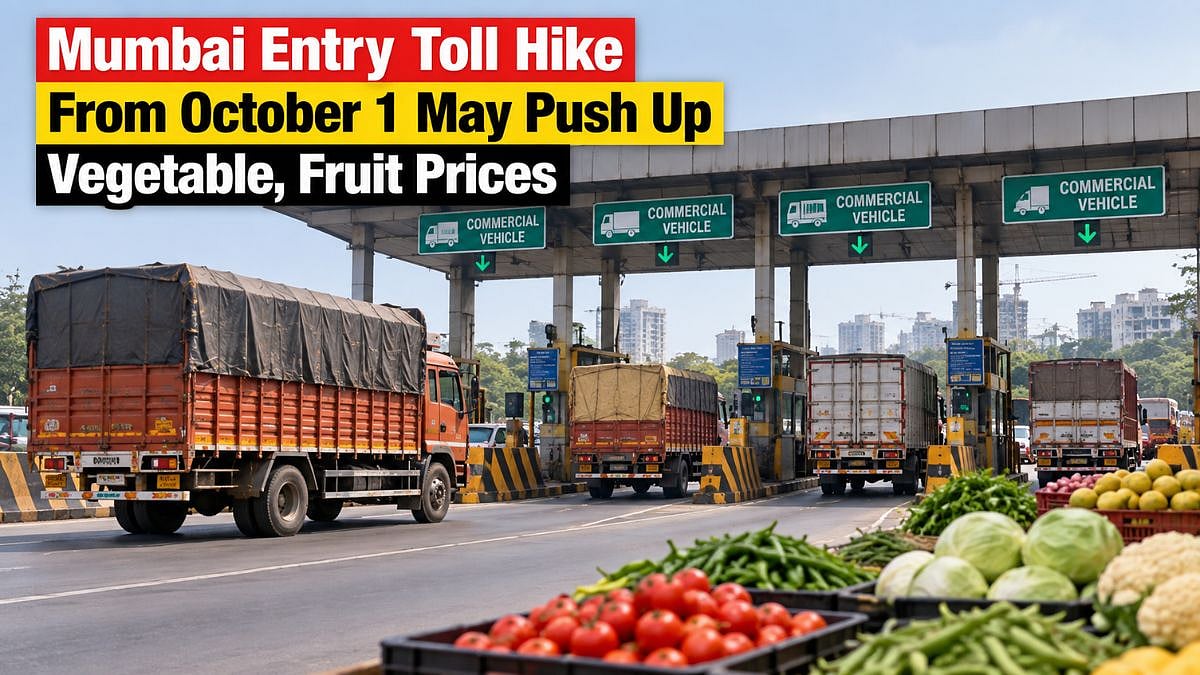
Mumbai is increasing the toll charged to many trucks and commercial vehicles entering the city.
The new rates begin on October 1, 2026.
Trucks and buses will pay ₹180 for each trip, while heavier vehicles will pay ₹225.
These vehicles carry vegetables, fruits, and other goods from places such as Nashik and Pune.
Transporters say the extra cost may be added to the prices shoppers pay.
A household worker also said food prices are already difficult to manage.
The toll authority is facing lower revenue because cars no longer pay the toll.
A transport representative says the toll should be stopped because the project cost has already been recovered.

Commercial vehicle tolls at Mumbai’s five entry points will increase from October 1, 2026.
Mini buses and light commercial vehicles will pay ₹90, trucks and buses ₹180, and heavy motor vehicles ₹225 per trip.
Transporters say higher tolls and fuel costs could raise the prices of vegetables, fruits, and other essentials.
The toll contract, held by Mumbai Entry Points Ltd, is due to expire in 2026.
Light motor vehicles have been toll-exempt since October 2024, causing an estimated daily revenue loss of ₹50 lakh.
- Who
- The Maharashtra State Road Development Corporation, Mumbai Entry Points Ltd, transporters, traders, and Mumbai households are affected.
- What
- Tolls for commercial vehicles entering Mumbai are being increased, potentially raising the cost of transported goods.
- Where
- At five Mumbai entry points: Vashi, Mulund’s LBS Road, Mulund’s Eastern Express Highway, Airoli Bridge, and Dahisar.
- When
- The revised rates take effect on October 1, 2026; the existing toll contract is set to expire in 2026.
- Why
- The toll rates are being revised while commercial vehicle collections remain important to revenue after light motor vehicles were exempted.
Revenue and Toll Collection
Transporter and Household Costs
Whether toll collection should continue
Revenue and Toll Collection
Commercial vehicle tolls remain an important source of revenue, particularly after light motor vehicles were exempted and the department began losing about ₹50 lakh daily.
Transporter and Household Costs
Bal Malkit Singh, an advisor and former president of the All India Motor Transport Congress, said the project cost has already been recovered and the toll should be discontinued.
Effect on essential-goods prices
Revenue and Toll Collection
The revised charges apply to vehicles bringing goods into Mumbai, helping maintain the toll system and its associated infrastructure responsibilities.
Transporter and Household Costs
Transporters and traders said higher tolls, combined with fuel costs, could be passed on to consumers through higher prices for vegetables, fruits, and other commodities.
Key facts
- Effective date
- October 1, 2026
- Mini buses and LCVs
- ₹90 per trip, up from ₹75
- Trucks and buses
- ₹180 per trip, up from ₹150
- Heavy motor vehicles
- ₹225 per trip, up from ₹180
- Entry points
- Vashi, Mulund LBS Road, Mulund Eastern Express Highway, Airoli Bridge, and Dahisar
- Toll operator
- Mumbai Entry Points Ltd
- Contract value and duration
- ₹2,100 crore, awarded in 2010 for 16 years
- Estimated revenue loss
- About ₹50 lakh daily after light motor vehicles became exempt
Quotes
Bal Malkit Singh
Advisor and former President of the All India Motor Transport Congress
“It is an extra burden on heavy vehicles, including trucks. With the increase in toll rates and fuel prices already having risen, input costs have increased significantly, adding to inflationary pressure. This additional burden will ultimately be passed on to the common people through an increase in the cost of essential commodities”
 freepressjournal.in
“Vegetable prices have already increased significantly, and with low rainfall affecting the supply, the prices of vegetables and other essential commodities are rising further. For ordinary households like us, this is becoming increasingly difficult to manage. Even 500 grams of vegetables now costs more than Rs 50 in many cases.”
freepressjournal.in
Sources
Related news
Mumbai CNG Rise Coincides With Higher Auto, Taxi Fares

Mumbai Milk, Gas and Transport Prices Rise Ahead of Festivals

Mumbai Metropolitan Region Raises Auto-Rickshaw and Taxi Fares

MGL Raises Mumbai CNG Prices by Rs 2 Per Kilogram
Mumbai Petrol Pumps Threaten UPI Shutdown Over Revised MDR

Aadhaar Name Mismatches Delay Maharashtra Vehicle Ownership Transfers

Jan Vishwas Act Eases Minor Motor Offences From August 15

Tamil Nadu Tops Road Accidents, Uttar Pradesh Deadliest in 2025