1 week ago
BJP Reconsiders UGC Caste Rules Amid Political and Legal Pushback
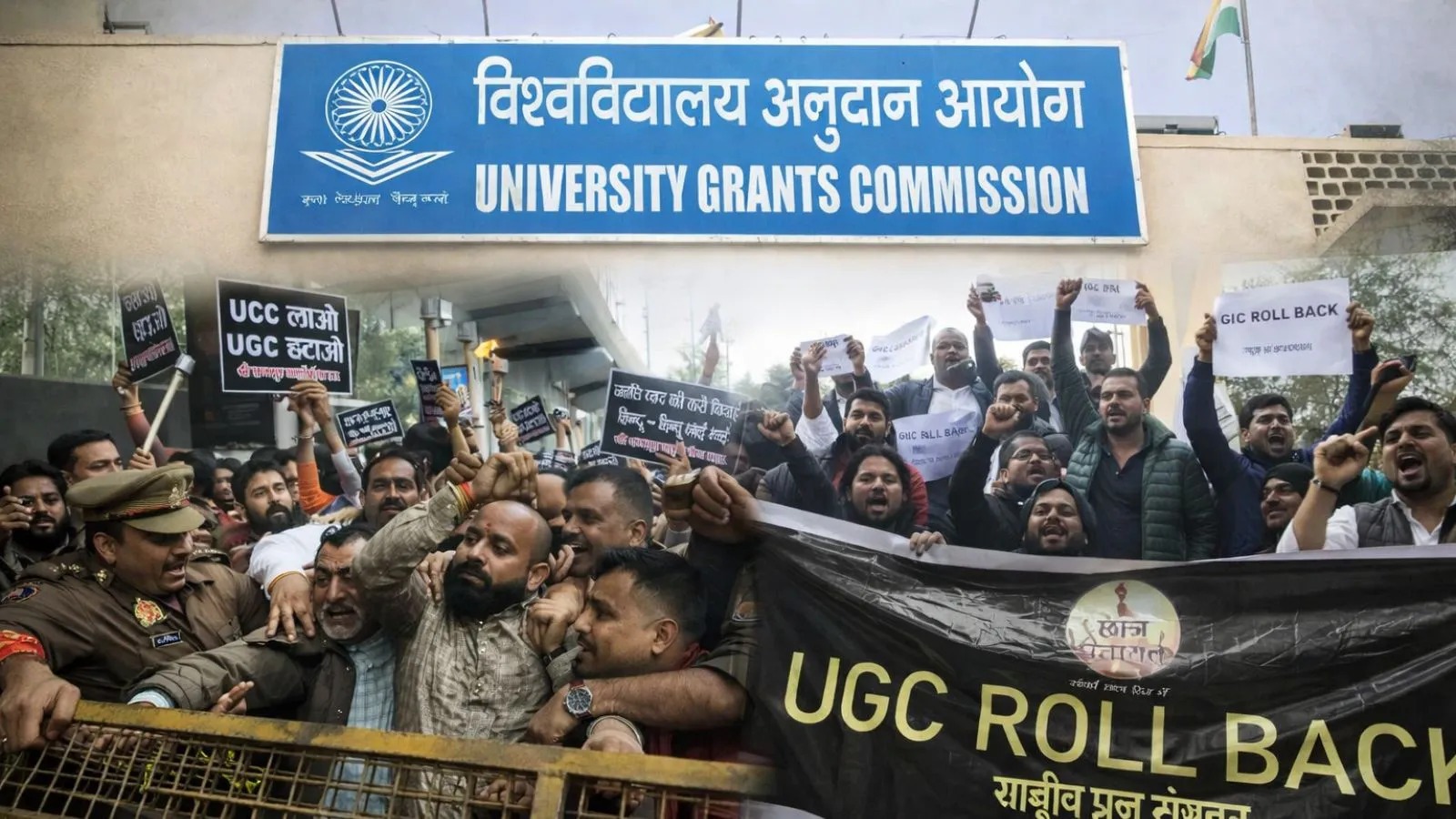
The government made rules to help stop caste discrimination in colleges and universities.
Some people said the rules mainly protected SC, ST and OBC students and did not protect general-category students.
They also worried that people could make false complaints without facing penalties.
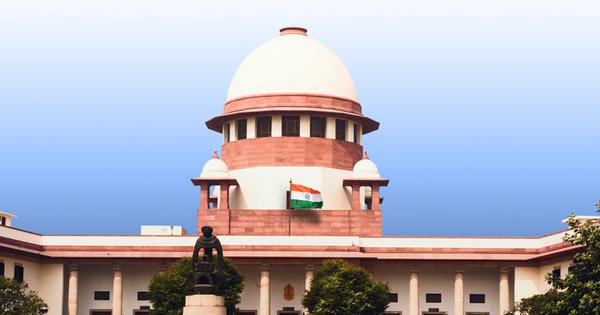
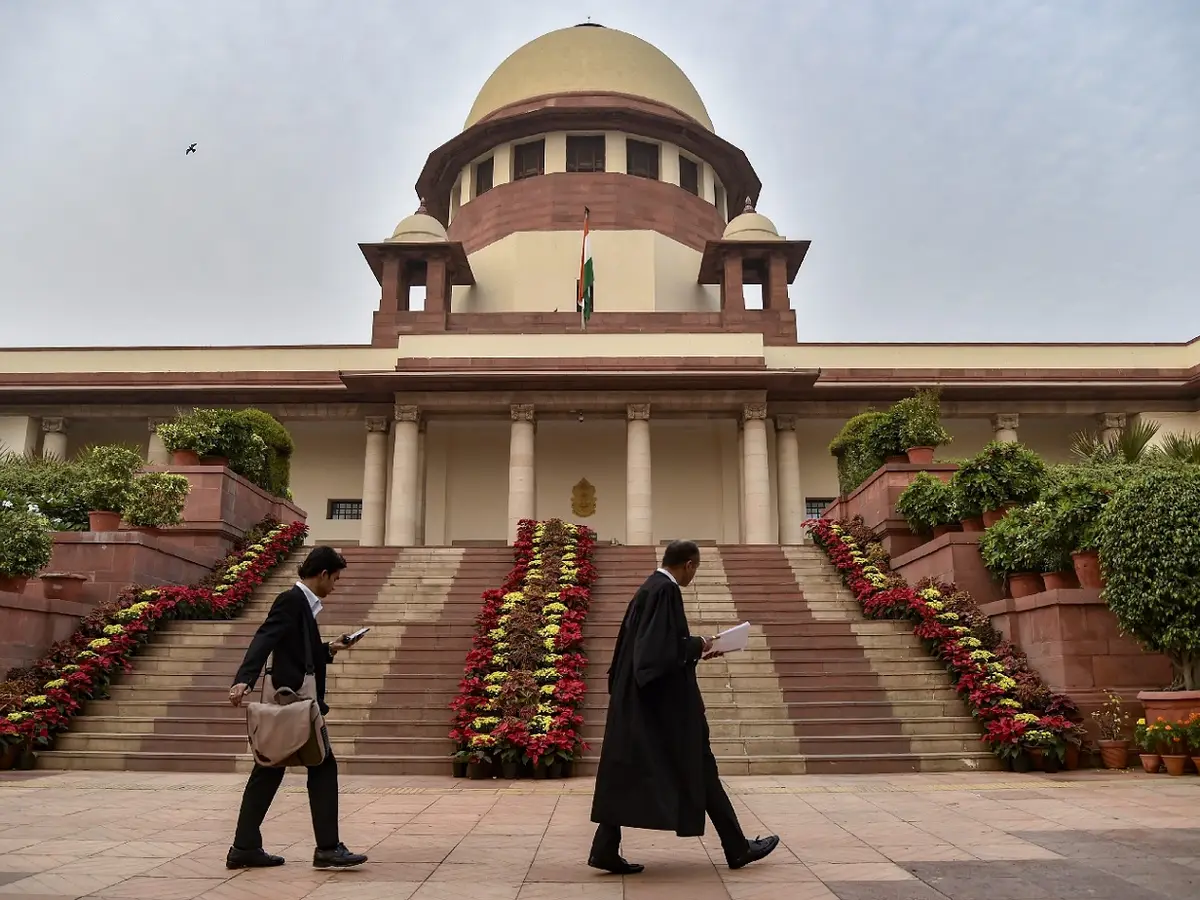
The Supreme Court paused the new rules while it studies these concerns.
The older 2012 rules will continue for now.
The BJP government is reconsidering what to do next.
It wants to respond to upper-caste concerns without upsetting OBC, SC and ST communities.
The issue is politically sensitive because elections are approaching in Uttar Pradesh.
The government may change some rules or create a committee to examine them.

The Centre told the Supreme Court it is reconsidering the UGC’s 2026 equity regulations.
The rules define caste discrimination as affecting SC, ST and OBC students, excluding general-category students.
Petitioners objected to the exclusion and the absence of penalties for allegedly false complaints.
The Supreme Court stayed the 2026 regulations on January 29 and kept the 2012 rules in force.
The BJP faces competing pressure from upper-caste groups and its OBC, SC and ST constituencies.
- Who
- The BJP-led Centre, the University Grants Commission, the Supreme Court, and petitioners including Mritunjay Tiwari, Vineet Jindal and Rahul Dewan.
- What
- The Centre said it is reconsidering the UGC’s Promotion of Equity in Higher Education Institutions Regulations 2026, which have been challenged in court.
- Where
- The dispute is before the Supreme Court of India and concerns higher educational institutions across India, with political attention focused partly on Uttar Pradesh and Bihar.
- When
- The Centre made the statement on Thursday; the Supreme Court stayed the regulations on January 29, 2026.
- Why
- The regulations face legal objections over their definition of caste discrimination, the exclusion of general-category students, and the absence of penalties for false complaints.
Inclusion and Stronger Anti-Discrimination Protections
Equal Protection and Misuse Safeguards
Who should be protected
Inclusion and Stronger Anti-Discrimination Protections
Supporters of the regulations argue that higher-education institutions need stronger protections for SC, ST and OBC students, reflecting concerns raised after alleged caste-based discrimination.
Equal Protection and Misuse Safeguards
Petitioners argue that excluding general- or upper-caste students from the definition ignores discrimination they may experience, regardless of its seriousness or context.
Including OBC communities
Inclusion and Stronger Anti-Discrimination Protections
The regulations specifically include OBCs and require their representation on institutional equity committees.
Equal Protection and Misuse Safeguards
Some BJP and ABVP figures argue that caste-discrimination protections should focus on SC and ST communities, saying there was no OBC demand for this provision.
False complaints and enforcement
Inclusion and Stronger Anti-Discrimination Protections
Supporters of firm enforcement emphasize institutional accountability and action against caste discrimination.
Equal Protection and Misuse Safeguards
Critics object that the final regulations removed penalties for false complaints and could allow misuse; the Supreme Court also said ambiguities and possible misuse required examination.
Political response
Inclusion and Stronger Anti-Discrimination Protections
Withdrawing the regulations could allow the Opposition to portray the BJP as opposed to OBC, SC and ST interests.
Equal Protection and Misuse Safeguards
Keeping the rules unchanged could deepen unease among upper-caste voters, whom BJP leaders identify as an important party constituency.
Key facts
- Regulations
- University Grants Commission (Promotion of Equity in Higher Education Institutions) Regulations 2026.
- Court status
- The Supreme Court stayed the 2026 regulations on January 29 and continued the 2012 regulations.
- Government position
- Solicitor General Tushar Mehta told the Court that the Centre is reconsidering the regulations.
- Main challenge
- Petitioners primarily challenged Section 3(1)(c), which defines caste discrimination as affecting SC, ST and OBC communities.
- Political concern
- The BJP is balancing reported upper-caste unease with the larger OBC, SC and ST electorate.
- Possible next steps
- The Centre could revise provisions, including the treatment of false complaints, or establish a high-level committee.
Quotes
Solicitor General Tushar Mehta
Solicitor General of India speaking to the Supreme Court bench
“"Caste-based discrimination means discrimination only on the basis of caste or tribe against the members of SCs, STs, and OBCs"”
 indianexpress.com
“"The mistake was to include OBCs in the regulation, as discrimination is an issue pertaining to SCs and STs, and not OBCs"”
indianexpress.com
Sources
Related news
Will Upper-Caste Discontent After Bihar Loss Hurt BJP in UP?
Centre Reconsiders UGC Equity Rules Amid Supreme Court Challenge
Centre Reconsiders 2026 UGC Equity Rules Amid Supreme Court Challenge
Karni Sena UGC Rollback Agitation Troubles BJP Before Rajasthan Local Polls
India Roundup: UGC Rules, Sajjan Kumar Death and Court Cases
Nadda Engages Anti-Reservation Protesters Amid BJP’s Upper-Caste Dilemma
BJP Walks Caste Tightrope Between Reservation Protesters and Allies

Yogi Adityanath Urges Youth Innovation At University Foundation Day

Mahayogi Gorakhnath University Marks Five Years With 53 Courses

Chidambaram Opposes One Nation, One Election Before Panel