3 days ago
How to Protect Your Feet During a Long Mountain Trek
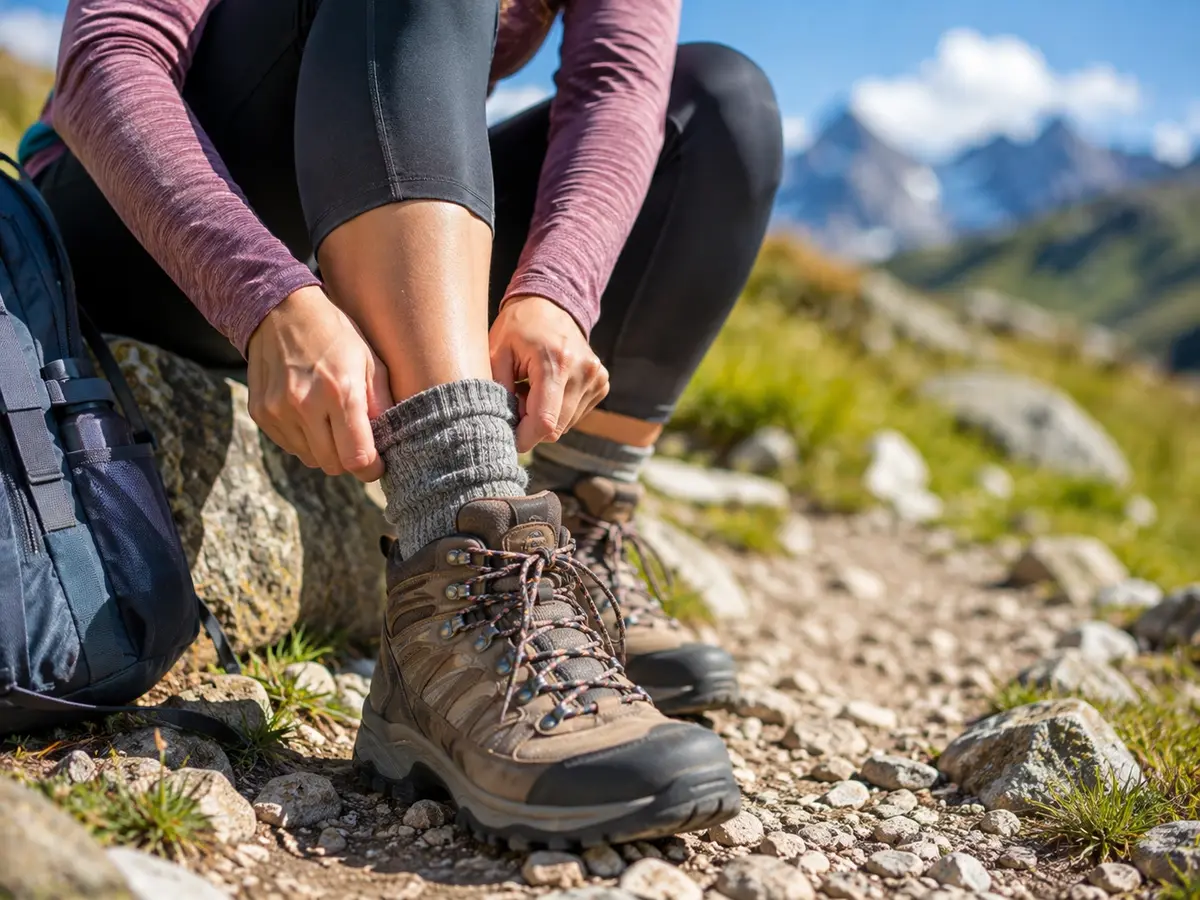

Buy hiking boots half a size larger to accommodate swelling and protect toes downhill.
Choose merino wool socks and avoid cotton, which holds moisture against the skin.
Use heel-lock lacing to reduce heel movement and friction inside the boot.
Apply medical tape to blister-prone areas before walking and treat hot spots immediately.
Air, elevate, and gently massage your feet at camp to support recovery.
- Who
- Mountain trekkers and hikers; podiatrists and outdoor experts provide the advice.
- What
- Guidance on preventing foot pain, blisters, swelling, and toe injuries during long treks.
- Where
- On long mountain treks and at the campsite.
- When
- Before and during the trek, with additional recovery steps at the campsite.
- Why
- To reduce friction, swelling, blisters, bruised toes, and other foot problems that can end a trek.
Key facts
- Boot fit
- Hiking boots should be half a size larger than normal to allow for swelling.
- Recommended socks
- Merino wool socks wick moisture away from the skin.
- Sock material to avoid
- Cotton traps sweat and can increase friction and blister risk.
- Lacing method
- Heel-lock lacing, also called a runner's loop, anchors the heel inside the boot.
- Tape finding
- A 2016 Stanford University study reported that surgical paper tape reduced blister formation by 40 percent.
- Hot-spot response
- Stop immediately and apply a thick blister plaster when friction or a hot spot develops.
- Camp recovery
- Remove boots and socks, elevate the legs for 10 to 15 minutes, and gently massage the soles.
Sources
Related news

Shakti Mohan’s Foot Injury Advice Challenged by Orthopedic Expert
Why Mountain Treks Can Leave Fit People Breathless
Monsoon Makes Six Iconic Indian Trekking Routes Extremely Risky
Kailash Pilgrimage Tests Faith Against Geography, Politics, and Physiology
Why travellers tape suitcase wheels before heading to airports

Ultra-Flat Shoes Spark Back Pain Concerns, Orthopaedic Doctors Warn
Stanford Hoover Fellowship Offers Early-Career Researchers Rs 2.18 Crore

Sanders Backs Gates Warning About AI Job Losses
Court Blocks Trump Student Visa Crackdown Over Political Speech

Judge blocks Trump's deportation efforts over pro-Palestinian speech