2 weeks ago
India Updates Laws and Enforcement for AI-Generated Child Abuse Material
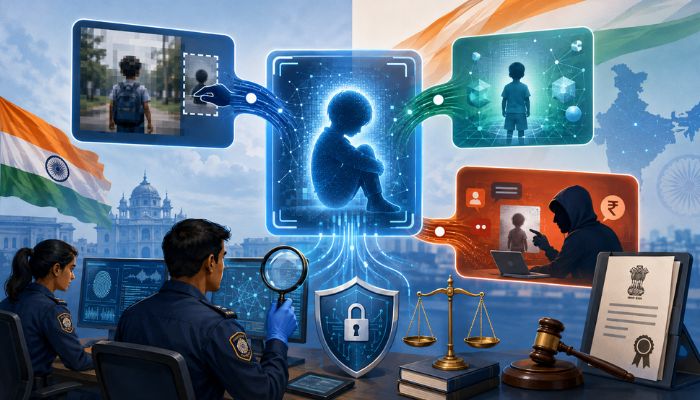
Artificial intelligence can create fake sexual images involving children.
Sometimes the image shows a real child whose photograph was changed.
Sometimes it comes from real abuse material, and sometimes the child in the image may not exist at all.
Fake images can still hurt real children by being used for bullying, threats, blackmail, or grooming.
Indian law already includes computer-generated and altered images in its child-protection rules.
Another law can punish making or sharing digital material showing children in sexual situations.
New rules also require AI and social-media services to try to stop unlawful images from being created or spread.
Police must find out whether a real child is involved, how the image was made, and what the person did with it.
Courts have not yet fully explained how the law applies when the child is entirely fictional.

AI-generated child abuse material can involve real victims, manipulated photographs, derivative abuse imagery, or entirely synthetic children.
India’s POCSO Act has covered computer-generated and modified child depictions since a 2019 amendment.
POCSO Section 11(v) addresses threats involving real or fabricated sexual depictions of children, while Sections 13-15 cover use and possession.
The Information Technology Act’s Section 67B includes creating, distributing, possessing, and accessing digital material depicting children in sexual conduct.
Intermediary rules notified in February 2026 require services to prevent unlawful synthetic content, including CSEAM, but courts must still clarify how fully synthetic imagery fits existing offences.
- Who
- Indian law-enforcement agencies, courts, forensic laboratories, technology platforms, and AI-generation services are involved in responding to AI-generated CSEAM.
- What
- India is applying existing child-protection and information-technology laws while adding platform duties to prevent, detect, and remove AI-generated child sexual exploitative and abuse material.
- Where
- India, with international comparison data cited from the United States National Center for Missing & Exploited Children.
- When
- POCSO was amended in 2019; the Supreme Court issued a relevant judgment on 23 September 2024; and the latest intermediary-rule provisions came into force on 20 February 2026.
- Why
- Generative AI can create or alter abusive-looking images in ways that obscure whether a real child, an actual abuse event, or existing abuse material is involved.
Key facts
- NCMEC reports in 2025
- More than 400,000 CyberTipline reports had a generative-AI nexus.
- Possession or generation reports
- More than 182,000 reports involved possession, generation, or attempted generation of generative-AI CSEAM.
- Material tracked since 2023
- More than 158,000 images and videos have been categorized as generative-AI CSEAM, with over 275 victims identified.
- Key POCSO provision
- Section 2(1)(da) includes digital or computer-generated images indistinguishable from an actual child and modified images appearing to depict a child.
- Threats involving fabricated images
- POCSO Section 11(v) covers threats to use real or fabricated depictions of a child’s body or involvement in a sexual act.
- Latest Indian rules
- The Information Technology (Intermediary Guidelines and Digital Media Ethics Code) Amendment Rules, 2026 were notified on 10 February and relevant provisions took effect on 20 February.
- India-specific data
- A comparable public national breakdown of India-linked AI-generated CSEAM cases is not currently available.
Sources
Related news

India to Keep Internet Free From Unlawful, Obscene Content

India Cuts Deepfake Takedown Deadline From 36 to 3 Hours

India Warns Meta: No Safe Harbour for CSAM Violations
How CBI and INTERPOL track cross-border child abuse networks
Meta Apologizes as India Investigates Child Abuse Ads

Meta Intensifies Efforts to Curb Child Abuse Content

Pune Sugar Trader Loses Rs 3 Crore in Whale-Phishing Attack
Mumbai CA Targeted After Lost Phone, Photos Allegedly Morphed

Mumbai Police Book Two Over Provocative Clash Videos

Two Thane Seniors Lose Rs 15.73 Lakh in Voter Fraud

Two Men Arrested In Pune Cyber Fraud Bank Account Case