

51 mins ago
Iran Nuclear Chief Blocked From IAEA Meeting After US Objection
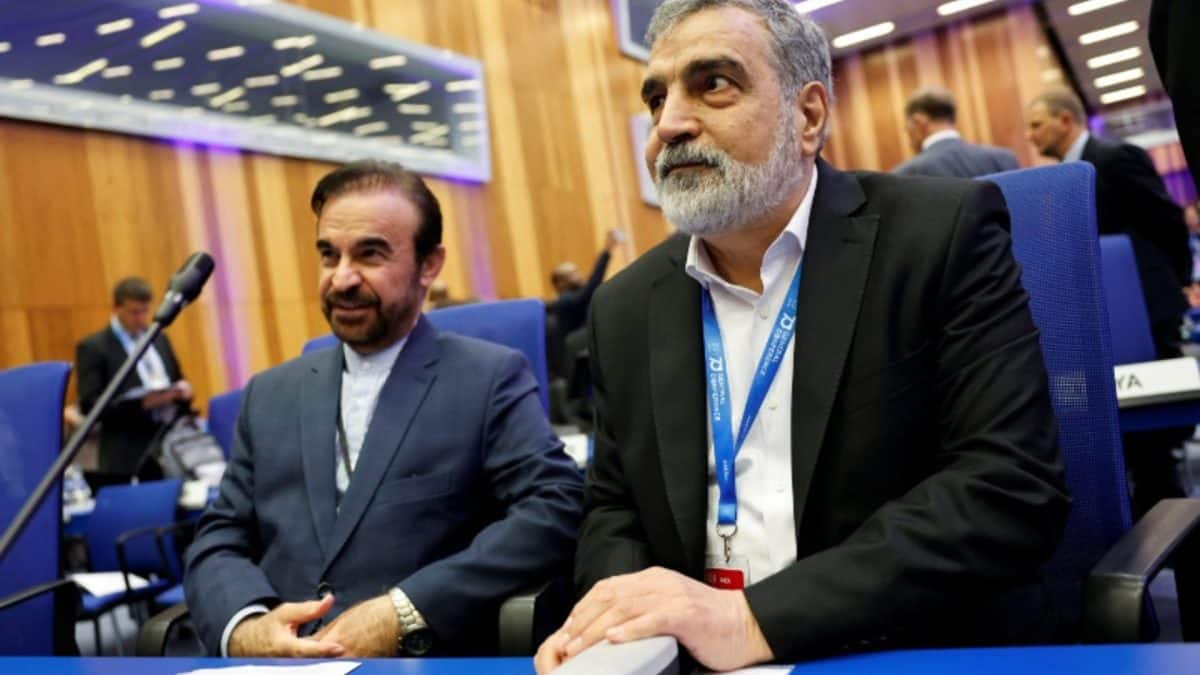
Iran wanted its nuclear chief, Mohammad Eslami, to attend a meeting in Vienna.
Austria, where the meeting was held, did not allow him to enter.
Austria said it had asked for permission to make an exception to a United Nations travel ban.
A United Nations committee rejected that request.
The United States said it objected to allowing Eslami to travel because Iran was not cooperating enough with nuclear inspectors.
Iran and Russia said the decision was unfair and politically motivated.
The meeting involved the International Atomic Energy Agency, which checks countries' nuclear activities.
Inspectors have not been able to visit some Iranian nuclear sites since they were attacked in 2025.
The disagreement is part of a larger dispute over Iran's nuclear program and international sanctions.

Iran said Austria violated its rights by preventing Mohammad Eslami from attending the International Atomic Energy Agency conference in Vienna.
Austria said a United Nations Security Council sanctions committee rejected its request to exempt Eslami from a travel ban.
The United States acknowledged objecting to the exemption, citing Iran's lack of meaningful cooperation with nuclear safeguards.
Iran and Russia condemned the decision as politically motivated and part of broader visa-related pressure against their officials.
The dispute comes as International Atomic Energy Agency inspectors remain unable to access sites affected by the 2025 strikes or verify Iran's uranium stockpile.
- Who
- Mohammad Eslami, Iran's nuclear chief, was barred from attending the meeting; Iran, Austria, the United States, Russia, and the International Atomic Energy Agency were involved.
- What
- Eslami was denied entry to Austria after a request to exempt him from a United Nations travel ban was rejected.
- Where
- Vienna, Austria, at the annual conference of the International Atomic Energy Agency.
- When
- The dispute occurred around the annual International Atomic Energy Agency conference, which began after Eslami reportedly traveled toward Vienna on Saturday.
- Why
- The United States objected to the travel exemption, citing Iran's lack of meaningful cooperation with nuclear safeguards; Austria said the sanctions committee's rejection left it obliged to deny entry.
Iran and Russia
Austria and the United States
Responsibility for the exclusion
Iran and Russia
Iran said Austria violated its obligations as host and accused the United States of pressuring Vienna to block Eslami.
Austria and the United States
Austria said it was required to deny entry after the United Nations sanctions committee rejected its exemption request; the United States said its objection led to the rejection.
Meaning of the decision
Iran and Russia
Iran and Russia described the move as politically motivated and part of a wider campaign to misuse visa restrictions against disfavored countries.
Austria and the United States
The United States said allowing Eslami to attend without meaningful nuclear cooperation would undermine the credibility of the International Atomic Energy Agency.
Legality of sanctions
Iran and Russia
Iran, Russia, and China reject the legality of sanctions restored through the United Nations snapback mechanism.
Austria and the United States
The United States and European governments support the restored sanctions framework, including the travel ban, after concerns about Iran's nuclear activities and safeguards cooperation.
Key facts
- Blocked official
- Mohammad Eslami, head of Iran's Atomic Energy Organisation
- Host country
- Austria
- Meeting
- Annual general conference of the International Atomic Energy Agency
- Travel decision
- A United Nations Security Council sanctions committee rejected Austria's exemption request
- United States position
- Washington said it objected to the exemption because Iran was not meaningfully cooperating with nuclear safeguards
- Iranian uranium stockpile
- The International Atomic Energy Agency reported 440.9 kilograms enriched to up to 60 percent purity
- Inspection dispute
- The International Atomic Energy Agency has been unable to access Iranian nuclear sites affected by the June 2025 strikes
Quotes
Christian Ebner
Austria’s ambassador to the IAEA
“By obstructing our full and effective participation, the denial of access contravenes both the letter and the spirit of the legal framework governing attendance at meetings of the International Atomic Energy Agency”
 deccanchronicle.com
“The cancellation and so-called legal justification advanced for it are a stark indication of a political act and advanced formal politicisation of this organisation”
 firstpost.com
Preston Wells Griffith III
US ambassador
“While we are focused on a diplomatic solution to the challenges posed by Iran's nuclear programme, we could not allow a UN designated official to travel … without any meaningful cooperation on nuclear safeguards”
deccanchronicle.com
“The United States objected to the exemption request, which per the rules of the UN sanctions committee resulted in the UN Security Council denying the request”
firstpost.com
Sources
Related news

Iranian Nuclear Chief Blocked From IAEA Vienna Conference

Iran Nuclear Impasse Deepens After U.S. Wins IAEA Vote

UN Security Council Faces Iran Sanctions Panel Renewal Showdown
US Allies Seek UN Referral Over Iran Nuclear Access
Global roundup covers Iran warning, shootings, courts and AI bans
Iran Signals Possible NPT Exit as Nuclear Tensions Escalate

BRICS New Delhi Declaration Signals Global South Challenge Western Order
BRICS Summit Rebukes Trump and Expands India’s Strategic Space

Fuel Prices Hold Steady as Saudi Pipeline Closure Lifts Crude
