1 week ago
Readers Urge Caution, Accountability and Support for Farmers

Readers wrote about several important problems facing society.
Some said people must check whether online images are real before sharing them.
They want social media companies to label images made or changed by artificial intelligence.
They also want schools and news organisations to teach people how to spot false information.
Another reader said governments should publish clear economic numbers instead of relying only on political speeches.
A different reader explained that police must protect people while also respecting peaceful protests.
The writer said video recordings could help show whether police or protesters acted improperly.
Another reader said farming programmes should help tenant farmers, not only people who own land.
The letters together ask for more honesty, careful decision-making and public support.

Readers called for rigorous verification and clear labels for AI-generated or substantially altered images.
They urged schools, colleges and news organisations to strengthen media literacy and explain image-verification methods.
One writer sought quarterly, politically neutral reporting on unemployment, inflation and other performance indicators.
A reader said police need flexibility, video evidence and balanced procedures when protests become violent.
Another urged governments to extend agricultural schemes, credit and price support to tenant farmers.
- Who
- Readers of The Hindu, including A Myilsami, Swathi Senthilkumar, Prajesh Paramasivan, Dr O Prasada Rao and Pratapa Reddy Yaramala.
- What
- They expressed views on AI-generated images, public confidence, protest policing and agricultural support for tenant farmers.
- Where
- The contributors wrote from Sulur, Coimbatore, Neelambur, Hyderabad and Tiruvuru; the agricultural discussion concerned Musunuru in Eluru district and India.
- When
- The views were published on August 26, 2026; they referred to articles published on August 24 and 25, 2026.
- Why
- They sought stronger verification, transparent government reporting, balanced protest management and more inclusive agricultural policies.
Safeguards and flexibility
Rights and accountability concerns
Handling violent protests
Safeguards and flexibility
Police supporters argue that officers must act when demonstrations involve violence, property damage, attacks or major road and railway blockades.
Rights and accountability concerns
Critics warn that measures such as lathi charges or tear gas can cause injuries and may be viewed as excessive violations of democratic rights.
Rules for police action
Safeguards and flexibility
The letter supports giving police flexibility because rigid standard operating procedures cannot cover every situation, while continuous recording can protect responsible officers.
Rights and accountability concerns
Public scrutiny remains necessary because police may be accused of brutality when they act and of failing in their duty when they do not.
Agricultural assistance
Safeguards and flexibility
The letter argues that tenant farmers, who cultivate much land, should receive institutional credit, market intervention and other government support.
Rights and accountability concerns
It notes that existing programmes are largely confined to landowners, leaving tenant farmers without equal access to benefits.
Key facts
- Publication date
- August 26, 2026
- AI-image recommendation
- Verify an image's source, context and authenticity before sharing or publishing it.
- Media-literacy proposal
- Schools, colleges, news organisations and platforms should help people identify manipulated material.
- Economic-transparency proposal
- Quarterly public reporting should cover indicators such as unemployment and inflation without political framing.
- Police-accountability proposal
- Continuous video recording should be accepted as evidence during protest policing.
- Agricultural inclusion proposal
- Government schemes should provide tenant farmers with institutional credit and protection against falling prices.
- Popcorn farming reference
- The letter said more than 17,500 farmers in eight states cultivate nearly 40,000 acres through the Popcornica facility.
Sources
Related news

Real Images Face Ferocious Battle Against AI-Generated Fakes

Phone Authenticity Tools May Not Solve The Fake Image Crisis
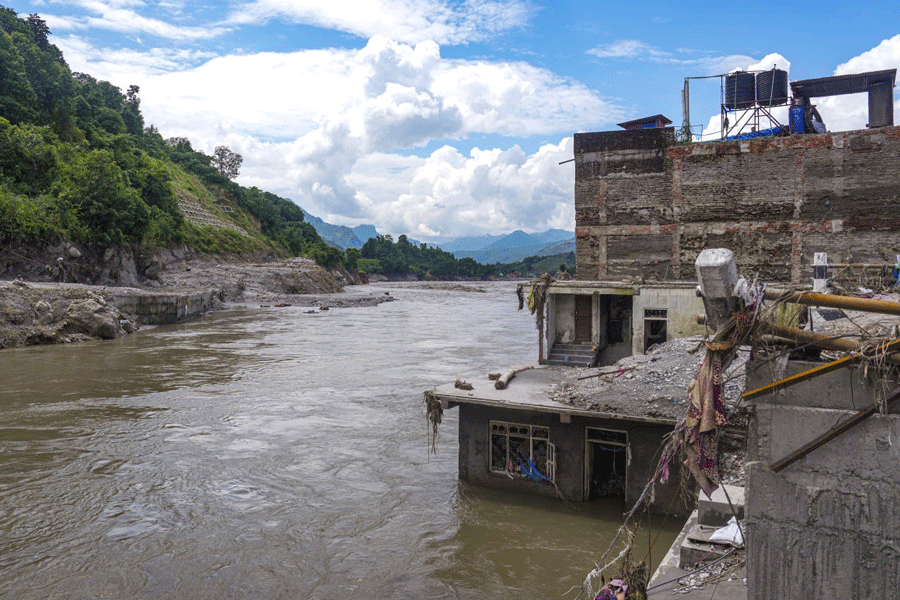
Nepal Cracks Down on Fake Flood Content Online

Bandi Sanjay Highlights Visual Journalists’ Vital Role in Democracy

Rahul Kanwal Named IAA Media Person of the Year

Andhra Pradesh Principal Urges Telugu Media To Verify Facts
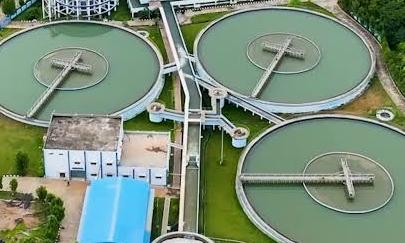
₹3,050-Crore Godavari Water Grid Targets Rural Drinking Water
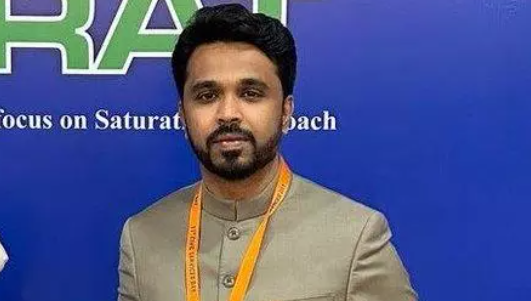
AP Cadre IAS Officer Prasanna Venkatesh Named NTA Director
Visakhapatnam–Vijayawada Jana Sadharan Special Train Runs For Three Days

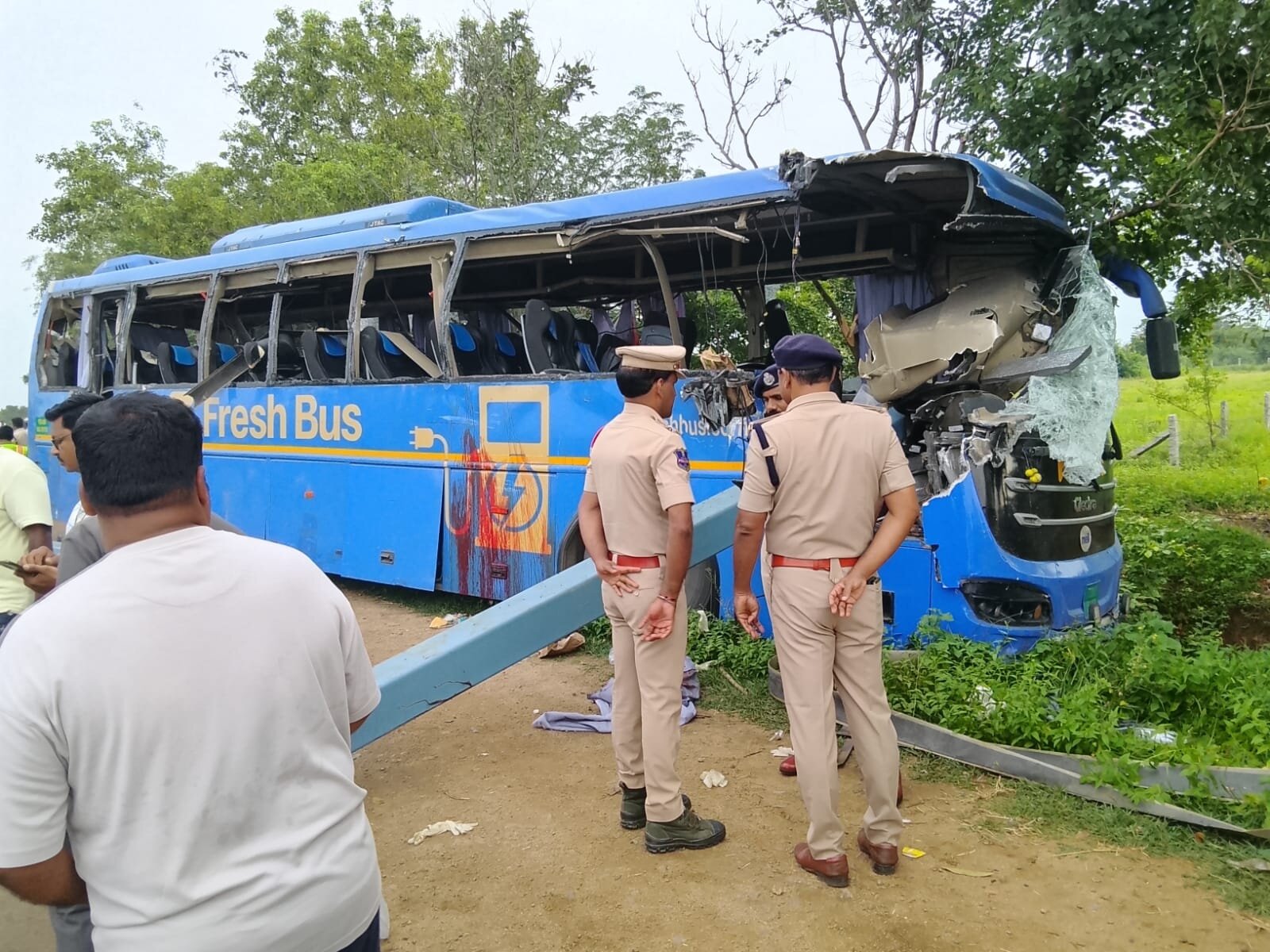
Six killed, 12 injured as bus hits truck in Suryapet

Six killed, 17 injured as Telangana electric bus hits truck