

3 weeks ago
BrahMos: Why global militaries are eyeing India's cruise missile
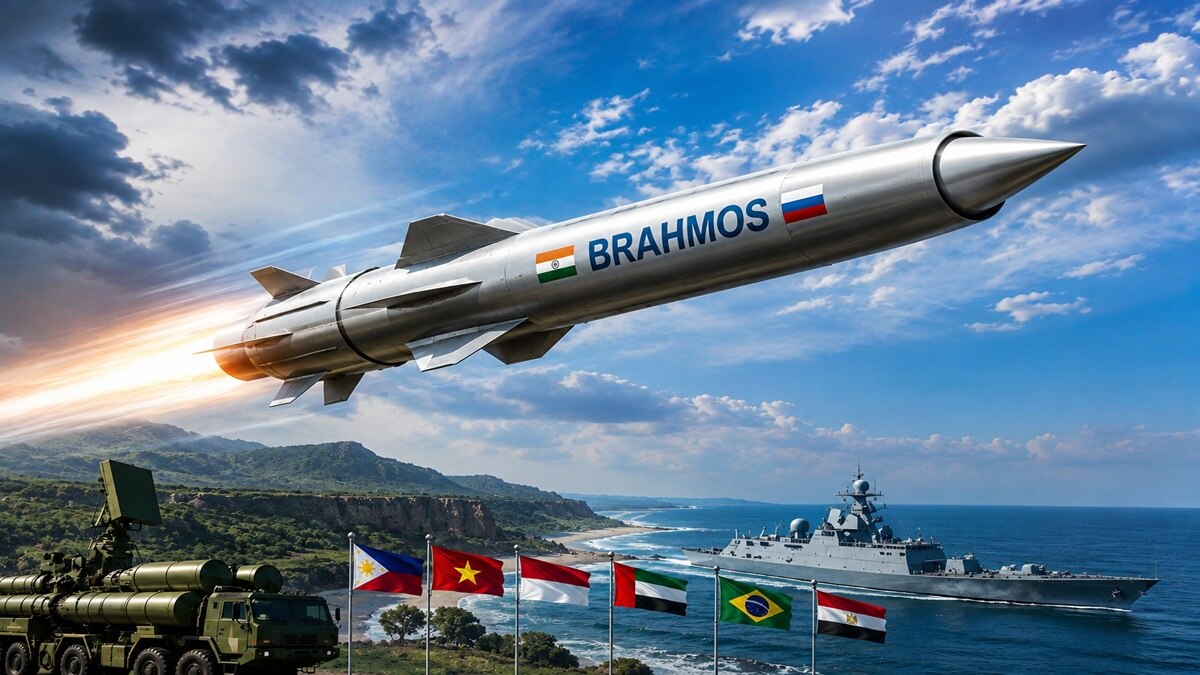
A missile is like a very fast rocket that countries use to protect themselves.
India and Russia worked together to build a missile called BrahMos.
BrahMos flies about three and a half times faster than the speed of sound.
That makes it one of the fastest cruise missiles in the world.
Because it is so fast, enemies have only seconds to react and find it very hard to stop.
The missile can be launched from the ground, from ships, or from aeroplanes.
Many countries, including the Philippines and Indonesia, want to buy it.
But each missile costs about three to five million dollars, which is very expensive.
That is why some countries choose cheaper, slower missiles instead.
India hopes BrahMos will become its most famous weapon sold around the world.

BrahMos, an Indo-Russian supersonic cruise missile in service since 2006, flies at about Mach 3.5 with a range of roughly 290-500 km and a weight of around 3,000 kg.
Operated by India and the Philippines and launchable from land, sea and air, it is regarded as one of the fastest operational cruise missiles in the world.
At an estimated $3-5 million per unit, it costs more than rivals such as France's Exocet and the US Tomahawk, but its speed delivers a kinetic punch subsonic missiles cannot match.
The Philippines was the first major export buyer, signing a $375 million deal in January 2022; Indonesia is in advanced negotiations on a reported $450 million contract.
Vietnam, the UAE and Saudi Arabia are reportedly in active talks, with Operation Sindoor said to have boosted inquiries from regional defence establishments.
- Who
- India and Russia, via BrahMos Aerospace, build the missile; India and the Philippines currently operate it, with Indonesia, Vietnam, the UAE, Saudi Arabia and other countries as prospective buyers.
- What
- The Indo-Russian BrahMos supersonic cruise missile is emerging as India's flagship defence export because of its Mach 3.5 speed, precision strike capability, combat validation and multi-platform versatility.
- Where
- India, with market interest across South East Asia, West Asia and Latin America; other interested countries include Argentina, Brazil, Chile, Egypt, Brunei, Malaysia, Oman, South Africa and Venezuela.
- When
- The missile entered service in 2006 and the Philippines signed its deal in January 2022; the publication date of the assessment report is not stated in the article.
- Why
- Global militaries want a high-end stand-off strike capability: BrahMos's speed compresses enemy reaction time, complicates interception and multiplies impact energy, and Operation Sindoor reportedly drove a rise in inquiries.
Cost-Conscious Buyers
Capability-First Militaries
Is the premium price justified?
Cost-Conscious Buyers
At an estimated $3-5 million per missile, BrahMos costs more than systems like Exocet or Tomahawk, which can limit adoption among price-sensitive buyers.
Capability-First Militaries
The speed, survivability and precision of BrahMos justify the premium, as its Mach 3.5 kinetic punch is several times higher than that of subsonic peers.
Speed versus range design
Cost-Conscious Buyers
Long-range subsonic alternatives such as the US Tomahawk (roughly 1,600-2,500 km) offer greater reach and proven land-attack performance.
Capability-First Militaries
BrahMos's Mach 3.5 velocity compresses enemy reaction time to minutes or seconds and complicates interception, and it remains faster overall than dual-speed rivals like China's YJ-18.
Key facts
- Missile
- BrahMos supersonic cruise missile (Indo-Russian)
- Speed
- About Mach 3.5
- Range
- Roughly 290-500 km
- Weight
- Around 3,000 kg
- Estimated unit cost
- $3-5 million
- Current users
- India and the Philippines
- Philippines deal (January 2022)
- $375 million
- Indonesia deal (reported, in talks)
- About $450 million
Sources
Related news
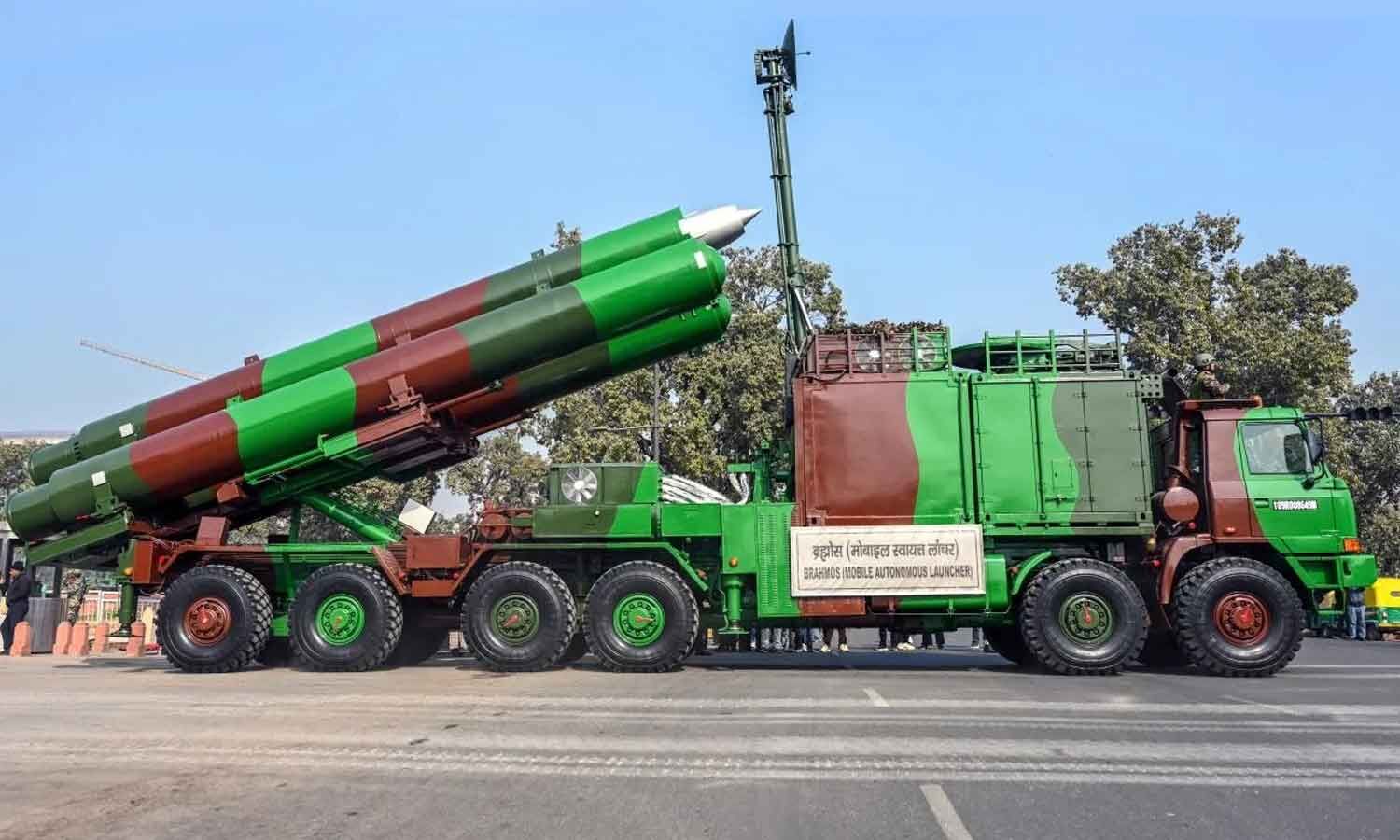
BrahMos missile emerges as star of India's defence export push

Thailand evaluates BrahMos as more nations seek India's missile
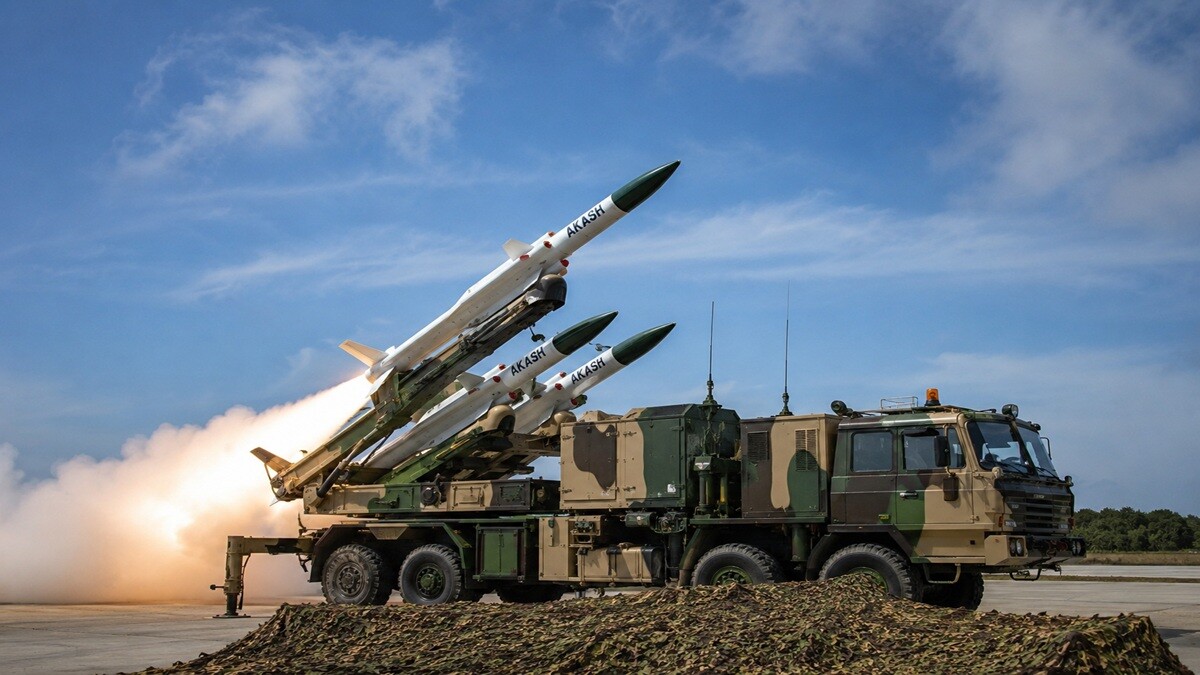
Akash Missile Gains Combat Credibility and Global Export Momentum
Can India's homegrown Astra rival battle-tested AIM-120 AMRAAM?
India Targets Top 25 Arms Exporters Amid Global Expansion
India Turns to Britain’s Low-Cost Martlet Missile for Drones
Indian Seafarers Face Risks Sailing Through Strait of Hormuz

US Launches Strikes on Iran After Attacks on Bases

Bessent Predicts Pipelines Will Bypass Strait of Hormuz
Qatar Urges United States and Iran to Resume Talks

Iran Signals Ceasefire Return If US Honors Commitments
