1 hr ago
ISRO Staff Question Space Privatisation After Successful GSLV Launch
India’s space agency, ISRO, is allowing private companies to do more space work.
Some ISRO employees are worried that this could reduce the agency’s important jobs and change its future.
They wrote to the ISRO chairperson asking whether a plan to shift more work has officially been approved.
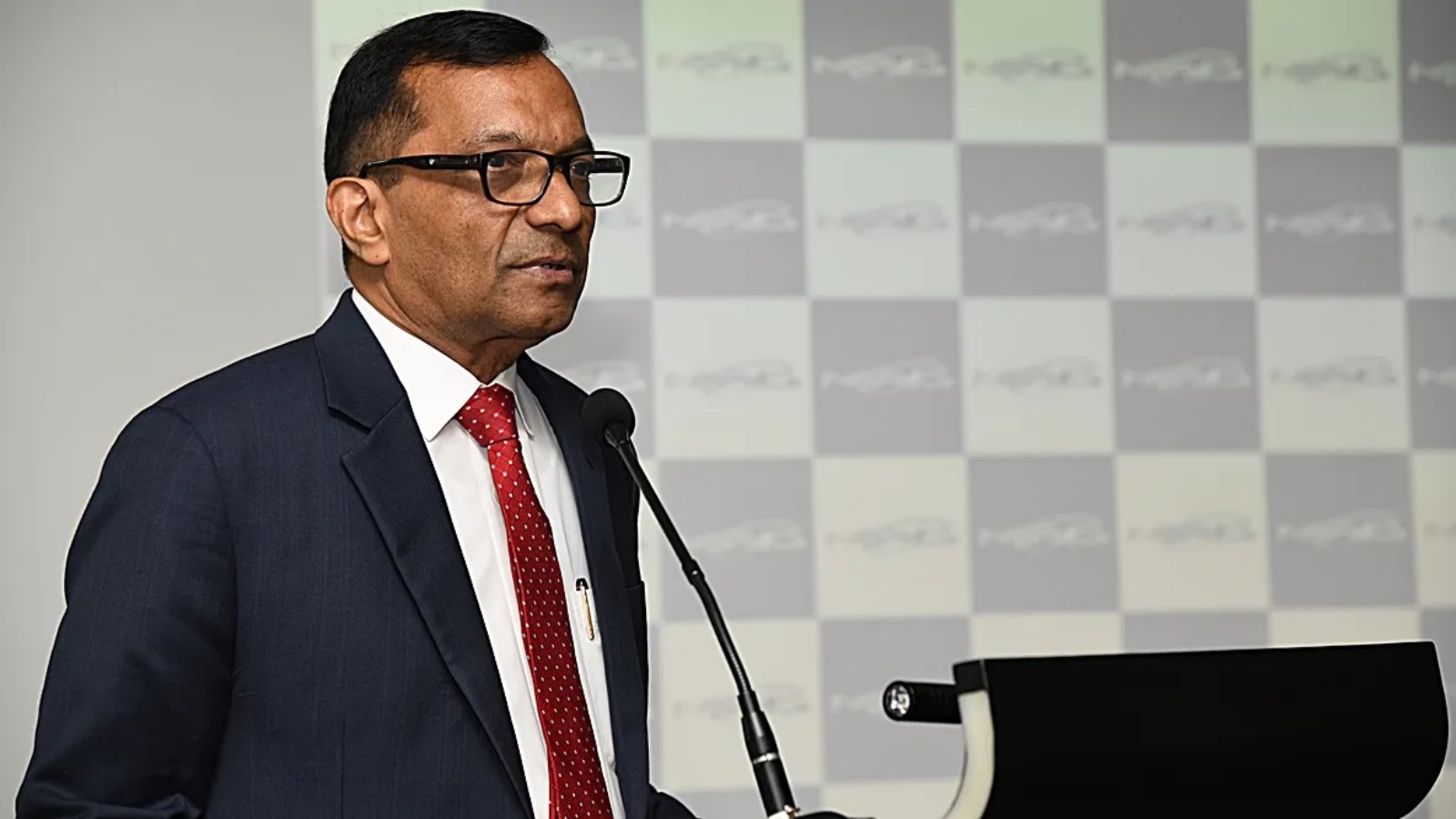
The concerns came after comments by Pawan Goenka, who leads IN-SPACe.
He said private companies or public-sector organizations might eventually build launch vehicles and regular satellites.
The employees want to know what will happen to current workers and future hiring.
The government’s approach is for ISRO to focus on major scientific and strategic missions while private companies handle more routine work.
Analyst Ajay Lele said private participation is useful but argued that ISRO should still be able to launch important satellites itself.

ISRO employee associations asked Chairperson V Narayanan to clarify the agency’s future role under space-sector privatisation.
The letter followed remarks by IN-SPACe Chairperson Pawan Goenka that private companies or public-sector undertakings could eventually manufacture launch vehicles and routine satellites.
Employees questioned whether Goenka’s comments reflected an approved government policy and sought details on timelines, legal authority, staffing, and consultation.
The associations warned that withdrawing from ISRO’s core activities could undermine its viability, recruitment, and public-sector career appeal.
Analyst Ajay Lele supported opening the sector to private participation but said ISRO should retain launch and vehicle-development capabilities, especially for strategic missions.
- Who
- Employee associations across the Indian Space Research Organisation, including representatives from the Space Applications Centre and Liquid Propulsion Systems Centre, wrote to Chairperson V Narayanan; the letter responds to comments by Pawan Goenka.
- What
- The associations requested written clarification on the direction, authority, timeline, and workforce implications of India’s space-sector privatisation drive.
- Where
- The letter was sent within the Indian Space Research Organisation and addressed to its chairperson; the cited remarks were made at a Business Today event.
- When
- The letter was sent on Friday, shortly after the successful GSLV launch; Goenka made the remarks at a Business Today event on August 21.
- Why
- The associations said the comments raised uncertainty about ISRO’s public role, core activities, employee protections, recruitment, and the transfer of publicly funded technologies to private companies.
Employee Concerns
Privatisation Supporters
ISRO’s future role
Employee Concerns
Employee associations say launch-vehicle manufacturing and routine satellite work are part of ISRO’s core competence, and withdrawing from them could threaten the organisation’s long-term viability.
Privatisation Supporters
The government’s stated approach is for ISRO to mentor private companies, shift routine work to them, and concentrate on missions of scientific and strategic significance.
Impact on workers and recruitment
Employee Concerns
The associations say employees face uncertainty and that shrinking recruitment could discourage talented professionals from pursuing ISRO careers.
Privatisation Supporters
Supporters of the sector’s opening argue that some functions will naturally move to private players as ISRO focuses on major programmes such as Gaganyaan, the Bharatiya Antariksh Station, and a crewed lunar mission.
Launch capability
Employee Concerns
The associations are seeking clarification on whether public-sector undertakings will also be excluded from manufacturing work and whether ISRO will retain its existing capabilities.
Privatisation Supporters
Ajay Lele said private participation was overdue but cautioned that ISRO should remain capable of developing vehicles and launching some of its own, particularly strategic, satellites rather than becoming completely dependent on private providers.
Key facts
- Agency involved
- Indian Space Research Organisation (ISRO)
- Letter recipient
- ISRO Chairperson V Narayanan
- Policy body
- Indian National Space Promotion and Authorization Centre (IN-SPACe), under the Department of Space
- Trigger for letter
- Remarks by Pawan Goenka at a Business Today event on August 21
- Recent launch
- An Earth observation satellite was successfully launched aboard a GSLV rocket after a months-long hiatus
- Technology transfers
- ISRO has transferred around 120 technologies to industry, including the Small Satellite Launch Vehicle and PSLV
- New spaceport
- The spaceport being developed at Kulasekarapattinam is expected to focus on small satellite launches
Quotes
Pawan Goenka
Chairperson of IN-SPACe and chair of the board of governors at IIT Madras
“Eventually, ISRO will not manufacture any launch vehicles, that will be done by the private sector or PSU. They will not do any day in day out kind of satellites. They will do the satellites that are for special purpose, for orbits for scientific research or to develop new technology that will then get transferred to the private sector.”
 indianexpress.com
“The situation should not be like NASA, where they are completely dependent on SpaceX for their launches. ISRO should remain capable of launching some of its own satellites, especially the strategic ones.”
indianexpress.com
Sources
Related news
ISRO Staff Seek Written Clarity on Private-Sector Space Shift

Congress Accuses Modi Government of Planning ISRO Privatization

Congress Raises Concerns Over ISRO’s Future Role

ISRO Shifts Launch Vehicle Manufacturing Toward India’s Private Sector
ISRO Says Private Sector Needed To Meet India’s Space Needs

Chandigarh University hosts National Space Technology Conclave with ISRO, IIST
UPSC Quiz Reviews Ten Current Affairs Topics for Prelims
Katalyst Spacecraft Reaches Failing Swift Observatory, Turns Away

Report Labels India’s Waste-to-Energy Plants Most Polluting Industrial Sector
UPSC Key Highlights India’s Diplomacy, Economy, Climate and Science