1 week ago
ISRO Shifts Launch Vehicle Manufacturing Toward India’s Private Sector

ISRO is changing how it works with the space industry.
It plans to spend more time on research and difficult space missions.
Private companies and public sector organizations would make launch vehicles and regular satellites.
India has about 450 space startups that could help with this work.
The change is connected to plans for Gaganyaan and a future Bharatiya Antariksh Station.
India also hopes to land people on the Moon by 2040.
Some industry leaders say this could create more businesses and investment.
Others say strong safety, security and intellectual-property rules will be needed.

ISRO plans to focus on research, development and major space missions rather than manufacturing launch vehicles.
Private companies and public sector undertakings are expected to produce launch vehicles and routine satellites.
The shift comes as India prepares for Gaganyaan, a Bharatiya Antariksh Station by 2035 and a Moon landing target for 2040.
India has around 450 space startups spanning upstream and downstream space activities.
Industry representatives say the change could expand manufacturing, attract investment and grow commercial space applications.
- Who
- The Indian Space Research Organisation, private space companies, public sector undertakings and Indian space-industry representatives.
- What
- ISRO is shifting launch-vehicle and routine-satellite manufacturing toward private companies and public sector undertakings while focusing on research, development and major missions.
- Where
- India, including the Satish Dhawan Space Centre in Sriharikota.
- When
- The announcement was reported on Saturday; the article’s image is dated January 11, 2026.
- Why
- The shift is intended to support India’s expanding space ambitions and encourage manufacturing, investment and commercial applications.
Supporters of the Shift
Calls for Safeguards
Who should manufacture launch vehicles?
Supporters of the Shift
ISRO officials and industry representatives describe private-sector and public-sector manufacturing as the natural next step, potentially helping companies scale and compete globally.
Calls for Safeguards
The transition must include clear regulatory oversight, security vetting and safeguards to keep critical intellectual property and manufacturing capability within India.
Where will space growth come from?
Supporters of the Shift
Industry leaders emphasize upstream manufacturing and launch capabilities as evidence that Indian companies can move from innovation to execution and attract investors.
Calls for Safeguards
Other representatives stress that downstream uses—such as earth observation, satellite communications, geospatial intelligence and space-data analytics—will be equally important for long-term revenue.
Key facts
- Organizations
- Indian Space Research Organisation will focus on research, development and major space missions.
- Manufacturing
- Private companies and public sector undertakings are expected to manufacture launch vehicles and routine satellites.
- Startups
- India has around 450 space startups.
- Crewed mission
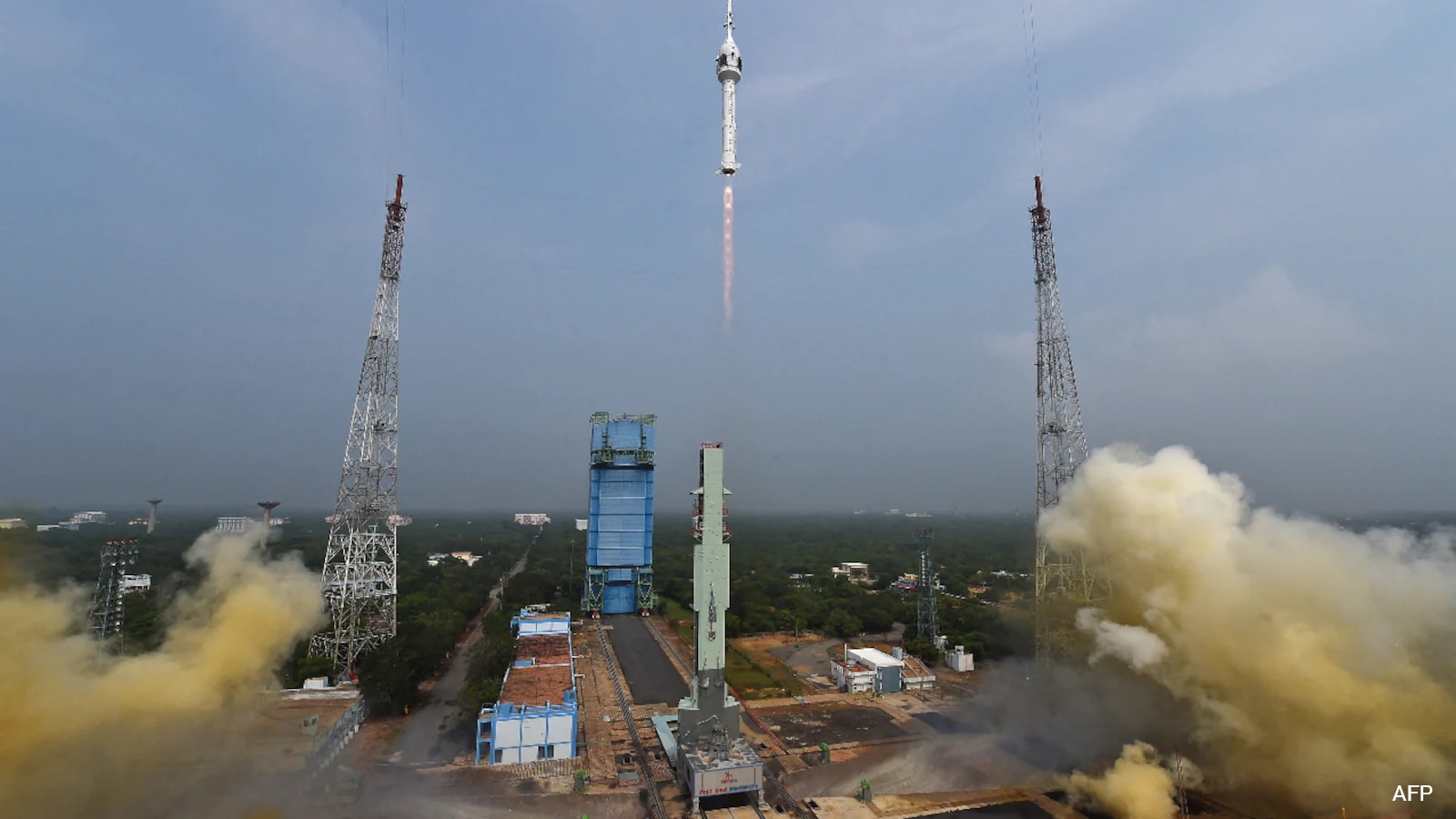
- India is preparing for a crewed orbital spacecraft mission next year, according to the article.
- Space station
- The Bharatiya Antariksh Station is planned for 2035.
- Moon target
- India is aiming for an Indian landing on the Moon by 2040.
- Industry segments
- Upstream activities support space assets, while downstream businesses use satellite capabilities to create applications and services.
Quotes
Krishanu Acharya
CEO and cofounder of Suhora Technologies
“This is a natural next step in how ISRO and private industry work together. ISRO will push further into research and frontier technology while private players like us take on more of the manufacturing and operational scale,”
 rediff.com
“As more satellites reach orbit, that raw data only becomes valuable once it's converted into usable insight, and that's where downstream players will increasingly drive revenue for India's space economy,”
rediff.com
Lieutenant General A K Bhatt
Retired lieutenant general and director general of the Indian Space Association
“Recent successes by private space companies have demonstrated India's ability to build capabilities at a globally competitive level, ”
rediff.com
Sources
Related news
India registers 440 space startups as private investment surges

India’s Space Sector Expands With 440 Startups After Reforms

India's space sector sees 440 startups; 18 win IN-SPACe authorisations

Congress Accuses Modi Government of Planning ISRO Privatization
ISRO Targets Gaganyaan Uncrewed Launch Within Four Months

India’s Space Economy Targets $45 Billion by 2030

108-Country Girl-Powered ShaktiSat Sets Sights on Moon

India’s Space Economy Projected to Reach $40–45 Billion

Starlink’s Rural India Promise Faces Security-Related Launch Delays