

1 hr ago
NPCI Says UPI Charges May Affect Limited Transaction Value

UPI is a payment system used by millions of people and businesses in India.
A new merchant fee could apply to some UPI payments.
NPCI chief Dilip Asbe said consumers are most at risk of seeing charges on about 10% of the total transaction value.
Large companies are expected to pay most of the fees themselves.
This is because they already accept credit cards and include those costs in their prices.
Most UPI transactions are not expected to attract charges.
NPCI and banks say they will work to prevent businesses from passing fees on to customers.
Part of the collected money could help small shops obtain payment equipment such as soundboxes.

NPCI chief Dilip Asbe said only about 10% of UPI transaction value risks charges being passed to consumers.
Businesses with annual turnover above ₹1,000 crore are expected to account for 80% of MDR collections.
About 96% of UPI transaction volume and 75% of its value are not expected to attract charges.
NPCI estimates around 60 million active UPI merchants, with 75% of QR-code merchants receiving no transaction above ₹2,000.
Five percent of MDR collections could fund a ₹3,000 crore, three-year initiative to expand UPI acceptance among small merchants.
- Who
- NPCI chief Dilip Asbe, NPCI, banks, large businesses and UPI merchants.
- What
- NPCI explained that a limited share of UPI transaction value could result in merchant discount rate charges being passed to consumers.
- Where
- At the 13th SBI Banking & Economics Conclave 2026 in India.
- When
- September 24, 2026; the comments were made at the 13th SBI Banking & Economics Conclave 2026.
- Why
- To explain the likely consumer impact of proposed MDR charges and outline support for expanding UPI acceptance among small merchants.
Limited Consumer Impact
Potential Consumer Charges
Who bears the fees
Limited Consumer Impact
NPCI says large businesses that already accept credit cards are likely to absorb most proposed UPI costs rather than pass them to customers.
Potential Consumer Charges
Businesses may pass some MDR costs to consumers, particularly within the roughly 10% of transaction value identified as potentially affected.
Scale of the impact
Limited Consumer Impact
NPCI says 96% of transaction volume and 75% of transaction value are not expected to attract charges.
Potential Consumer Charges
The remaining transactions could still expose some consumers to additional costs, so NPCI, banks and payment providers must work to limit pass-through charges.
Use of MDR collections
Limited Consumer Impact
NPCI proposes directing 5% of MDR collections to support young entrepreneurs and expand UPI acceptance among small merchants.
Potential Consumer Charges
The articles do not report a separate opposition to the proposed fund, but its design remains under discussion with the Reserve Bank of India and other stakeholders.
Key facts
- Potential consumer impact
- About 10% of overall UPI transaction value could face charges being passed to consumers.
- Transactions not expected to attract charges
- About 96% of transaction volume and 75% of overall value.
- Largest MDR contributors
- Businesses with annual turnover above ₹1,000 crore are expected to provide 80% of MDR collections.
- UPI merchant base
- Approximately 60 million active merchants.
- Small-merchant support fund
- Five percent of MDR collections could be directed to a proposed fund.
- Potential fund size
- Around ₹3,000 crore over three years.
- Payment infrastructure
- India has an estimated 20–25 million soundboxes, according to Asbe.
Quotes
Dilip Asbe
NPCI managing director and CEO
“However, (for) the remaining 10 per cent, yes, there is a possibility, and the banks and NPCI, the providers and payment educators, we have to work towards ensuring that the charges are not passed back to them”
 rediff.com
 thehindubusinessline.com
“About 80 per cent of the MDR is collected from the businesses which are doing more than about Rs 1,000 crore per annum”
rediff.com
thehindubusinessline.com
Sources

Related news
NPCI Says October 15 UPI MDR Won’t Disrupt Payments
UPI Sets 0.4% MDR on High-Value Merchant Payments

UPI MDR Begins October 15, Merchants Face Charges, Customers Don’t
Panel to Decide UPI MDR Charges Above ₹2,000 Soon

New UPI MDR Rules Keep Consumers Free, Charge Eligible Merchants

India Plans Daily Monitoring of New UPI Merchant Fee
Apple Pay India Launch Faces UPI-Dominated Payments Market
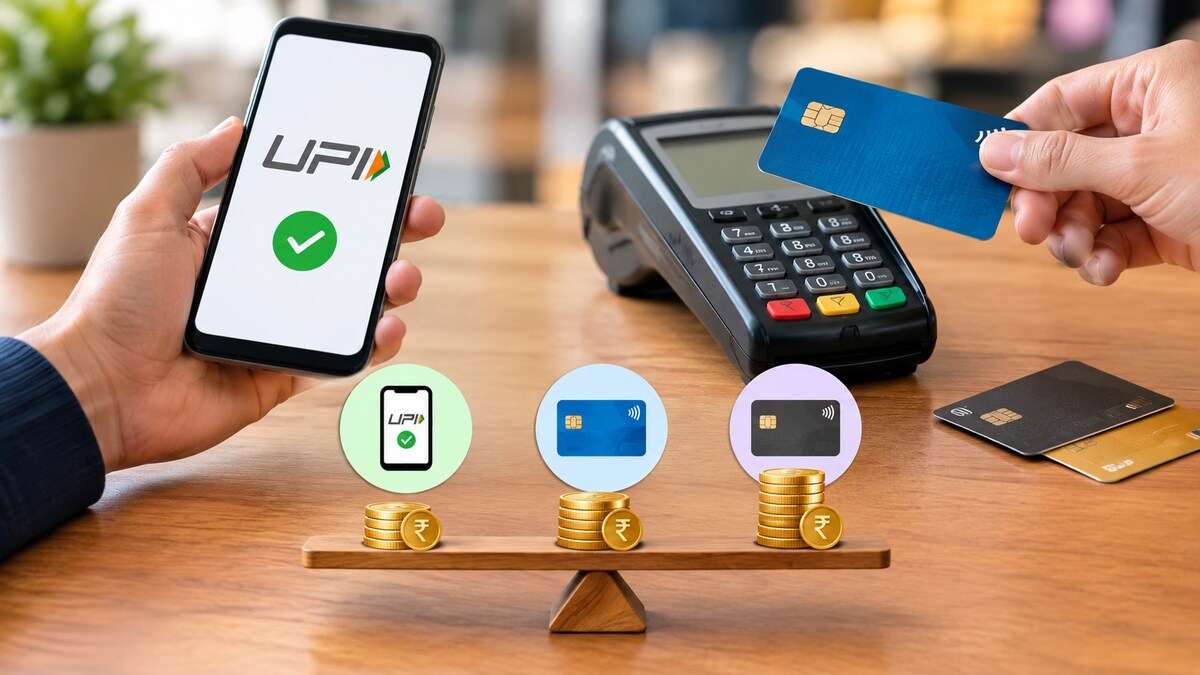
UPI MDR Keeps Payments Cheap, While Cards Reward Big Purchases
New UPI MDR framework may help SBI recover costs