1 week ago
Iran Blacklists Indian, Pakistani Ships Over Strait Of Hormuz Violations
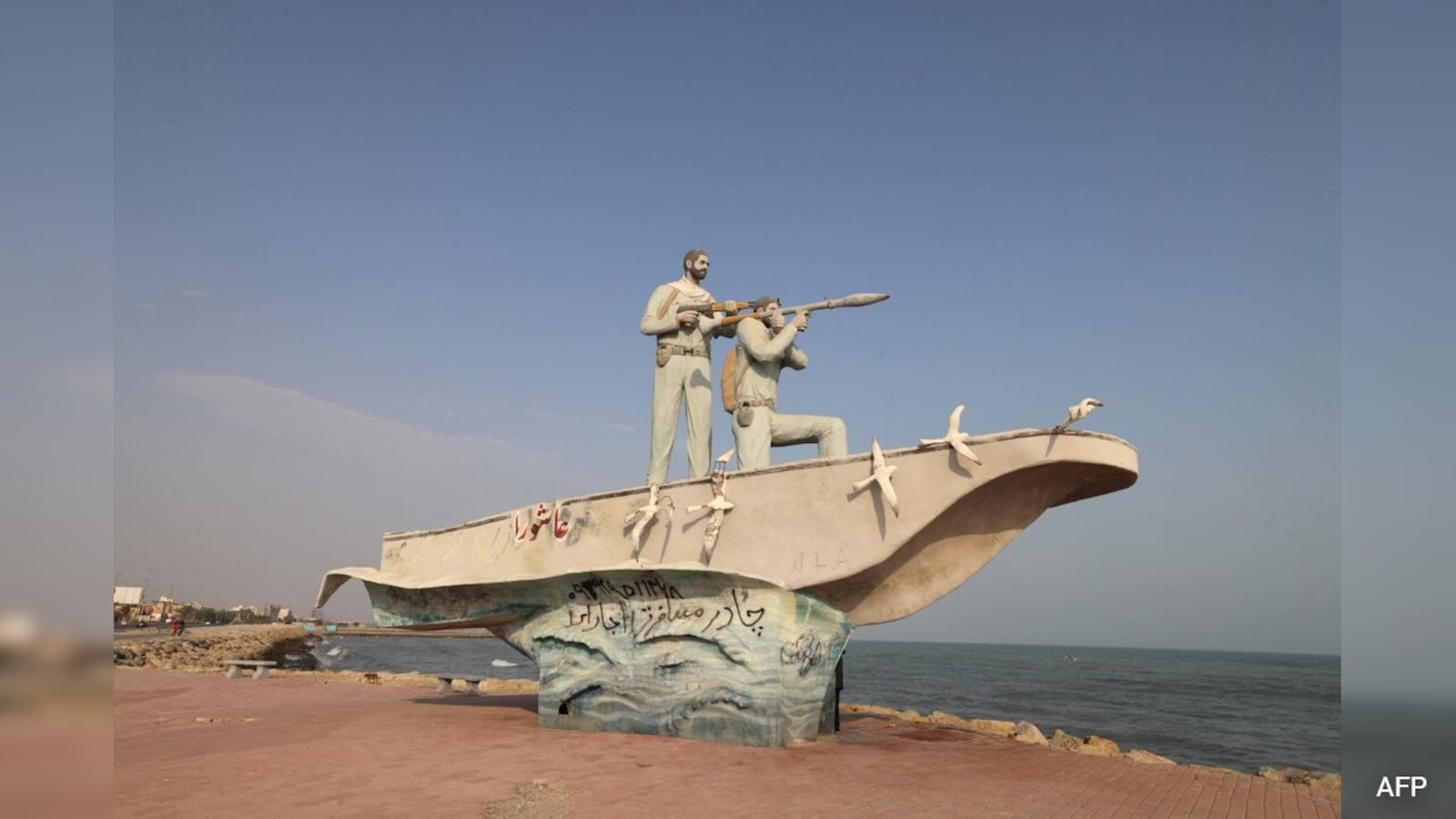
Iran has made a list of 45 ships that it says did not follow its rules for crossing the Strait of Hormuz.
Two ships connected to Indian companies are Disha and Maha Roos, which another report spells Maah Roos.
A Pakistan-flagged oil tanker called Mardan is also on the list.
Iran says the ships could face fines, seizure or confiscation when they try to cross the strait again.
Iran has not explained the specific rule-breaking by each ship.
It also says ships that transfer cargo with listed vessels could be added.
The United States and its regional allies disagree with Iran’s permission and route requirements.
Many listed ships have traveled through the strait since early March.
The strait is important because large amounts of oil and gas pass through it.

Iran’s Persian Gulf Strait Authority listed 45 vessels as “non-compliant,” including Indian-linked ships Disha and Maha Roos, also rendered Maah Roos.
The list includes a Pakistan-flagged crude tanker named Mardan and vessels linked to companies in the UAE, Saudi Arabia, Qatar, South Korea, Singapore and other countries.
Iran alleged violations of its transit arrangements but did not specify what individual vessels had done.
Listed ships could face fines, seizure or confiscation, while ships conducting ship-to-ship transfers with them could also be added to the list.
An AFP analysis found that 14 listed vessels had already been damaged in reported attacks, while the United States and allies support routes near Oman that Iran rejects.
- Who
- Iran’s Persian Gulf Strait Authority listed 45 vessels, including Indian-linked Disha and Maha Roos and Pakistan-flagged Mardan.
- What
- The authority designated the vessels as “non-compliant” for allegedly violating Iranian arrangements for transiting the Strait of Hormuz.
- Where
- The dispute concerns the Strait of Hormuz and nearby waters off Oman; listed vessels are linked to companies in several countries.
- When
- The list was issued on Sunday; the articles discuss vessel activity since late February and early March.
- Why
- Iran says the vessels violated its transit protocols, including requirements to seek approval and use routes designated by Tehran, but it provided no specific allegations for individual ships.
Iran’s Transit Requirements
U.S. And Allied Position
Permission to cross
Iran’s Transit Requirements
Iran says ships must obtain approval from the Persian Gulf Strait Authority to transit the Strait of Hormuz and may face fees for maritime and related services.
U.S. And Allied Position
The United States and its regional allies oppose Tehran’s permission requirement and encourage vessels to transit without seeking approval from the authority.
Approved routes
Iran’s Transit Requirements
Iran insists that vessels use shipping routes designated by Tehran, including a route in the northern part of the waterway.
U.S. And Allied Position
The United States and its regional allies encourage vessels to use waters near Oman instead of Iran-designated lanes.
Authority over shipping
Iran’s Transit Requirements
Iran says vessels violating its arrangements may be fined, seized or confiscated, and that cooperating vessels may also be blacklisted.
U.S. And Allied Position
The articles say the strait had been open before the war under international maritime law and that Washington is conducting a separate blockade against Iran-linked shipping in the region.
Key facts
- Number of listed vessels
- 45 vessels were named by Iran’s Persian Gulf Strait Authority.
- Indian-linked vessels
- The Indian Express identified LNG tanker Disha and bulk carrier Maha Roos; Maha Roos is also rendered Maah Roos in the reporting.
- Pakistan-linked vessel
- Mardan, a Pakistan-flagged crude oil tanker, was included.
- Potential penalties
- Iran warned of fines, seizure or confiscation during future transits.
- Additional blacklisting
- Vessels conducting ship-to-ship transfers or transshipment with listed ships could also be added.
- Reported damage
- AFP found that at least 14 of the 45 listed vessels had already been damaged in incidents confirmed by the International Maritime Organization.
- Shipping activity
- AFP found that 39 listed vessels were commodity carriers that had crossed the strait at least once since early March; some crossed as many as 12 times.
- Energy significance
- Before the war, the Strait of Hormuz carried about 20% of global crude and LNG flows.
Quotes
Persian Gulf Strait Authority
Iranian agency responsible for regulating passage through the Strait of Hormuz
“In light of violations by certain vessels of the Iranian arrangements for transiting the Strait of Hormuz, these vessels will face restrictions in their future transits through the Strait of Hormuz, such as fines, seizure, or confiscation.”
 NDTV
NDTV
 indianexpress.com
“Vessels that, from this date onward, engage in ship-to-ship transfers, transshipment, etc., with vessels on this list will themselves be added to this list.”
indianexpress.com
Sources
Related news

Iran Threatens Hormuz Vessels With Fines and Passage Restrictions
Iranian Warship Reportedly Warns Indian Tanker Off Hormuz Route
US Redirects 70 Vessels Amid Iran Strait Blockade
Shipping Data Challenges US Claims of Control Over Hormuz
Hormuz Traffic Falls Below 20 Ships Amid Blockades
GE Shipping Posts Record Profit Amid Buyback and Freight Surge

Expert Recommends Five Stocks as Market Risks Weigh

India’s 100-Vessel Plan Puts Five Maritime Stocks in Focus

SCI launches $720-million tender for six 8,000 TEU container ships