1 hr ago
Wall Street Recovers as Bond Yields and Oil Rise
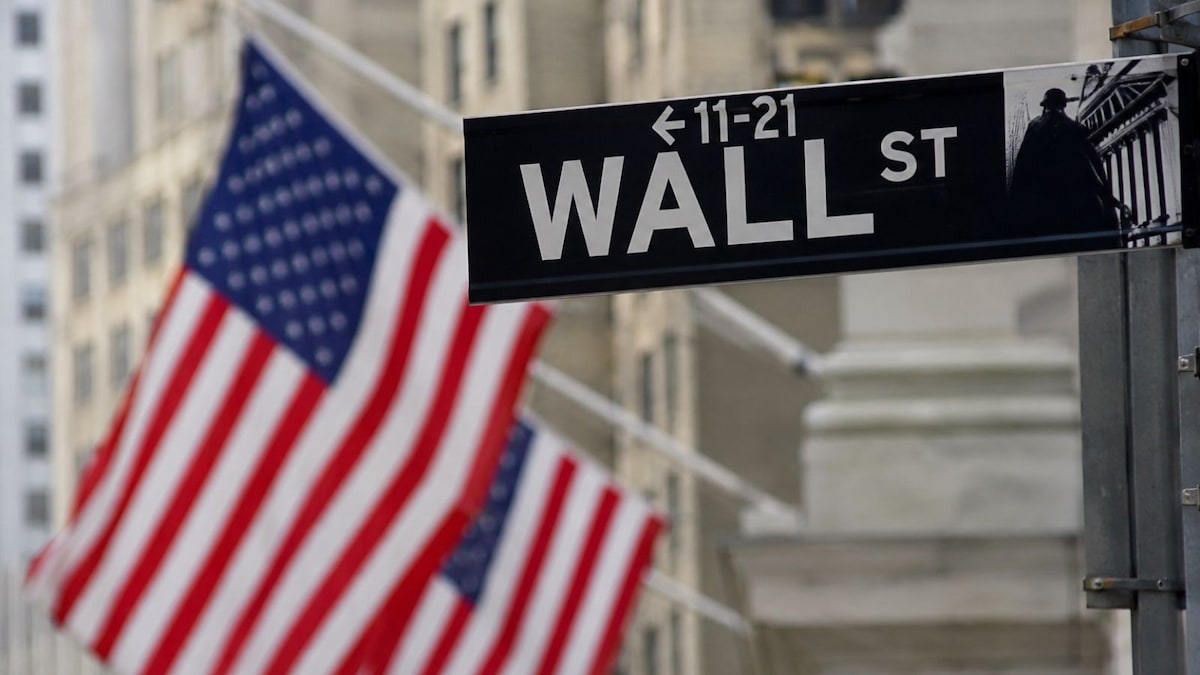
U.S. stocks had a rough day but recovered much of their early losses.
The Dow Jones still finished lower, while the S&P 500 and Nasdaq ended almost unchanged.
At the same time, investors continued selling government bonds.
This pushed bond interest rates to their highest levels in many years.
Higher bond rates also lifted the average 30-year mortgage rate to 7.45%.
Analysts at JPMorgan said rates could rise further because of expensive energy, government borrowing, and possible tighter monetary policy.
Oil prices stayed high, with Brent crude around $105 to $106 per barrel.
Reports suggested the United States and Iran might be discussing a deal, but attacks claimed by the Houthis and missile interceptions reported by Saudi Arabia added uncertainty.

The Dow Jones fell as much as 400 points before ending 170 points lower on Thursday, September 24.
The S&P 500 and Nasdaq recovered early losses to finish near the flat line.
The 10-year Treasury yield rose to 5.21%, its highest level since 2007, while the 30-year yield neared 5.5%.
A seven-year bond auction drew weaker-than-expected demand, and the Treasury accepted $4.1 billion in another bond buyback.
Brent crude remained near $105-$106 a barrel as reports of possible US-Iran talks conflicted with claims of regional missile attacks.
- Who
- Wall Street investors, the U.S. Treasury Department, JPMorgan analysts, and regional parties including the United States, Iran, the Houthis, and Saudi Arabia.
- What
- U.S. stocks remained volatile as bond yields continued rising and oil prices stayed elevated.
- Where
- Wall Street, U.S. bond markets, and energy facilities and waterways in the Middle East.
- When
- Thursday, September 24; the article also refers to trading the following morning.
- Why
- Markets faced pressure from heavy government borrowing, energy-driven inflation, possible further monetary tightening, weak bond-auction demand, and uncertainty over Middle East tensions.
Diplomatic De-escalation
Regional Escalation
Outlook for Middle East oil supply
Diplomatic De-escalation
Bloomberg and Reuters reported that the United States and Iran were working toward a phased deal involving the removal of a naval blockade and Iran reopening the Strait of Hormuz.
Regional Escalation
The Houthis claimed attacks on a Saudi Aramco facility in Yanbu and a target in Riyadh, while Saudi Arabia said it intercepted six ballistic missiles directed toward Yanbu Port and Taif.
Direction of bond yields
Diplomatic De-escalation
Wall Street stocks recovered much of their early losses, suggesting some market resilience despite the bond-market sell-off.
Regional Escalation
JPMorgan analysts said yields could rise further because of energy-driven inflation, heavy government borrowing, and the risk of additional monetary-policy tightening.
Key facts
- Dow Jones
- Fell 400 points at its low and ended 170 points lower.
- 10-year Treasury yield
- Rose to 5.21%, the highest level since 2007.
- 30-year Treasury yield
- Neared 5.5%, the highest level since 2004.
- Treasury buyback
- The Treasury accepted $4.1 billion in 20- and 30-year bonds against a $6 billion maximum.
- Seven-year bond auction
- Received less demand than anticipated despite a 5.085% yield.
- 30-year mortgage rate
- Rose to 7.45%, compared with 5.99% in late February.
- Oil prices
- Brent crude remained around $105-$106 per barrel, while West Texas Intermediate stayed near $95.
Sources
Related news
Wall Street stocks plunge as oil and bond yields surge

Dow Jones Falls 1,300 Points as Bonds and Oil Rise
West Asia Tensions Send Stocks Lower, Oil and Yields Higher

Bond Yields, Oil Prices Drive Wall Street Sell-Off
Dow Jones Drops 330 Points as Oil and Yields Rise
Wall Street Slides as West Asia Tensions Lift Oil Prices

Gold Slips as Iran Standoff Fuels Fed Rate Bets

US Cost Pressures Mount as Mortgage Rates and Oil Rise

Iran Signals Talks While Warning Conflict Could Expand

Oil Surge Pushes U.S. 30-Year Yields To 20-Year High