

3 days ago
Moral Knots Persist in Debates Over Bodies and Clothing
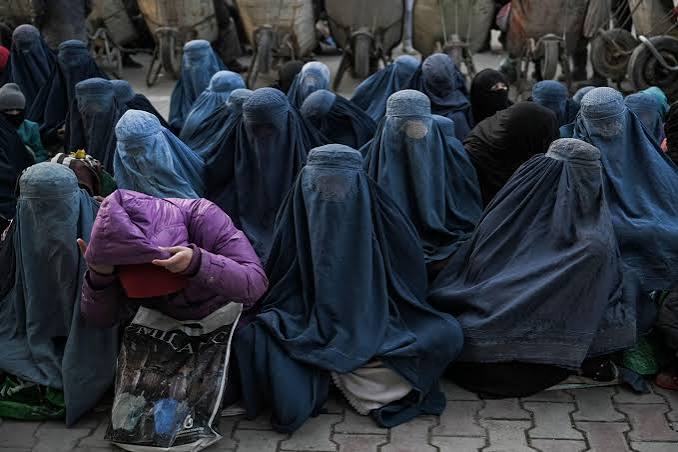
The essay asks why people often judge others by their clothes or bodies.
It says artists such as Robert Mapplethorpe showed that every body can have beauty and meaning.
Clothing styles have changed across history and do not automatically reveal a person's character.
Paintings once considered improper are now treated as important art.
The essay also says women are often judged while their bodies are used to sell films and products.
It argues that a sari, burqa or revealing neckline can have different meanings for different people.
People should think carefully about culture, personal choice and safety.
However, nobody's clothing gives others permission to violate them.
The main lesson is to respect differences instead of turning them into moral rankings.

Robert Mapplethorpe treated the human body as a carefully structured subject, including scars, tattoos and other individual features.
The essay argues that clothing does not inherently determine morality, modesty or personal character.
Works by Francisco Goya and Édouard Manet show how once-condemned nude representations can later become cultural masterpieces.
It criticizes the simultaneous sanctification and commercial objectification of femininity in media, advertising and cinema.
The essay calls for cultural pluralism, personal responsibility and respect for bodily autonomy without judging unfamiliar appearance as moral failure.
- Who
- The essay discusses artists including Robert Mapplethorpe, Francisco Goya and Édouard Manet, as well as women whose bodies and clothing are socially judged.
- What
- It examines the moral judgments attached to bodies, nudity, clothing and visual representation, arguing for more nuanced and respectful interpretation.
- Where
- The examples include the Prado Museum, the Musée d’Orsay, South Asian temples, Ajanta and Kabul.
- When
- It draws on examples ranging from historical art to Taliban rule and a 2003 musical release, without focusing on one single date.
- Why
- The essay argues that appearance is repeatedly mistaken for morality, while responsibility for objectifying representation is often assigned to the person depicted rather than the creator or viewer.
Pluralist interpretation
Moral-regulation interpretation
Meaning of clothing
Pluralist interpretation
A sari, burqa, décolletage or unconventional outfit may reflect culture, conviction, practicality, visual taste or bodily comfort rather than a fixed moral message.
Moral-regulation interpretation
Clothing is treated as carrying moral or social implications, with some forms of dress being judged as proper, improper, modest or provocative.
Representation of women
Pluralist interpretation
Women should not be blamed for meanings imposed by photographers, filmmakers, advertisers or other creators; viewers should question objectifying conventions.
Moral-regulation interpretation
Women’s appearance is subjected to scrutiny and regulation, while the essay argues that this moral scrutiny can coexist with the commercial use of women’s bodies.
Nudity and artistic value
Pluralist interpretation
Historical works once condemned as indecent may later be recognized as important art, suggesting that standards of propriety change over time.
Moral-regulation interpretation
Nude or unconventional representation may initially be treated as a threat to prevailing standards of decorum or social morality.
Key facts
- Central argument
- Clothing and bodily appearance do not inherently establish virtue, consent, character or moral worth.
- Robert Mapplethorpe
- His photography is presented as treating the body through proportion, contour, texture, individuality and physical presence.
- Historical art
- Francisco Goya’s The Naked Maja and Édouard Manet’s Le Déjeuner sur l’herbe and Olympia were described as provoking controversies over propriety.
- South Asian traditions
- The essay refers to apsaras at Ajanta and celestial dancers in South Indian temples as examples of bodies represented within sacred settings.
- Taliban rule
- The prescribed burqa is described as making women’s public presence inseparable from concealment.
- Burka Blue
- A Kabul-based musical ensemble’s 2003 single is presented as turning imposed anonymity into audibility.
- Responsibility
- The essay maintains that when an image becomes reductive, responsibility rests with the creative choices shaping it, not automatically with the person depicted.
Sources
Related news

Monalisa Says Presentation Shapes Debate Over Women’s Objectification

Rakhi Advertisement Withdrawal Rekindles Debate Over Women’s Clothing
Liu Yu Recasts Manish Malhotra Couture as Fluid Fashion
Kriti Sanon Ad Reignites Debate Over Gendered Clothing Policing

Madhu Chopra Defends Boundaries Amid Kriti Sanon Rakhi Ad Row
