

1 hr ago
Why India’s Unnamed Nepal Aid Reflects Changed Friendship
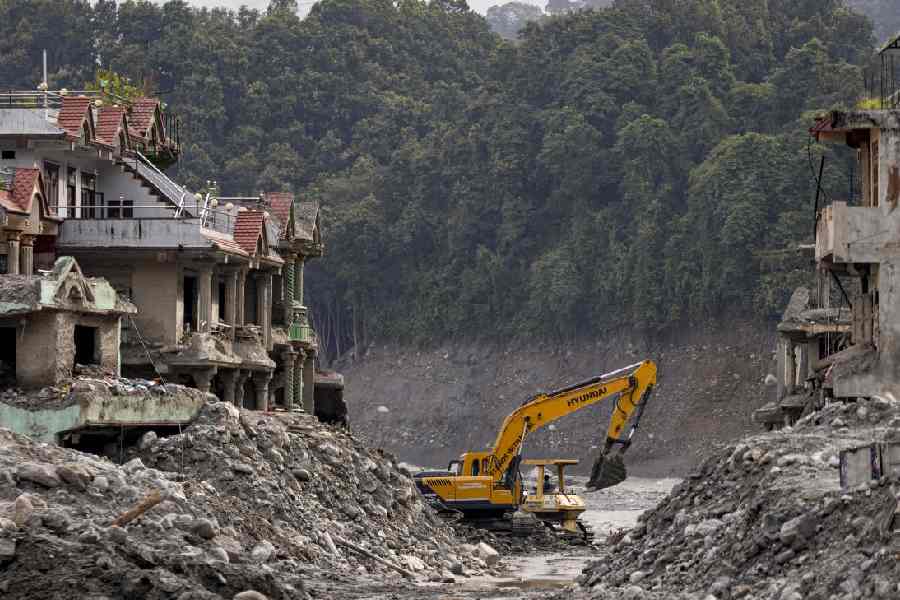
India sent help to Nepal after serious floods.
This time, it did not give the aid effort a special name.
The article says India may have avoided branding the mission because an earlier relief effort caused anger in Nepal.
That earlier effort, called Operation Maitri, followed a major earthquake in 2015.
Many Nepalis felt Indian television coverage focused too much on India and Narendra Modi.
Later disagreements over Nepal’s Constitution and a border blockade damaged relations further.
India said Madhesi groups were responsible for the blockade, while Nepal accused India of helping cause it.
The writer says India is now trying to act more like a helpful friend than a country seeking praise.

India provided prompt assistance after Nepal’s August flash floods but did not give the mission a formal name.
The decision contrasts with Operation Maitri, India’s highly publicized response to Nepal’s 2015 earthquake.
Nepali critics said the earlier mission turned humanitarian relief into publicity for Narendra Modi and India.
Tensions later worsened over Nepal’s Constitution and a border blockade that Nepal accused India of orchestrating.
The article says India’s quieter approach reflects lessons learned from the backlash over Operation Maitri.
- Who
- India and Nepal, including India’s government and Nepalese public opinion.
- What
- India provided search-and-rescue personnel, technical assistance, equipment and humanitarian aid after flash floods in Nepal without formally naming the operation.
- Where
- Nepal.
- When
- The assistance followed floods on August 26; India discussed it on August 27, and the article says no name had been announced a month later.
- Why
- The article says India adopted a quieter approach because its highly publicized 2015 earthquake response triggered backlash in Nepal.
Indian humanitarian assistance
Nepali concerns about publicity and pressure
Value of the flood response
Indian humanitarian assistance
India deployed personnel, technical expertise, equipment and humanitarian assistance promptly and on a scale the article says no other country matched.
Nepali concerns about publicity and pressure
The article suggests that Nepal’s experience made visible assistance and public recognition politically sensitive, even when the aid itself was useful.
Operation Maitri’s presentation
Indian humanitarian assistance
India’s 2015 earthquake mission involved thousands of soldiers, rescue work and deliveries of oxygen, machinery, medicines and blankets.
Nepali concerns about publicity and pressure
Many Nepalis viewed the mission as a public-relations campaign, with Indian media portraying India as a powerful and generous aid-giver during Nepal’s crisis.
The 2015 blockade
Indian humanitarian assistance
India maintained that Madhesi groups, rather than New Delhi, instituted the blockade after disputes over Nepal’s Constitution.
Nepali concerns about publicity and pressure
Nepal accused India of orchestrating the border closure to pressure Kathmandu, contributing to a prolonged deterioration in relations.
Key facts
- Recent disaster
- Flash floods in Nepal prompted India to provide assistance.
- India’s approach
- The aid effort had no publicly announced formal name a month after August 27.
- Earlier operation
- Operation Maitri followed Nepal’s 7.8-magnitude earthquake in 2015.
- Nepali criticism
- Critics said Indian media coverage made the earthquake response appear to be publicity for India and Narendra Modi.
- Later dispute
- India and Nepal clashed over Nepal’s new Constitution and a subsequent border blockade.
- India’s position
- India has consistently said Madhesi groups instituted the blockade.
- Nepal’s position
- Nepal accused New Delhi of orchestrating the border closure to pressure Kathmandu.
Sources
Related news
Nepal Thanks India as Glacial Disaster Rescue Efforts Continue
Nepal PM Thanks India, China Amid Climate Compensation Demand

Rajnath Singh Pledges India’s Support After Nepal Floods
India Sends Fresh Aid as Floods Ravage Nepal

India and Nepal Explore Strategic Ties Amid Relief Efforts
India Sends 11 Tonnes of Relief Supplies to Nepal
India Joins Pakistan-Hosted SCO Talks Despite Bilateral Tensions

Trinidad and Tobago Pursues UPI Adoption, Deepening India Partnership

Kejriwal Demands Modi Resignation Amid Electoral Roll Revision Row
BJP Kisan Morcha Accuses Karnataka Government of Mishandling Drought
