8 months ago
Pakistan's Economic Crisis and IMF Relations

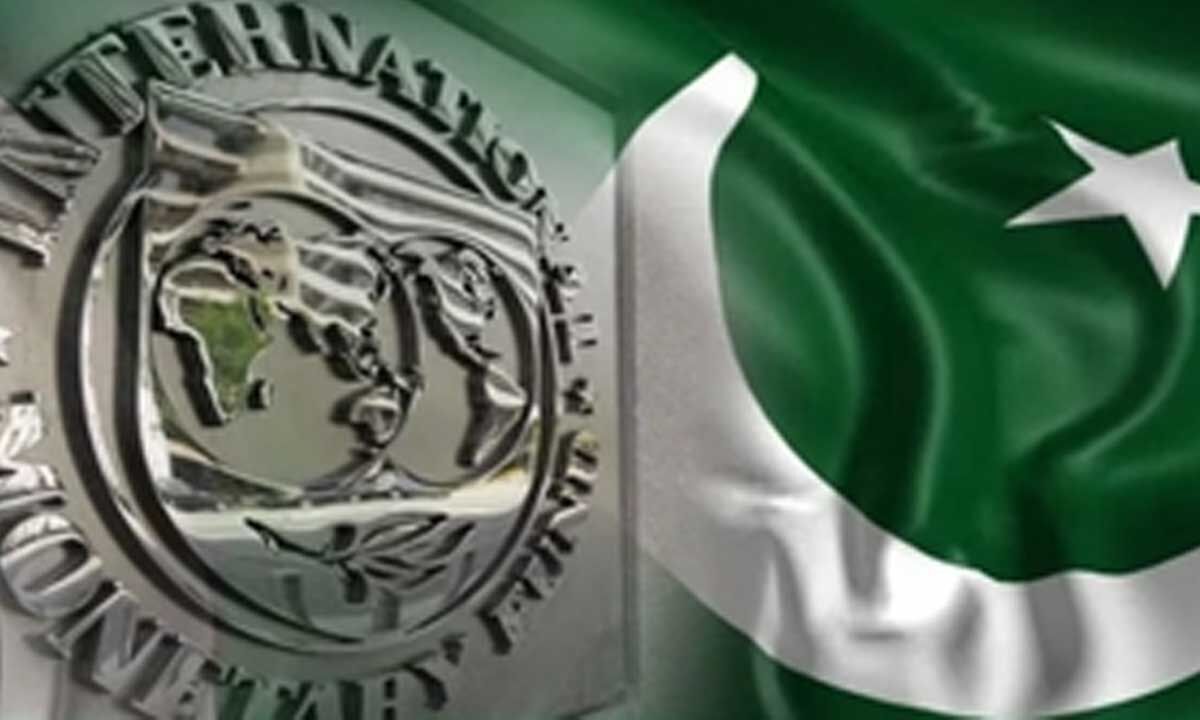
Pakistan is in a tough spot with its economy.
The government is selling state-owned companies because they are losing a lot of money due to poor management and political interference.
The IMF gives Pakistan loans to help, but some people blame the IMF for making things worse by raising energy costs and taxes, which have led to many factories closing and people losing their jobs.
Big companies like Microsoft and Shell are also leaving Pakistan because of the unstable economy.
The country's exports have gone down, and many talented people are moving away.
The article says Pakistan should focus on education and technology to improve its economy, but instead, it's facing a lot of problems.

Pakistan is selling state-owned enterprises due to poor governance and political interference, leading to massive losses and unsustainable debt.
The IMF provides loans to Pakistan, but critics argue that IMF policies have raised energy costs, imposed regressive taxation, and throttled industrial production.
Pakistan's industrial landscape has experienced a dramatic contraction, with hundreds of local manufacturing units shutting down due to rising energy costs, heavy tax burdens, and policy uncertainty.
Major companies like Microsoft, Careem, Shell, Telenor, and Procter & Gamble are either exiting or scaling back their presence in Pakistan due to currency volatility, inflationary pressures, and regulatory uncertainty.
The textile sector, Pakistan's traditional export engine, has been particularly devastated, with at least 144 textile mills shutting down nationwide, leading to job losses and declining export competitiveness.
- Who
- Pakistan's government, state-owned enterprises, IMF, business leaders, industrial sectors
- What
- Economic crisis, privatization of state-owned enterprises, industrial closures, job losses, IMF loans and criticisms
- Where
- Pakistan
- When
- Ongoing, with recent distress sales and industrial closures
- Why
- To address huge losses, unsustainable debt, and economic woes exacerbated by IMF policies
Key facts
- Country
- Pakistan
- Issue
- Economic crisis and IMF relations
- Causes
- Poor governance, political interference, mismanagement, IMF policies
- Examples
- PIA, PTCL, K-Electric, Microsoft, Careem, Shell, Telenor, Procter & Gamble
- Outcome
- Fire sales, unresolved disputes, rising prices, industrial closures, job losses
- Comparison
- British rail vs. European public rail systems
- Exports
- $30 billion (declined from $35 billion)
- Industrial Units Closed
- 795 in Khyber Pakhtunkhwa alone
Quotes
The News International
A Pakistani newspaper
“Pakistan’s long engagement with the IMF has produced a pattern of systematic destruction: in the name of stabilisation, fiscal consolidation and 'reform', Pakistan has been subjected to a policy mix that has dramatically raised energy costs, imposed highly regressive taxation, throttled industrial production, increased poverty and pushed the economy towards de-industrialisation.”
 thehansindia.com
“The exact opposite has happened, which now poses a huge existential threat: our schools, colleges and universities lie in tatters, our exports have declined to about $30 billion after touching $35 billion, the poverty has increased substantially, and there has been a mass migration of talented youth and industrial groups to greener pastures abroad.”
thehansindia.com
Sources

Related news

Five Fundamentally Strong Stocks Trading Below Historical Valuations

Indian Executives Make Record Gains in US Corporate Boardrooms
Over 50 Stocks Set for Dividend Record Dates This Week
Gujarat Attracts Massive Manufacturing Investment Through Infrastructure and Policy

Costa Rican Mother Gets Recycled-Plastic Home After Nine-Year Savings