

1 week ago
Shaktigarh Lyangcha Prices Rise as Sugar and Fuel Costs Soar

Shaktigarh is famous for a sweet called lyangcha.
The shops that make and sell it are paying much more for sugar, chhana and cooking gas.
Because of this, some shops have already raised prices by Rs 2–5 for each piece.
Other shops are waiting because they worry customers may stop buying.
Chhana makers in nearby Memari have also stopped production while asking for higher payment.
If they receive it, chhana could become at least Rs 30 more expensive per kilogram.
Sweet sellers say they may have to charge customers more to keep their businesses running.
Some customers are worried that higher costs could also affect the quality of the sweets.

Sugar prices have risen by Rs 15–20 per kg, while chhana costs are up around Rs 55–60 per kg.
Commercial LPG costs have added to expenses for Shaktigarh’s 68 highway sweet shops.
Several vendors have already raised lyangcha prices by Rs 2–5 per piece, while others are absorbing the costs.
Chhana producers in Memari halted production, potentially raising the ingredient’s price by at least Rs 30 per kg.
Sweet makers and customers fear higher prices and possible declines in product quality as costs continue increasing.
- Who
- Sweet shop owners, chhana producers, sweet makers and customers in and around Shaktigarh and Burdwan.
- What
- Rising sugar, chhana and commercial LPG costs are pushing up lyangcha production expenses, with some shops increasing prices.
- Where
- The main impact is at the 68-shop Lyangcha Hub along NH-19 near Burdwan town, with related effects in Memari and Burdwan.
- When
- The reports say chhana production in Memari stopped on Friday; no year is specified. Vendors have already revised some prices.
- Why
- Input costs have increased, while chhana producers are seeking higher remuneration and sweet sellers say existing profit margins are under pressure.
Business and producer concerns
Customer and buyer concerns
Passing on higher costs
Business and producer concerns
Shop owners and sweet makers say rising sugar, chhana and LPG expenses are shrinking profits and may force further price increases.
Customer and buyer concerns
Some vendors are holding prices to avoid losing customers, while buyers may resist increases and face costlier sweets.
Chhana supply dispute
Business and producer concerns
Chhana producers have stopped production while demanding higher remuneration; shop owners say the disruption was abrupt despite negotiations being planned for August 29.
Customer and buyer concerns
Sweet sellers face a disrupted supply chain and potentially higher chhana prices if the producers’ demand is accepted.
Product quality
Business and producer concerns
Vendors say they need reasonable profit margins to keep operating amid higher costs.
Customer and buyer concerns
A frequent customer said prices had risen and quality appeared to have declined, suggesting some sellers may be compromising quality.
Key facts
- Affected businesses
- The Shaktigarh Lyangcha Hub has 68 shops along the highway.
- Sugar increase
- Sugar is reportedly Rs 15–20 more expensive per kg.
- Chhana increase
- Chhana costs have risen by around Rs 55–60 per kg; a further increase of at least Rs 30 per kg is possible if producers’ demands are accepted.
- Lyangcha price changes
- Several shops have increased prices by Rs 2–5 per piece.
- Wholesale sugar price
- A Burdwan sweet maker said wholesale sugar prices had reached Rs 68–69 per kg.
- Supply disruption
- Chhana producers in Memari stopped production while seeking higher remuneration.
- Other affected sweets
- Sweet makers producing Burdwan’s Mihidana and Sitabhog are also facing higher input costs.
Quotes
Shamim Mondal
Secretary of the Shaktigarh Lyangcha Traders Association
“The situation is forcing us to increase prices to survive. Profits are shrinking every day while expenses have more than doubled. We do not know how long we can continue like this.”
 thestatesman.com
“Prices have gone up and the quality appears to have declined. It seems some sellers are compromising on quality to cope with the increased production costs.”
thestatesman.com
Sources
Related news
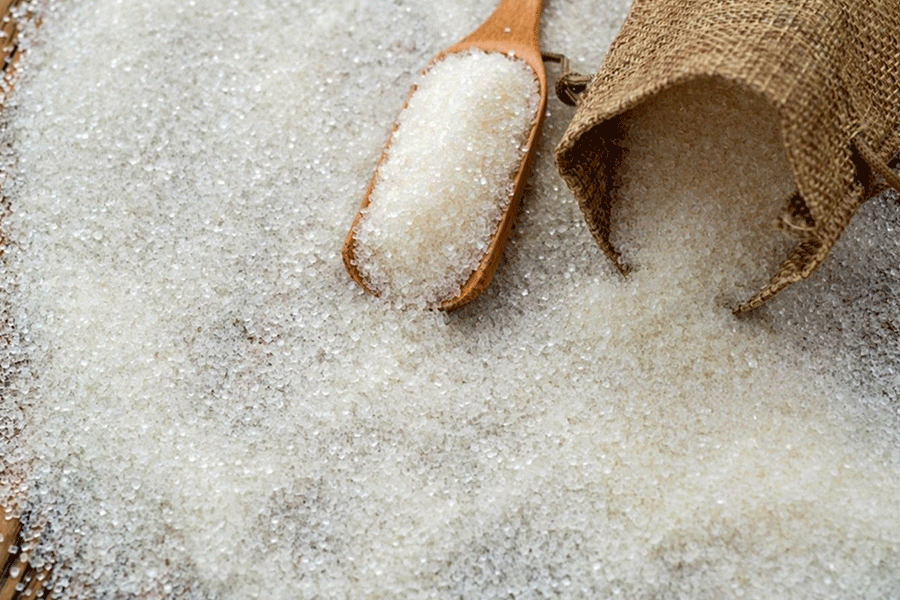
Bengal sweet trade faces sugar shock before festive season
Sugar and Onion Prices Force Festive Food Vendors to Adapt

Bengal Sugar Prices Soar to Rs 70 Ahead of Festivities

West Bengal Bakers Raise One-Pound Bread Price by Rs 4

Mumbai Wholesale Milk Price to Rise ₹9 From September 1

Nehru Statue Reinstalled in Durgapur After Congress Protest

Bengal Health Minister Proposes 72-Hour Private Surgery Restriction in Bardhaman

Youth Congress demands probe after man dies in Bankura attack

Adhikari to lay Rs 4,000-crore steel plant foundation in Purulia
