1 hr ago
Oyster Shell Recycling Helps Restore Gulf Reefs and Communities
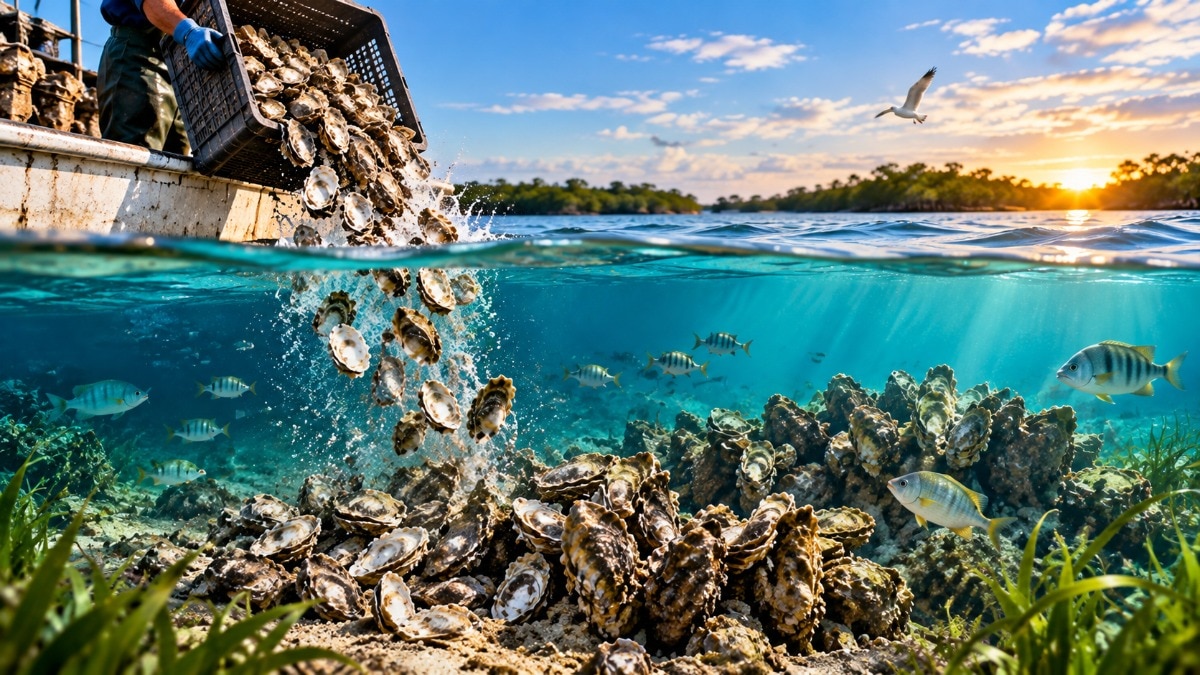
People used old oyster shells to help rebuild reefs under the water.
The shells gave young oysters a hard place to attach and grow.
Tiny organisms also began living on the shells.
As the shells slowly broke down, they changed the water around them in helpful ways.
Growing oysters cleaned some of the water by filtering it.
The rebuilt reefs created homes for other sea life.
Fish, turtles and dolphins reportedly returned in larger numbers.
Healthy reefs can also help fishermen, tourism and coastlines during storms.
The project shows how seafood waste can become useful material for restoring nature.

A Florida restoration effort used 500,000 tons of discarded oyster shells to rebuild damaged reefs.
The shells provided hard surfaces for young oysters and helped create conditions supporting underwater organisms.
As oyster populations grew, they filtered water and helped limit harmful algae blooms.
Fish, turtle and dolphin populations reportedly returned to levels not seen in more than 25 years.
Similar shell-recycling programs have expanded to Alabama, Texas, Louisiana, California, Mississippi and the Carolinas.
- Who
- A Florida restoration program, researchers, oysters and coastal communities are involved.
- What
- Discarded oyster shells were placed in waterways to rebuild oyster reefs and support marine life.
- Where
- Florida waterways and other U.S. states, including Alabama, Texas, Louisiana, California, Mississippi and the Carolinas.
- When
- The recovery occurred over time; the article does not provide a specific date.
- Why
- Oyster reefs had declined because of overharvesting and human-caused disasters, including the Deepwater Horizon oil spill.
Key facts
- Shells used
- 500,000 tons of oyster shells
- Primary location
- Florida
- Restoration material
- Discarded oyster shells
- Reported wildlife recovery
- Fish, turtles and dolphins reportedly returned to levels not seen in more than two and a half decades
- Ecosystem benefits
- Water filtration, reduced harmful algae blooms and habitat creation
- Coastal benefits
- Support for fisheries, tourism and storm protection
- Expansion
- Programs have spread to Alabama, Texas, Louisiana, California, Mississippi and the Carolinas
Sources
Related news
After 2024 Bleaching, El Niño Threatens Coral Reefs Further

How 2,000 Chitlapakkam Residents Revived a Sewage-Choked Lake

Mumbai Civic Body Unanimously Seeks Coastal Committee Against Pollution
HYDRAA Advances Phase-II Restoration at Three Hyderabad Lakes

Moynaq’s Vanished Sea Becomes an Unusual Tourist Attraction
Egyptian Shark Graveyard Reveals Ancient Cretaceous Marine Ecosystem

Washington Debate Intensifies Over How to Regulate Artificial Intelligence

San Jose AI Data Center Boom Faces Local Resistance

Affluent US Families Increasingly Turn to AI-Powered Homeschooling

Deepti Naval Reunites With Ashwini Bhave During US Tour