58 mins ago
India’s Nuclear Build-Out Puts Three Equipment Stocks In Focus
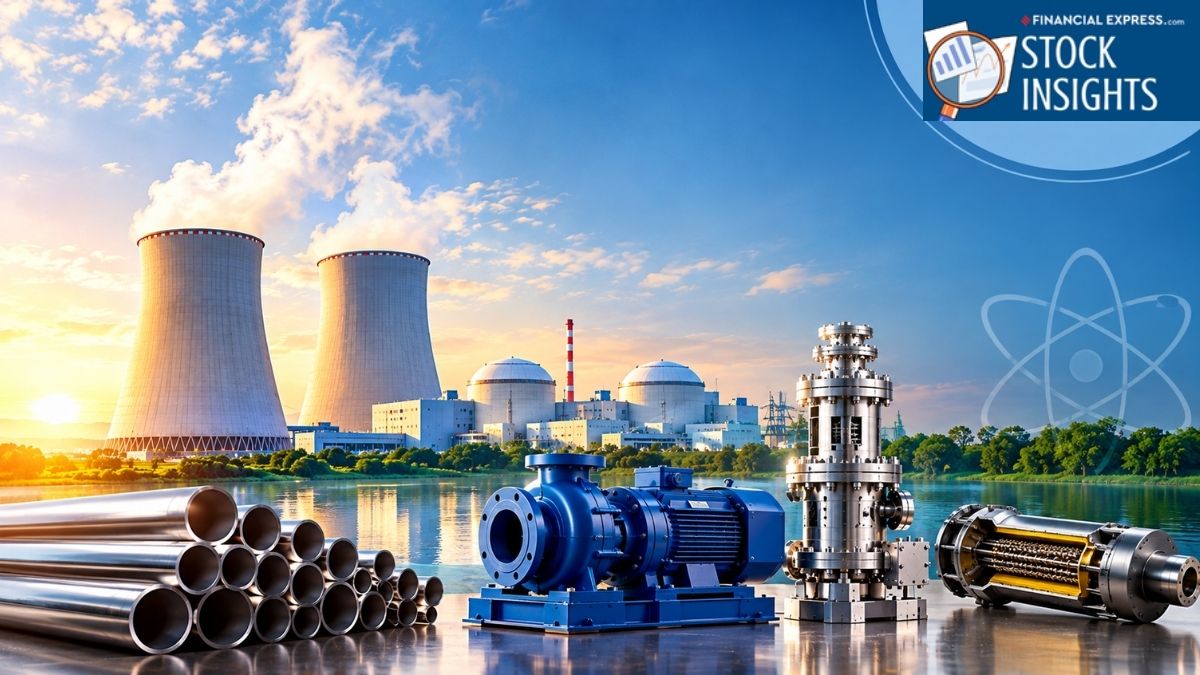
India wants to build many more nuclear power plants over the next several decades.
This means companies that make reactor parts could receive more orders.
Ratnamani Metals makes special pipes and prefabricated pipe sections for nuclear projects.
MTAR Technologies makes important reactor components and has won large orders.
KSB makes pumps used in nuclear reactors and has supplied India’s pressurised heavy water reactors for many years.
The government is also considering small reactors and more private-sector participation.
However, nuclear projects take a long time because equipment needs many approvals and inspections.
Investors should therefore consider both the possible growth and the risks before making decisions.

India aims to raise nuclear capacity from about 8.8 GW to 22.5 GW by FY32 and 100 GW by 2047.
The expansion includes 10 indigenous 700 MW reactors, small modular reactors, and a planned ₹6 lakh crore NTPC expansion.
Ratnamani Metals is positioned in nuclear piping and spooling, with its joint venture expanding capacity to 4,000 metric tonnes.
MTAR Technologies has secured major reactor-component orders, including ₹504 crore for the Kaiga 5 and 6 projects.
KSB has a ₹1,235.4 crore nuclear order book, but all three companies face long approvals, execution timelines, and premium valuations.
- Who
- Ratnamani Metals & Tubes, MTAR Technologies, and KSB are identified as companies positioned to benefit from India’s nuclear expansion.
- What
- India is planning a large increase in nuclear generation capacity, creating potential demand for pipes, pumps, and reactor components.
- Where
- The projects and manufacturing activity are primarily in India, with Ratnamani also approved for projects in Egypt, Türkiye, and Hungary.
- When
- Capacity targets include 22.5 GW by FY32 and 100 GW by 2047; several company updates refer to FY26, FY27, and CY26.
- Why
- The government is expanding nuclear power, supporting indigenous reactors, and opening the sector to private and foreign participation.
Expansion Opportunity
Execution and Valuation Risks
Long-term demand
Expansion Opportunity
Rising nuclear-capacity targets, new indigenous reactors, small modular reactors, and private-sector participation could generate multiyear demand for specialist equipment.
Execution and Valuation Risks
Projects must progress from tenders to awards and revenue recognition, and long qualification and approval cycles can delay benefits.
Company positioning
Expansion Opportunity
Ratnamani has nuclear pipe and spooling capabilities, MTAR has major reactor-component exposure, and KSB has a long history supplying nuclear pumps.
Execution and Valuation Risks
Current financial performance is uneven: MTAR’s civil nuclear revenue contribution fell to 1% in Q1FY27, while KSB reported lower operating profit and net profit in Q2CY26.
Investment case
Expansion Opportunity
Large order books, refurbishment opportunities, and possible awards from projects such as Mahi Banswara could support future growth.
Execution and Valuation Risks
All three companies trade at premium price-to-earnings multiples relative to the industry median and their historical five-year median valuations.
Key facts
- Current nuclear capacity
- Approximately 8.8 GW
- Nuclear capacity target
- 22.5 GW by FY32 and 100 GW by 2047
- Small modular reactor allocation
- ₹20,000 crore under Budget 2026
- Planned NTPC nuclear expansion
- US$62 billion, or approximately ₹6 lakh crore
- Ratnamani joint-venture capacity plan
- RFSS plans to increase capacity from 1,500 MT to 4,000 MT by December 2026
- MTAR nuclear order book
- ₹684 crore, with potential refurbishment orders taking it close to ₹800 crore
- KSB nuclear order book
- ₹1,235.4 crore as of June 2026
Sources
Related news
Indian Nuclear Expansion Puts Specialized Pump Stocks In Focus

India's Draft Nuclear Rules Put Five Stocks Under Watch
MTAR Technologies Wins ₹126.7 Crore Nuclear Reactor Order
India's Private Nuclear Entrants Favor Indigenous Heavy Water Reactors
BARC Partners Industry for Rs 9,000-Crore Modular Reactor Plan

SHANTI Act draft rules open India's nuclear power to private firms
India Seeks Industry Backing for Indigenous Small Modular Reactors

Three Indian Stocks Positioned for Nuclear Energy Growth

Engineers India Shifts Toward Higher-Margin Consultancy and New Energy Projects