

3 hrs ago
Forest Department Plans Major Wildlife Body-Part Destruction Event
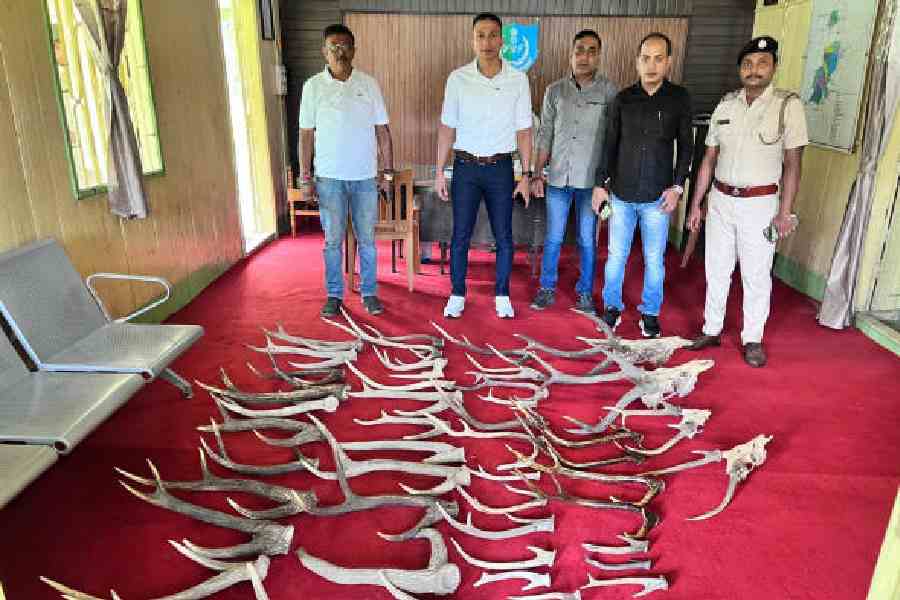
The forest department plans to destroy many animal body parts kept in north Bengal.
The event is planned at Jaldapara National Park on September 22, during World Rhino Day.
The items include rhino horns, deer antlers, animal skins, and elephant tusks.
Some parts were seized from suspected smuggling operations.
Others came from animals that died.
Officials are making a detailed list before deciding exactly what will be destroyed.
Nearly 1,000 items could be included.
Very large elephant tusks may be difficult to burn.
Officials are checking whether burning them could create air pollution.
The department says the action is meant to discourage poaching and support wildlife conservation.

Suvendu Adhikari is scheduled to visit Jaldapara National Park on September 22 for a World Rhino Day event.
The forest department plans to destroy seized and recovered wildlife parts after nearly 25 years.
The proposed list includes rhino horns and teeth, deer antlers, and deer and leopard skins.
Officials are cataloguing items from several north Bengal parks, sanctuaries, and forest divisions; nearly 1,000 items may be included.
Officials are assessing whether exceptionally large elephant tusks can be safely and completely burned without causing air pollution.
- Who
- The state forest department, north Bengal wildlife officials, and Chief Minister Suvendu Adhikari are involved; Adhikari is scheduled to attend the event.
- What
- The department plans to catalogue and destroy seized or recovered wildlife body parts.
- Where
- The event is planned at Jaldapara National Park, with materials collected from protected areas and forest divisions across north Bengal.
- When
- The destruction is scheduled for September 22; a similar large-scale exercise took place during the 2000-01 financial year.
- Why
- The forest department says the action is intended to send a message against poaching and encourage wildlife conservation.
Conservation Rationale
Operational and Environmental Concerns
Purpose of destroying the parts
Conservation Rationale
The forest department says destroying the materials will discourage poaching and encourage wildlife conservation.
Operational and Environmental Concerns
Officials have not challenged the conservation aim, but they are focused on how to dispose of especially large tusks safely and effectively.
Treatment of exceptionally large tusks
Conservation Rationale
Including the tusks in the destruction programme would ensure that stored animal parts are not retained for future misuse, consistent with the department’s stated anti-poaching message.
Operational and Environmental Concerns
Officials say large, heavy tusks may be difficult to transport and burn completely, and that prolonged burning could create air-pollution concerns.
Key facts
- Planned date
- September 22, during World Rhino Day
- Potential number of items
- Nearly 1,000
- Materials listed
- Rhinoceros horns and teeth, deer antlers, and deer and leopard skins
- Collection areas
- Jaldapara, Gorumara and Neora Valley national parks; Chapramari Wildlife Sanctuary; Buxa Tiger Reserve; Baikunthapur and Mahananda forest divisions; Singalila and Senchal areas
- Previous disposal
- A similar exercise was conducted during the 2000-01 financial year near Chilapata forest
- Large tusks under review
- Some tusks measure four to eight-and-a-half feet and weigh between 15kg and about 38kg
- Operational concern
- Officials say completely burning large tusks could take two to three days and are assessing possible air pollution
Quotes
A forest department official
An unnamed official discussing the practical and environmental concerns surrounding the tusks.
“The destruction of exceptionally large tusks could pose logistical difficulties. Also, completely burning such large and heavy tusks could take two to three days. We need to find out whether such prolonged burning can lead to air pollution in the surrounding areas and wait for instructions from higher authorities.”
 telegraphindia.com
“A similar exercise was carried out during the 2000-01 financial year, when wildlife body parts were burnt in a riverbed area adjoining the Chilapata forest. No such large-scale disposal programme has been undertaken in north Bengal since then.”
telegraphindia.com
Sources
Related news

Bengal to Burn Seized Wildlife Parts on World Rhino Day

Suvendu Adhikari Plans Two North Bengal Wildlife Visits

Chief Minister to Attend Two Alipurduar Wildlife Programmes

Bengal Forest Entry Fees Set to Resume After 20 Months

Tyre Removed From Wild Elephant’s Neck in Assam

Four Arrested for Alleged Deer Poaching in Erode Reserve

BRICS Summit Highlights India’s Diplomatic Balancing and Security Push

India-Nepal Tourism Pact Seeks To Boost Cross-Border Travel
