2 weeks ago
Supreme Court defers challenge to Bodh Gaya Temple Act management
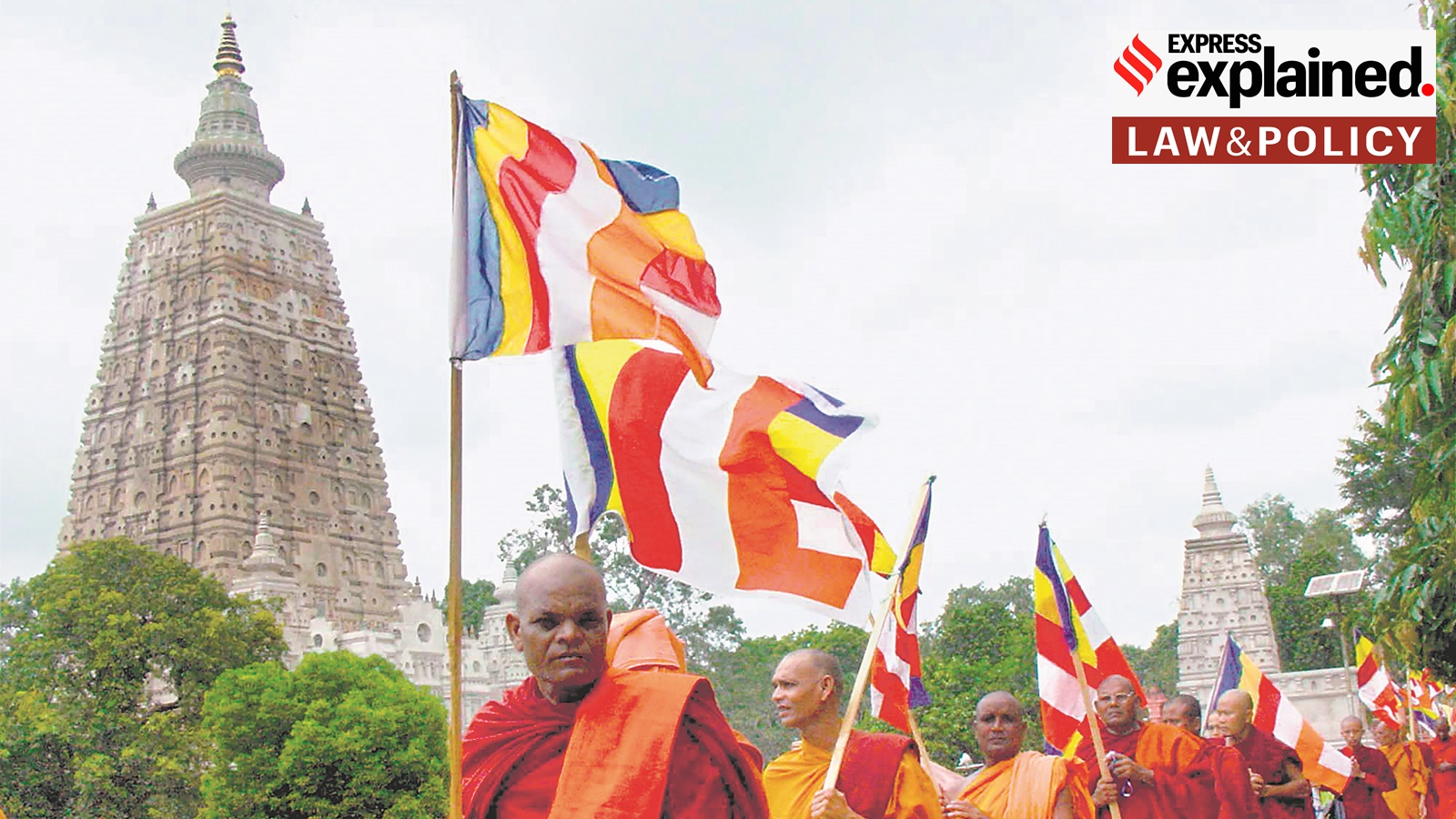
Bodh Gaya is a very special place for Buddhists.
It is where Prince Siddhartha became the Buddha a very long time ago, under a tree.
There is a big temple there called the Mahabodhi Temple.
A law from 1949 says the temple should be run by both Hindus and Buddhists together.
Some Buddhists think this is not fair.
They say the temple should be managed only by Buddhists.
They also do not want Hindu prayers and special rituals to happen inside the temple grounds.
A group called the Buddhist Society of India asked India's Supreme Court to change the law.
The Supreme Court decided to talk about it again in October.
It is first waiting for another important court decision.

A Supreme Court bench led by Chief Justice Surya Kant on August 11 deferred hearing a petition challenging the constitutional validity of the Bodh Gaya Temple Act.
The petition, filed by the Buddhist Society of India, seeks repeal of the 1949 Act and exclusive Buddhist control of the Mahabodhi Temple in Bihar.
The 1949 Act currently creates an eight-member committee with four Hindu and four Buddhist members, chaired ex-officio by the Gaya district magistrate.
The plea argues Hindu rituals such as pindadan should not be performed within the Mahabodhi Temple Complex and objects to the Mahanth's role in governance.
The court postponed the hearing to October, after its judgment in the nine-judge Sabarimala Temple reference is expected to clarify religious autonomy.
- Who
- The Buddhist Society of India (petitioner) and a Supreme Court bench led by Chief Justice Surya Kant.
- What
- Deferred hearing of a petition challenging the constitutional validity of the Bodh Gaya Temple Act, 1949, which seeks exclusive Buddhist management of the Mahabodhi Temple.
- Where
- Supreme Court of India; the dispute concerns the Mahabodhi Temple Complex in Bodh Gaya, Bihar.
- When
- Tuesday, August 11; the next hearing is scheduled for October, after the nine-judge Sabarimala Temple reference verdict.
- Why
- The petition argues the 1949 Act dilutes Buddhists' right to manage the shrine and permits Hindu rituals such as pindadan within the Buddhist temple complex.
Buddhist petitioners
Existing statutory framework
Temple management
Buddhist petitioners
The total management, control and administration of the Mahabodhi Temple should rest exclusively with Buddhists; the current equal committee gives Hindus dominance because district magistrates have historically been Hindu and only one of seven secretaries since 1953 was Buddhist.
Existing statutory framework
The 1949 Act provides parity through an eight-member committee with four Hindu and four Buddhist members, with a government-nominated secretary and the Gaya district magistrate as ex-officio chairperson.
Hindu rituals at the temple
Buddhist petitioners
Hindu rituals such as pindadan should not be permitted in the Bodh Gaya temple because Buddhism does not involve belief in a God and the site is Buddhist in character.
Existing statutory framework
Section 11 of the Act guarantees that Hindus and Buddhists of every sect shall have access to the temple and temple land for worship and pindadan, reflecting both communities' use of the site.
State control
Buddhist petitioners
The State remains the 'ultimate owner and controller' because it can dissolve the committee, reconstitute it, or assume direct control of the temple, which dilutes Buddhist autonomy.
Existing statutory framework
The Act retains State powers of oversight over the committee as part of the statutory framework for managing the temple and its properties.
Key facts
- Petitioner
- Buddhist Society of India
- Contested law
- Bodh Gaya Temple Act, 1949
- Site
- Mahabodhi Temple Complex, Bodh Gaya, Bihar (UNESCO World Heritage Site)
- Management committee
- 8 members - 4 Hindus and 4 Buddhists; chaired ex-officio by the Gaya district magistrate
- Buddhist secretaries (1953-2007)
- 1 of 7 appointed secretaries was Buddhist
- Supreme Court bench
- Chief Justice Surya Kant
- Next hearing
- October, after the Sabarimala Temple reference verdict
- Enlightenment
- Prince Siddhartha attained enlightenment in 589 BCE under the Bo tree
Sources
Related news
Madras High Court Cites Gita in Temple Access Case
Patna High Court Upholds Limits on Mahabiri Julus Participation
Rajasthan High Court upholds gurudwara attachment; faith can't prove ownership
Debate Grows Over Bhumi Pujan At Indian State Events

Dhar Bandh Over Bhojshala Prayer Site Dispute

Indore High Court Resolves 72-Year Ram Mandir Management Dispute

Supreme Court Questions IPS Deputation for CAPF Leadership Positions

Supreme Court Quashes 20-Year Conviction, Reaffirms Juvenile Legal Protections

Two Years After RG Kar Doctor's Rape-Murder, Case Remains Unresolved

ED widens Chhattisgarh probes with two arrests and searches
Delhi High Court Orders Madhya Pradesh to Pay Advocate Dues