2 weeks ago
Madras High Court Cites Gita in Temple Access Case
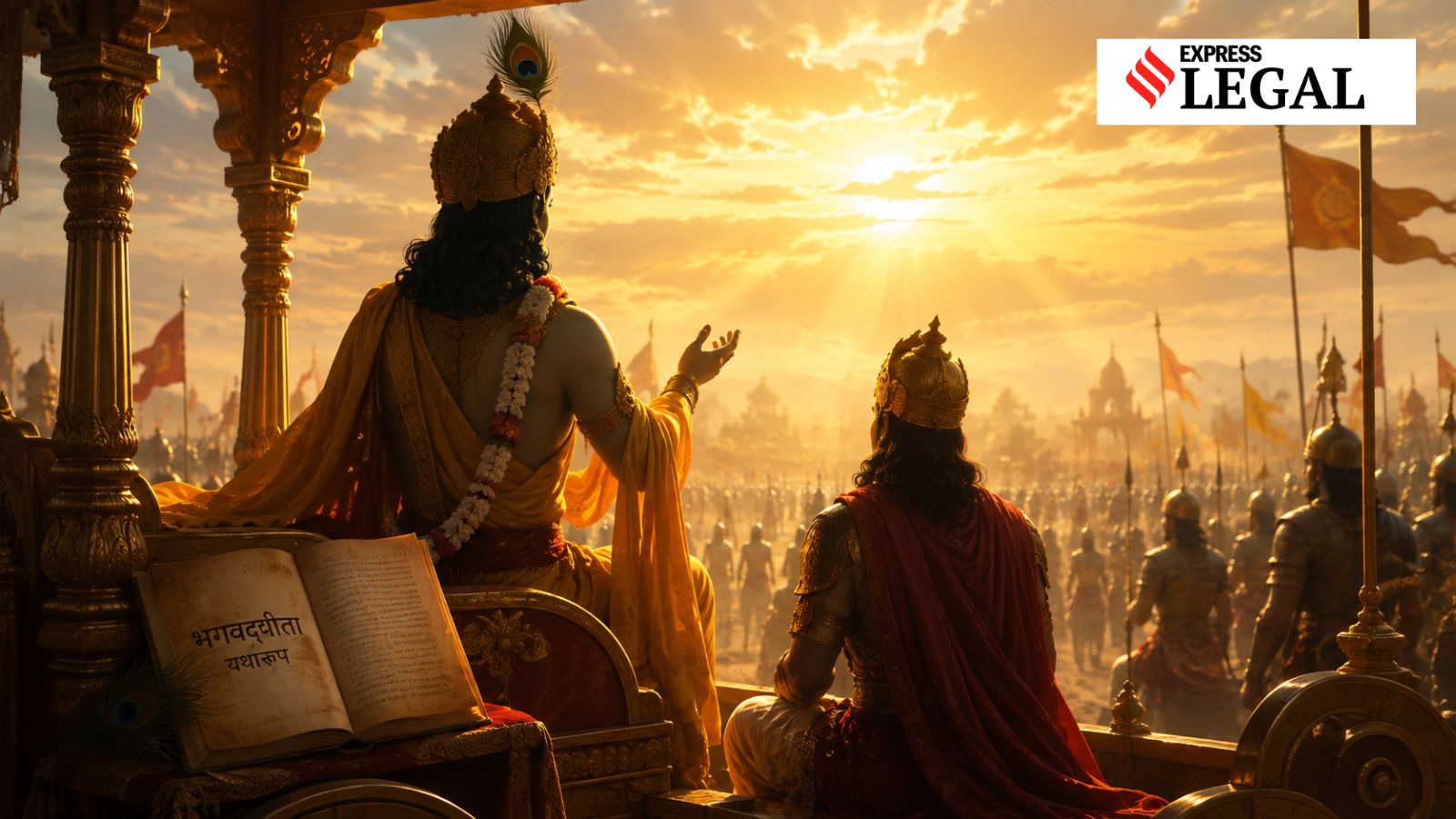
A devotee told the Madras High Court that non-Brahmin worshippers were being treated differently at a temple in Kanchipuram.
He said they were asked to use a side entrance and were sometimes kept outside shrines during rituals.
The temple authorities said they would not discriminate against any group.
They also explained that some shrines are too small to hold everyone.
The court said God treats all living beings equally.
It quoted a verse from the Bhagavad Gita about this idea.
The court said the devotee should still have a chance to recite hymns where permitted.
After hearing the assurances, the court closed the case without issuing further directions.

The Madras High Court said places of worship should not discriminate among devotees.
The court cited Bhagavad Gita Chapter 9, Verse 29, on God’s equal treatment of all living beings.
A petitioner alleged that non-Brahmin devotees faced different entrances and ritual access at a Kanchipuram temple.
Temple authorities said all devotees would be treated equally and that limited space explained some restrictions.
The court disposed of the PIL after recording the authorities’ assurances and undertakings.
- Who
- The Madras High Court, a devotee of Lord Devarajaswamy, and authorities of the Arulmigu Devaraja Swamigal Temple.
- What
- The court heard a PIL alleging discriminatory treatment of non-Brahmin devotees during temple entry, hymn recitation, and rituals.
- Where
- The dispute concerned the Arulmigu Devaraja Swamigal Temple in Kanchipuram, Tamil Nadu.
- When
- The order was issued on August 17; the year is not specified in the article.
- Why
- The PIL was filed to prohibit alleged discrimination against non-Brahmin devotees.
Petitioner’s allegations
Temple authorities’ response
Access and treatment
Petitioner’s allegations
The petitioner alleged that non-Brahmin devotees were asked to use a side entrance while Brahmin devotees could use the main entrance.
Temple authorities’ response
Temple authorities submitted that no section of devotees, including non-Brahmins, would face discrimination in temple rituals.
Shrine access and hymn recitation
Petitioner’s allegations
The petitioner alleged that non-Brahmins were not allowed to recite hymns in all shrines and had to remain outside while receiving Prasadam and Theertham.
Temple authorities’ response
The government’s representative said the sub-shrines were too small to accommodate the public and stated that devotees would not be prevented from reciting hymns for worship, subject to the stated traditional arrangement.
Traditional practices
Petitioner’s allegations
The petitioner said he sought to stop discrimination but did not intend to disrupt traditional rituals.
Temple authorities’ response
The court noted that preserving the explained arrangement, while allowing the petitioner a chance to recite hymns, would not amount to discrimination.
Key facts
- Court
- Madras High Court
- Judges
- Justices G Jayachandran and E Manoharan
- Temple
- Arulmigu Devaraja Swamigal Temple, Kanchipuram
- Religious text cited
- Bhagavad Gita, Chapter 9, Verse 29
- Allegation
- Non-Brahmin devotees were allegedly directed to a side entrance and restricted during some rituals.
- Temple explanation
- Officials said small sub-shrines could not accommodate the public, including reciters and scholars.
- Outcome
- The PIL was disposed of after the authorities’ assurances were placed on record.
Quotes
Madras High Court order
Judicial order issued by the Madras High Court
“"In the eyes of God, all living beings are equal and God does not discriminate. Having said that, it is to be noted that there is no room for discrimination in a place of worship," the August 17 order read.”
 indianexpress.com
“"I am equally disposed to all living beings. I am neither partial to anyone nor do I hate anyone. But those who worship Me with devotion, they are in Me and I am in them."”
indianexpress.com
Sources
Related news
Supreme Court defers challenge to Bodh Gaya Temple Act management

Saints welcome ISKCON Vrindavan's dress code banning immodest attire
Supreme Court Orders Donation Oversight at Banke Bihari Temple
Bhimashankar Temple Faces Crowds, Calls Grow For Equal Darshan
BJP MLA Alleges Caste Discrimination at UP Temple Ritual
Girls’ Dahi Handi Pyramid Highlights Women’s Empowerment Ahead Of Janmashtami

Janmashtami 2026: 4th Or 5th September Date Unclear

Spiritual Knowledge Offers Strength Against Life’s Sorrow

Teachers’ Day Essay Calls for a Deeper Idea of Teacherhood
Rajadhiraaj Returns To Mumbai For Krishna Mega-Musical Season