

1 day ago
Himalayan Flood Disaster Renews Calls For Climate Insurance
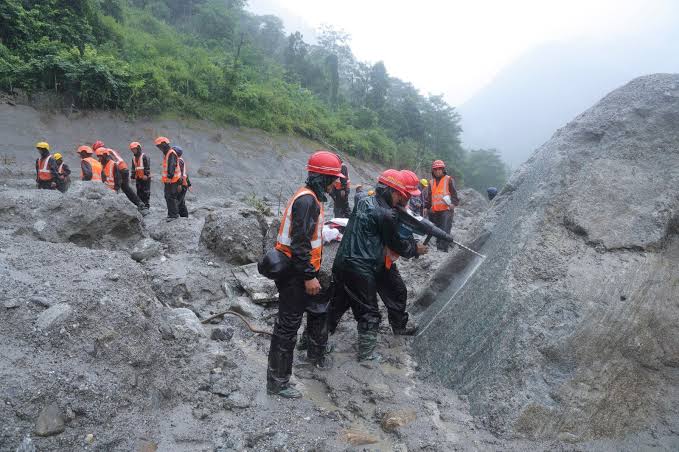
A glacier collapse caused a huge flood in the Himalayas.
More than 900 people have died, and many others are still missing.
The flood damaged roads, bridges and power projects in Nepal.
Rebuilding could cost Nepal between $4 billion and $5 billion.
The disaster has raised questions about how countries can pay for damage from extreme weather.
Around the world, many disaster losses are not covered by insurance.
India has discussed a national disaster insurance programme, but it has not started.
One type of insurance can pay automatically when rainfall, temperature or cyclone levels pass agreed limits.
A damaged hydropower project in Nepal may show how this type of insurance works in a real disaster.

A glacier collapse triggered a flash flood that killed more than 900 people, with nearly 5,000 still missing.
The disaster damaged roads, bridges and hydropower facilities, creating an estimated $4 billion-$5 billion reconstruction bill for Nepal.
Global natural catastrophes caused an estimated $100 billion in losses during the first half of 2026, with about 42% insured.
Only about 5% of disaster-related losses in India are estimated to be insured, according to a research foundation.
Parametric insurance could provide automatic payouts after extreme weather thresholds are breached, but wider adoption requires funding and coordination.
- Who
- People and communities in Nepal were affected, while policymakers, insurers and researchers are examining disaster insurance.
- What
- A glacier-collapse flash flood caused major deaths and destruction, renewing calls for structured climate-risk insurance.
- Where
- The disaster occurred in the Nepal-Tibet Himalayan region; the insurance discussion also focuses on India.
- When
- The disaster occurred last week; the article also cites global loss data for the first half of 2026 and an August 11 report.
- Why
- Climate-linked disasters are causing large human and economic losses, while insurance coverage remains limited and government relief is often ad hoc.
Structured Insurance Expansion
Existing Relief And Conventional Coverage
National disaster protection
Structured Insurance Expansion
Supporters say a government-backed national scheme could provide basic mandatory protection and make disaster support more predictable.
Existing Relief And Conventional Coverage
The current system relies largely on state relief, which Shailaja Lall described as unstructured and ad hoc; the proposed nationwide programme has not been implemented.
Parametric insurance
Structured Insurance Expansion
Proponents say parametric policies can pay automatically when rainfall, temperature or cyclone-intensity thresholds are breached, and may help in hazard-prone Himalayan areas.
Existing Relief And Conventional Coverage
Insurers say traditional coverage is generally more suitable for businesses, while parametric products can face funding, coordination and adoption challenges.
Key facts
- Deaths and missing
- More than 900 people were killed and nearly 5,000 remained missing after the flash flood.
- Nepal reconstruction estimate
- Damage to roads, bridges and hydropower facilities could cost $4 billion-$5 billion to rebuild.
- Global catastrophe losses
- Swiss Re Institute estimated $100 billion in natural-catastrophe losses worldwide during the first half of 2026.
- Global insured share
- About 42% of those global losses were insured.
- India’s insurance coverage
- An estimated 5% of disaster-related losses in India are insured.
- Proposed Indian programme
- A nationwide disaster insurance plan has been discussed, potentially funded by a small levy on utility bills, but has not been implemented.
- Potential test case
- Nepal’s Upper Trishuli-1 hydropower project was reportedly covered by a parametric policy and was damaged in the floods.
Quotes
Shailaja Lall
Partner and head of the insurance practice at Shardul Amarchand Mangaldas & Co.
“It may be particularly useful in hazard-prone locations such as parts of the Himalayas, where conventional insurance coverage or capacity can sometimes be difficult to obtain.”
 deccanchronicle.com
“In India, Nagaland has pioneered a state-level parametric disaster insurance programme, although the model is yet to be adopted more widely.”
deccanchronicle.com
Sources
Related news
Nepal Flood Reconstruction Bill Could Reach $5 Billion

Nepal Flood Death Toll Reaches 675 as Rescue Efforts Intensify

Nepal Flood Hits Hydropower Projects and Stock Market

Nepal Flood Reconstruction Could Cost $5 Billion
Landslides Threaten Nainital Homes as Uttarakhand Rain Continues

Flash Flood Devastates Nepal's Bhotekoshi River Region

Nepal Families Seek Missing Loved Ones After Deadly Flash Floods

Nepal Flood Death Toll Passes 1,200 Amid Ongoing Search

Nepal Flood Death Toll Tops 1,200 as Searches Continue