11 months ago
Tea Industry Divided: Small Growers Urge Winter Closure, Big Estates Oppose
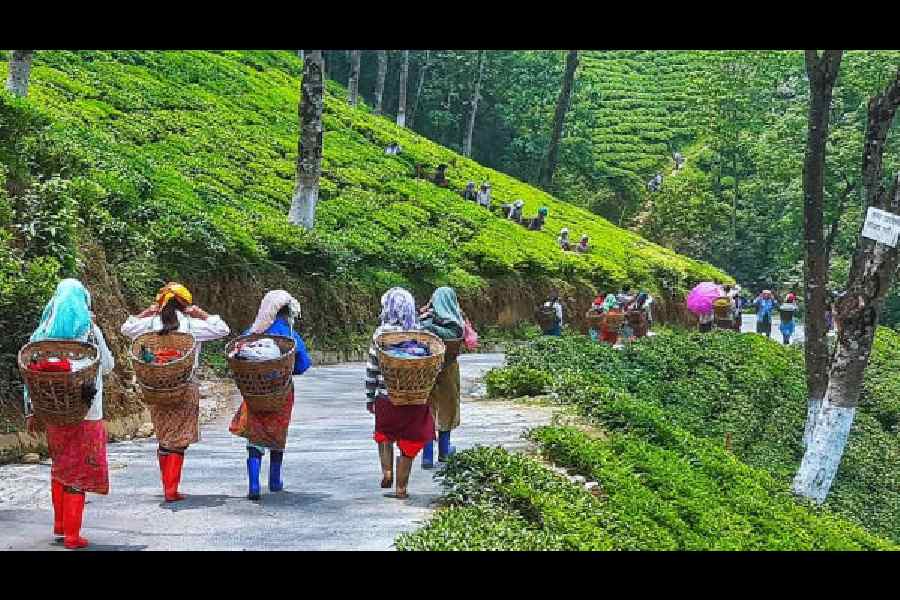
Imagine a big group of tea farmers, some with huge farms and some with small ones.
Every winter, when the tea plants don't grow much, they usually stop picking leaves for a while.
This helps to make sure there isn't too much tea and that the tea they do make is good quality, which helps keep prices up.
However, this year, the big farms think stopping early didn't help much because lots of tea was still imported from other countries, and they still didn't get good prices.
So, they want to decide for themselves when to stop picking.
But the small farmers are worried.
They think if the big farms stay open, they might pick low-quality leaves or use leftover bits, which could ruin the market for everyone.
They want the government to tell everyone to stop picking by a certain date, like they used to do.
The government is trying to figure out what to do, and everyone is waiting for their decision.

Organised tea players and small growers have differing opinions on mandatory winter closure of tea production.
The Tea Board is deciding whether to announce an early closure date for the 2025 winter season in North India.
Organised players (ITA, TAI) oppose early closure, citing lack of price improvement and increased imports impacting the market.
Small growers (CISTA) advocate for early closure to prevent market damage from poor quality winter tea production and waste.
Auction prices for CTC leaf and dust in North India have decreased between April and October, despite some production cuts.
- Who
- Organised tea players (represented by ITA and TAI) and small tea growers (represented by CISTA), along with the Tea Board of India.
- What
- Divergent views on whether to implement a mandatory early winter closure for tea production to manage supply, demand, and prices.
- Where
- Primarily affecting North India, specifically tea gardens in Bengal and Assam.
- When
- The Tea Board is yet to announce a date for the 2025 early closure, with a decision expected later this month.
- Why
- To address issues of lower auction prices, higher production, and rising imports. Small growers advocate for closure to prevent market damage from poor quality tea production during winter, while organised players argue that past closures did not improve prices and imports filled the supply gap.
Small Tea Growers (CISTA)
Organised Players (ITA, TAI)
Winter Closure Decision
Small Tea Growers (CISTA)
Urges the Tea Board to issue an order for an early winter closure, notifying the last plucking date as December 25 for Bengal and December 20 for Assam, to prevent production of poor quality tea and damaging the market.
Organised Players (ITA, TAI)
Argues against an early closure, stating that last year's closure did not lead to better prices and that the sacrificed crop was met by imports, with producers not gaining.
Impact of Imports and Production
Small Tea Growers (CISTA)
Believes that without a formal notification for closure, production with poor quality tea waste will damage the market.
Organised Players (ITA, TAI)
Believes that a surge in cheap imports, particularly from Kenya, and higher domestic production have impacted market prices despite lower auction prices.
Planning and Quality
Small Tea Growers (CISTA)
Requests the Board to announce a start date for plucking along with the closure notification to allow growers to plan pruning, which is important for quality.
Organised Players (ITA, TAI)
Members have decided not to push for an early closure, conveying this to the Tea Board, due to the lack of benefits from previous closures.
Key facts
- Mandatory Winter Closure (North India)
- Started in 2018 to balance supply and demand, support prices.
- 2024 Production Stop Date (Bengal)
- November 30
- Organised Players' Associations
- Indian Tea Association (ITA), Tea Association of India (TAI)
- Small Growers' Association
- Confederation of Small Tea Growers Associations (CISTA)
- Auction Price Drop (April-October)
- 15.13% for CTC leaf and dust (Assam), 17.56% for Dooars-Terai (Bengal)
- North India Production (Dec, est.)
- 50-55 million kg
- Imports (April-August 2025)
- 25.71 million kg
- Imports (April-August 2024)
- 22.67 million kg
- Small Growers' Share of Production
- 54%
Quotes
Arijit Raha
Secretary-general of the Indian Tea Association (ITA), an industry body representing organized tea producers.
“Early closure last year did not translate into buoyant prices in the first part of 2025. One could attribute this to the surge in imports towards the end of 2024, apart from higher production in the current year.”
 telegraphindia.com
“Though imports are likely for re-exports, apparent surplus globally as well as in the domestic pipeline may have impacted the market.”
telegraphindia.com
Prabir Bhattacharjee
Secretary-general of the Tea Association of India (TAI), an industry body representing organized tea producers.
“We saw that there has been a surge of cheap tea from Kenya, below our average cost of production. The crop we sacrificed was met by imports, and producers did not gain. Hence, our members have decided not to press for an early closure, and the same has been conveyed to the Tea Board.”
telegraphindia.com
“As days get shorter during winter, production drops and quality suffers. It, therefore, makes no sense to keep the gardens open.”
telegraphindia.com
A source aware of the deliberations
An unnamed source privy to the internal discussions of the Tea Board.
“A decision for early closure during winter months was taken based on the representation from stakeholders. Now the decision to keep it open has also been taken by the Board based on the feedback from stakeholders.”
telegraphindia.com
Bijoy Gopal Chakraborty
President of the Confederation of Small Tea Growers Associations (CISTA), an umbrella body representing small tea growers.
“The Board should also announce a date to start plucking at the time of closure notification so that producers can plan pruning tea bushes, which is important for quality.”
telegraphindia.com
Sources
Related news

Seven Political Movements Reflect Growing Global Public Discontent
Odisha-Born CSM Tech Deploys Kenya’s National Royalty System

Survey Finds More People Say Social Media Harms Democracy

Pew Survey Finds Growing Concern Social Media Harms Democracy

INS Tarkash Visit Deepens India-Kenya Maritime Cooperation in Mombasa