

5 hrs ago
India’s Death Penalty Debate Expands Beyond Hanging and Life Imprisonment
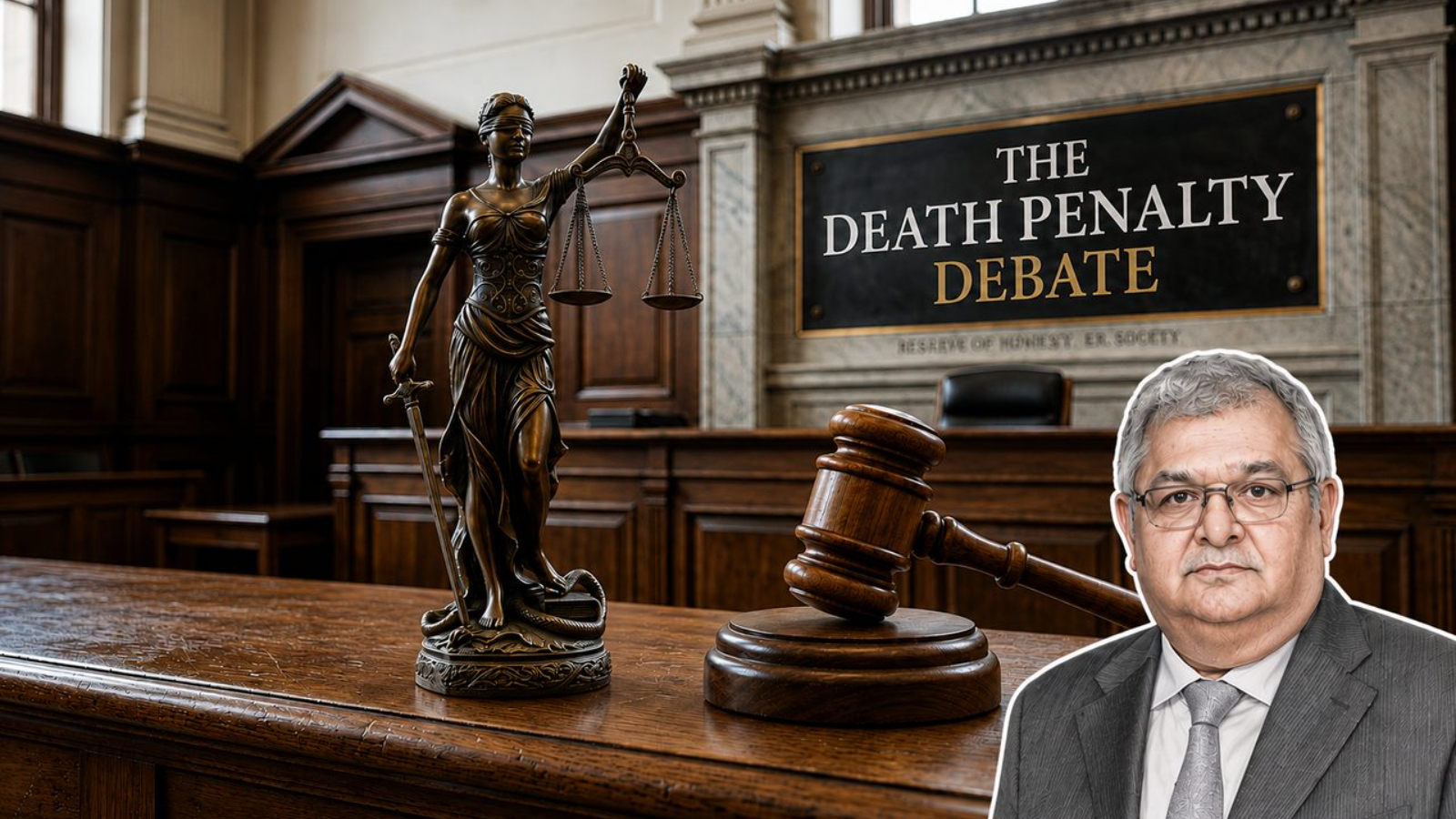
India has three ways of dealing with some of the most serious crimes.
A person may be executed, kept in prison for life, or left waiting for many years while courts and officials decide what happens.
The article says this waiting can itself become a kind of punishment.
Many death-penalty cases take years to finish in the High Courts and Supreme Court.
One recent trial mentioned in the article lasted 22 years, followed by another 22 years of appeal proceedings.
Indian courts have created rules to limit executions and consider a prisoner’s personal circumstances.
Parliament has also created sentences that can keep someone imprisoned for the rest of their natural life.
The article says there is no credible evidence that executions deter murder better than life imprisonment.
It calls for a broader public discussion about all forms of punishment that may end with a person dying in custody.

Indian death sentences can result in execution, whole-life imprisonment, or years of unresolved legal and mercy proceedings.
As of December 31, 2025, 33 cases involving 46 people were pending before the Supreme Court, with an average pendency of 6.06 years.
Another 312 cases involving 478 people were pending before High Courts, where the average pendency was 2.99 years and the longest was nearly 20 years.
Recent cases involving mass death sentences and decades-long trials have renewed concerns about sentencing quality and the right to a speedy trial.
The column argues that India’s debate should examine prolonged confinement and uncertainty, not only whether executions should be retained or abolished.
- Who
- People sentenced to death or whole-life imprisonment, courts, Parliament, and criminal-justice authorities in India.
- What
- A legal and policy debate over executions, whole-life imprisonment, and lengthy delays in death-penalty proceedings.
- Where
- India, including the Supreme Court, High Courts, and prisons such as Tihar, Yerwada, and Arthur Road.
- When
- The statistics cited are as of December 31, 2025; the article also discusses Supreme Court developments in April and July 2026.
- Why
- The column argues that prolonged appeals, mercy-petition delays, and indefinite confinement may create serious constitutional and humanitarian concerns.
Abolition and restraint
Retention and punishment
Whether executions are necessary
Abolition and restraint
The article cites the Law Commission’s conclusion that there is no credible evidence that the death penalty deters murder more effectively than life imprisonment.
Retention and punishment
Retentionist reasoning, as presented in the debate, treats death as justified for the most serious crimes and potentially important for retribution and deterrence.
What should replace the death penalty
Abolition and restraint
A reliable life sentence or imprisonment for the remainder of natural life could serve the purposes of punishment without execution.
Retention and punishment
Courts have developed whole-life imprisonment as an alternative for cases where release after a conventional life term is considered inappropriate.
How delays should affect punishment
Abolition and restraint
Years of uncertainty, delayed mercy decisions, and prolonged death-row confinement may violate Article 21 and should weigh strongly toward commutation or other relief.
Retention and punishment
Courts have generally treated delay as a factor to be assessed case by case rather than as an automatic reason to overturn a sentence.
Key facts
- Supreme Court pendency
- 33 cases involving 46 people were pending as of December 31, 2025.
- Supreme Court average
- Cases had remained pending for an average of 6.06 years, with a median of 6.59 years.
- Longest Supreme Court pendency
- The longest cited period was 13.94 years; the shortest was 44 days.
- High Court pendency
- 312 cases involving 478 people were pending before High Courts as of December 31, 2025.
- High Court average
- The average High Court pendency was 2.99 years, with a median of 2.33 years and a maximum of nearly 20 years.
- Death-row population
- The article says 545 people were on death row at the end of 2023, with more than one-fifth in Uttar Pradesh.
- Law Commission recommendation
- The Law Commission’s 262nd Report recommended abolishing the death penalty except for terrorism and waging war against the state.
Sources
Related news
Supreme Court Keeps Hanging, Leaves Door Open For Review

Supreme Court Upholds Execution by Hanging, Stresses Dignity

Supreme Court Rejects Plea To Replace Death By Hanging

India Retains Hanging as Global Executions Rise Despite Debate
Supreme Court bins plea to replace death by hanging
