2 weeks ago
Supreme Court Retains Hanging, Leaves Door Open For Alternatives

India’s Supreme Court decided that hanging can continue to be used for carrying out death sentences.
The court did not order the government to adopt another method.
It relied on an earlier 1983 ruling that had approved hanging.
A person who challenged the method argued that it should be reconsidered.
The judges rejected that challenge.
However, they said the government can study other methods in the future.
New science or technology might lead to a method that causes less unnecessary pain.
The court also said condemned prisoners’ dignity should be protected.

The Supreme Court declined to replace hanging as India’s constitutionally valid execution method.
A bench rejected reconsideration of the 1983 Constitution Bench ruling in Deena v. Union of India.
The court said its decision does not prevent future scrutiny based on scientific and technological developments.
The Union government may examine alternatives that reduce pain while preserving condemned prisoners’ dignity.
The challenge concerned Section 354(5) of the Code of Criminal Procedure, now reflected in Section 393(5) of the Bharatiya Nagarik Suraksha Sanhita, 2023.
- Who
- A Supreme Court bench comprising Justices Vikram Nath and Sandeep Mehta, in a case filed by senior advocate Rishi Malhotra.
- What
- The Supreme Court declined to invalidate hanging as the method for carrying out death sentences.
- Where
- New Delhi.
- When
- Tuesday; the articles do not provide a specific date.
- Why
- The court found no basis to reconsider its 1983 ruling upholding hanging, while allowing future review based on scientific and technological developments.
Challenge to Hanging
Court’s Ruling
Constitutionality of the method
Challenge to Hanging
Rishi Malhotra challenged the constitutionality of execution by hanging and sought consideration of a less painful or more humane method.
Court’s Ruling
The Supreme Court held that no case had been made to reconsider the 1983 ruling that upheld hanging as constitutionally valid.
Possibility of alternatives
Challenge to Hanging
The challenge sought replacement of hanging with another execution method described as less painful or humane.
Court’s Ruling
The court did not mandate a replacement but said the Union government may review the method and consider alternatives as scientific and technological developments occur.
Future scrutiny
Challenge to Hanging
The petition called for judicial reconsideration of the existing execution method.
Court’s Ruling
The court dismissed the challenge without foreclosing future scrutiny based on scientific knowledge and subsequent developments.
Key facts
- Current execution method
- Hanging remains constitutionally valid for carrying out death sentences.
- Earlier precedent
- A 1983 Constitution Bench judgment in Deena v. Union of India upheld hanging.
- Bench
- Justices Vikram Nath and Sandeep Mehta.
- Petitioner
- Senior advocate Rishi Malhotra, appearing in person.
- Relevant provision
- Section 354(5) of the Code of Criminal Procedure.
- Current legal reference
- Section 393(5) of the Bharatiya Nagarik Suraksha Sanhita, 2023.
- Future review
- The Union government may consider alternatives in light of scientific, technological, neurological or other future developments.
Quotes

Supreme Court Bench
A bench of Supreme Court justices Vikram Nath and Sandeep Mehta
“The court further observed that nothing in its judgment prevented the Union government from reviewing the existing method and considering an alternative aligned with scientific developments”
 thehansindia.com
“The dismissal does not foreclose any future scrutiny based on scientific knowledge and subsequent developments”
thehansindia.com
Sources
Related news

Supreme Court Rejects Plea To Replace Death By Hanging
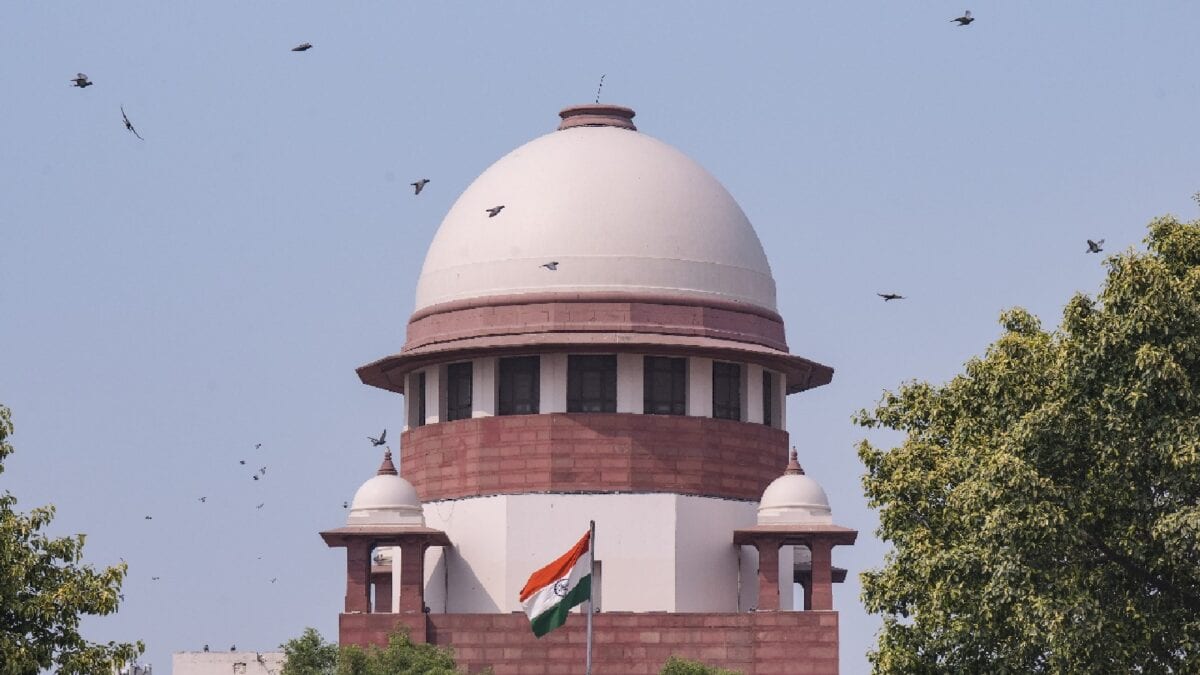
Supreme Court Keeps Hanging, Leaves Door Open For Review
Supreme Court bins plea to replace death by hanging

Supreme Court Upholds Execution by Hanging, Stresses Dignity

SC Verdict: Hanging Stays, Centre Can Explore Alternatives
India Retains Hanging as Global Executions Rise Despite Debate

PUCL Urges CJI Action Over Rajasthan High Court Allegations

Supreme Court Questions IPS Deputation for CAPF Leadership Positions
Supreme Court Quashes 20-Year Conviction, Reaffirms Juvenile Legal Protections

Two Years After RG Kar Doctor's Rape-Murder, Case Remains Unresolved

ED widens Chhattisgarh probes with two arrests and searches