2 hrs ago
Indian Railways Explains Alarm Chain Rules, Penalties and Emergencies
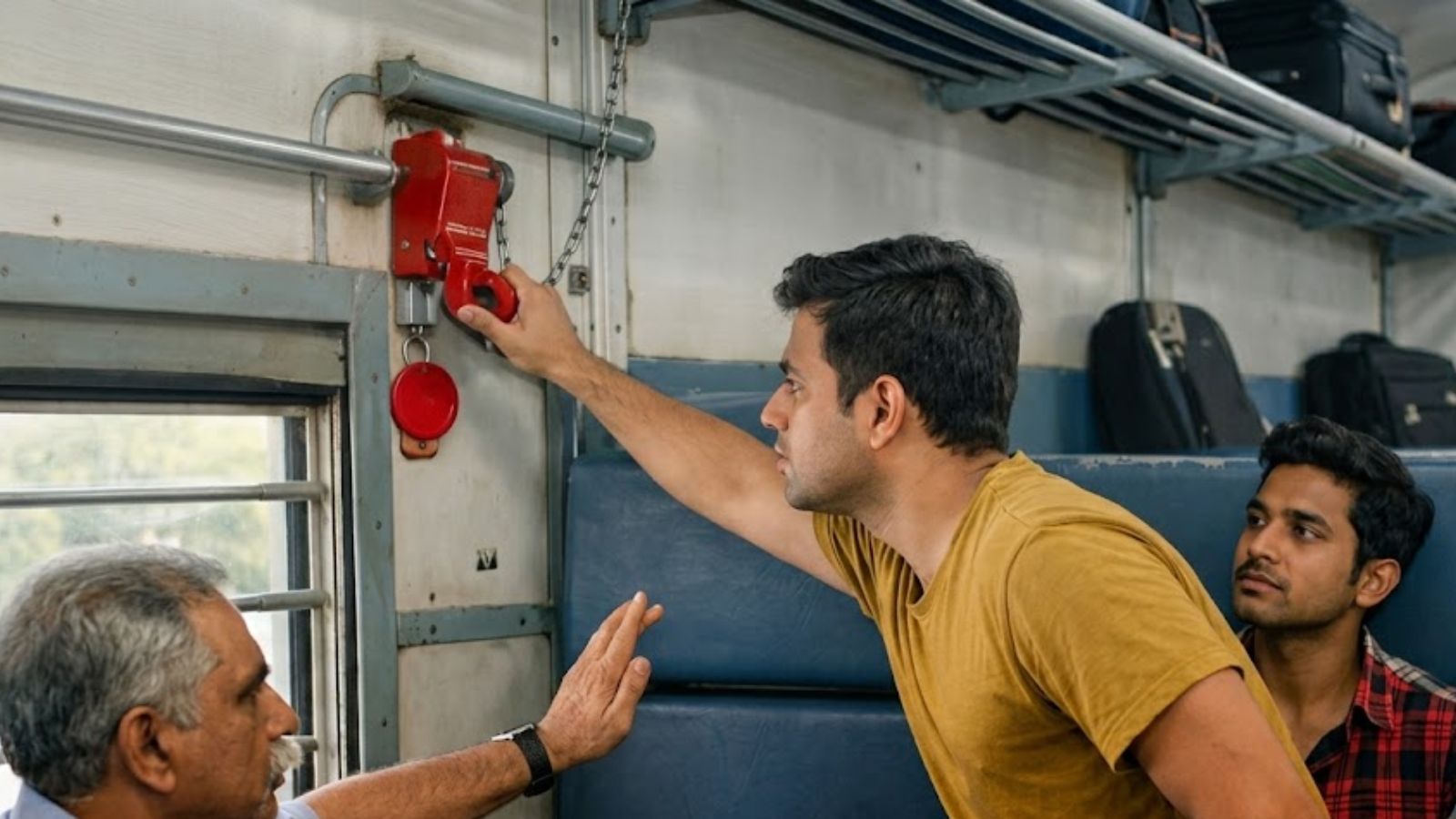
An alarm chain on a train is meant for serious emergencies.
When someone pulls it, air escapes from the train’s brake system.
The lower air pressure tells the loco pilot to slow and stop the train.
A fast-moving train may need time to stop safely.
Railway workers then check what happened and reset the chain.
The chain can be used for problems such as a fire, a serious medical emergency or someone falling from the train.
It should not be pulled because someone missed a station or boarded the wrong train.
Unnecessary stops can delay many passengers and other trains.
People who misuse the chain may face a fine or imprisonment.

Pulling the alarm chain vents air from the train’s brake pipe, reducing pressure and slowing the train.
Railway staff investigate the stoppage, reset the chain and allow the train to resume when appropriate.
The chain should be used only for serious emergencies, such as a medical crisis, fire, passenger fall or security incident.
Missing a station or boarding the wrong train is not a valid reason to pull the chain.
Unnecessary use is punishable under Section 141 of the Railways Act, 1989, with fines or imprisonment.
- Who
- Passengers, loco pilots, railway staff, the Railway Protection Force and Indian Railways are involved.
- What
- Indian Railways explained how alarm chain pulling stops a train, when it is allowed and what penalties apply for misuse.
- Where
- The mechanism operates inside train coaches; reported cases came from the Agra, Jhansi and Prayagraj divisions.
- When
- The report cites 6,393 alarm chain pulling cases recorded between January and August 2026.
- Why
- The alarm chain is intended to protect passengers during genuine emergencies, while unnecessary use causes unscheduled stoppages and delays.
Key facts
- Brake-pipe pressure
- Normally around 5 kg per square centimetre.
- Emergency signals
- Three horn sounds indicate to the guard and security personnel that the chain was pulled.
- Valid uses
- Serious medical emergencies, passenger falls, fires and serious criminal or security incidents.
- Legal provision
- Section 141 of the Railways Act, 1989, covers unnecessary interference with train communication equipment.
- Penalty
- Up to one year in prison, a fine of up to Rs 1,000, or both; the article also cites a minimum Rs 500 fine for a first offence and three months’ imprisonment for a second or later offence, subject to the provision’s circumstances.
- Reported cases
- There were 6,393 cases across the Agra, Jhansi and Prayagraj divisions from January through August 2026.
- Enforcement result
- Railways reported 6,379 arrests and Rs 16.63 lakh in collected fines in those divisions.
- Passenger assistance
- Passengers needing help are advised to call 139 or use the Rail Madad app.
Quotes
A Railway official
Railway official quoted in the article
“A strong hissing sound caused by the escaping air can also be heard from the coach where the alarm chain was pulled. This helps railway staff identify the affected coach. Once the reason for the alarm chain pulling is checked and the chain is manually reset, the train can resume its journey.”
 indianexpress.com
“If someone misses their station or realises that they are travelling on the wrong train, they should get down at the next station and make alternative travel arrangements.”
indianexpress.com
Sources
Related news

Passenger Rescued After Slipping Under Moving Train at Karjat
Western Railway Delays Services On Revised Timetable’s First Day
Indian Railways Plans Direct Routing of Rail Madad Complaints

Central Railway GM honours 12 employees with Safety Awards
Bird Strike, Wheel-System Snag Disrupt Mumbai and Vande Bharat Services

From Football Boots to Whistle, Kishor Choudhari Rises
CBI Alleges Former Railway DRM Held ₹2.19 Crore Assets
Panic Reported Aboard Panvel-CSMT Local After Missed Stops
Pune Railway Mega Block From September 19 Affects Trains