11 hrs ago
China names Hu Changsheng Tibet party chief in reshuffle
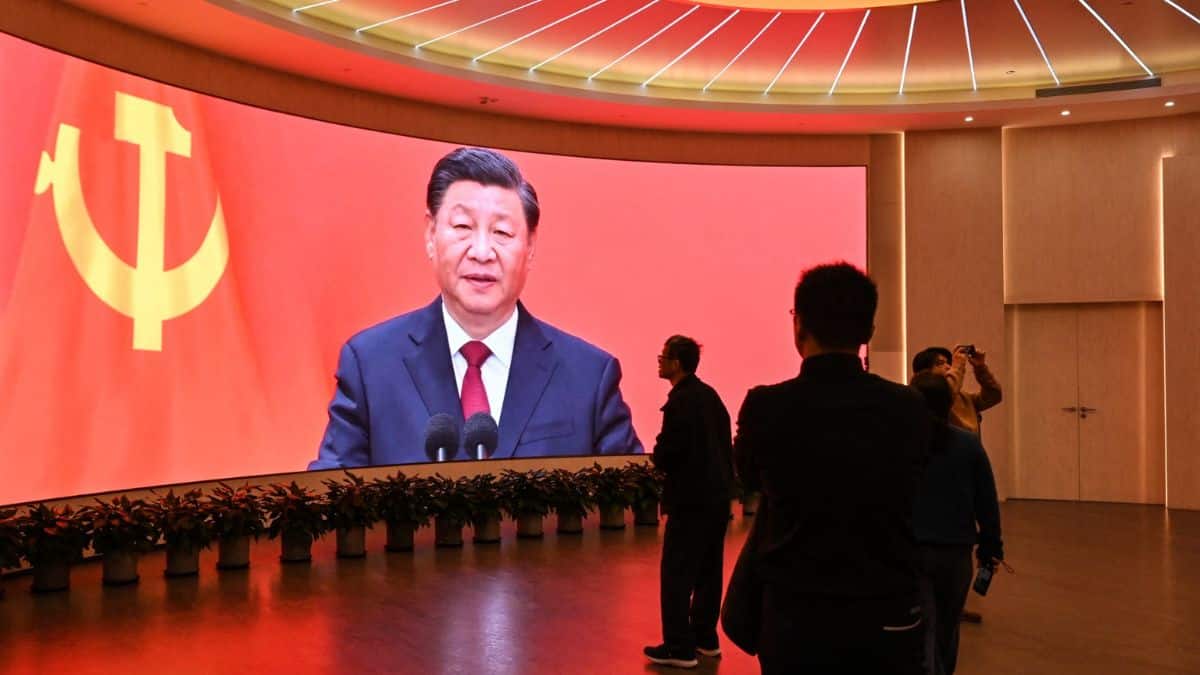
China changed several top political leaders in three provinces.
Hu Changsheng is now the Communist Party leader in Tibet.
He replaced Wang Junzheng, who had held the job for about five years.
Hu previously led Gansu province.
Wu Xiaojun will now lead Gansu.
Luo Dongchuan will become the Communist Party leader of Qinghai.
At a meeting in Lhasa, Hu promised to support the Communist Party.
He also said he would work on stability, ethnic unity, and religious affairs.
The changes come before important Communist Party meetings, including a national congress expected in 2027.

Hu Changsheng, 62, replaces Wang Junzheng as Communist Party secretary of Tibet.
Hu previously served as Communist Party secretary of Gansu province from 2022.
Wang, 63, stepped down after about five years in Tibet, with state media citing his age.
Wu Xiaojun will replace Hu in Gansu, while Luo Dongchuan will lead Qinghai.
Hu pledged loyalty to the Communist Party and vowed to strengthen stability, ethnic unity, and control of religious affairs.
- Who
- Hu Changsheng was appointed Tibet’s Communist Party secretary, replacing Wang Junzheng; Wu Xiaojun and Luo Dongchuan also received new provincial leadership posts.
- What
- China carried out a regional leadership reshuffle involving Tibet, Gansu, and Qinghai.
- Where
- The main appointment was formally made in Lhasa, Tibet, with related changes in Gansu and Qinghai.
- When
- The changes were announced on Tuesday, ahead of a major Communist Party meeting expected in October and the 21st Party Congress expected in 2027.
- Why
- The reshuffle comes ahead of key Communist Party meetings and reflects Beijing’s stated priorities of stability, ethnic unity, opposition to separatism, and management of religious affairs.
Beijing’s stated priorities
Concerns surrounding Tibet’s governance
Political and religious control
Beijing’s stated priorities
Hu said he would maintain stability, strengthen ethnic unity, oppose separatism, and intensify rule-of-law-based management of religious affairs.
Concerns surrounding Tibet’s governance
The article notes that Beijing’s focus on political stability, ethnic unity, and religious control is part of its broader governance approach in Tibet; it also reports that Wang Junzheng previously faced United States sanctions over alleged human rights abuses linked to his earlier work in Xinjiang.
Key facts
- New Tibet leader
- Hu Changsheng, 62
- Previous Tibet leader
- Wang Junzheng, 63, who served about five years
- Hu’s previous position
- Communist Party secretary of Gansu province since 2022
- Gansu’s new leader
- Wu Xiaojun, formerly Qinghai’s Communist Party chief
- Qinghai’s new leader
- Luo Dongchuan, formerly Qinghai’s governor
- Next national Party Congress
- Expected in 2027
- Hu’s stated priorities
- Political stability, ethnic unity, opposition to separatism, and rule-of-law-based management of religious affairs
Sources
Related news
China Removes General Linked to Doklam and Galwan Clashes

Congress Reshuffle Names Sachin Pilot Punjab In-Charge, Moves Baghel Assam
Cai Qi and Wang Yi: Xi’s Key Aides at BRICS
China Expels Top General Zhang Youxia in Military Purge
China Removes Two Generals, Leaving Military Commission With Two
Congress Replaces Baghel With Pilot Amid Punjab Infighting
Nepal's Avalanches Expose Rising Risks of Himalayan Disasters

Global Mountain Glaciers Lose 6.2 Percent of Mass Since 2000
Climate Scientist Urges Early Warnings Beyond Rainfall After Nepal Floods

Nepal Forms Panel to Investigate Deadly Bhotekoshi Floods