1 day ago
Google WeatherNext 3 Brings Hourly, Higher-Resolution Forecasts
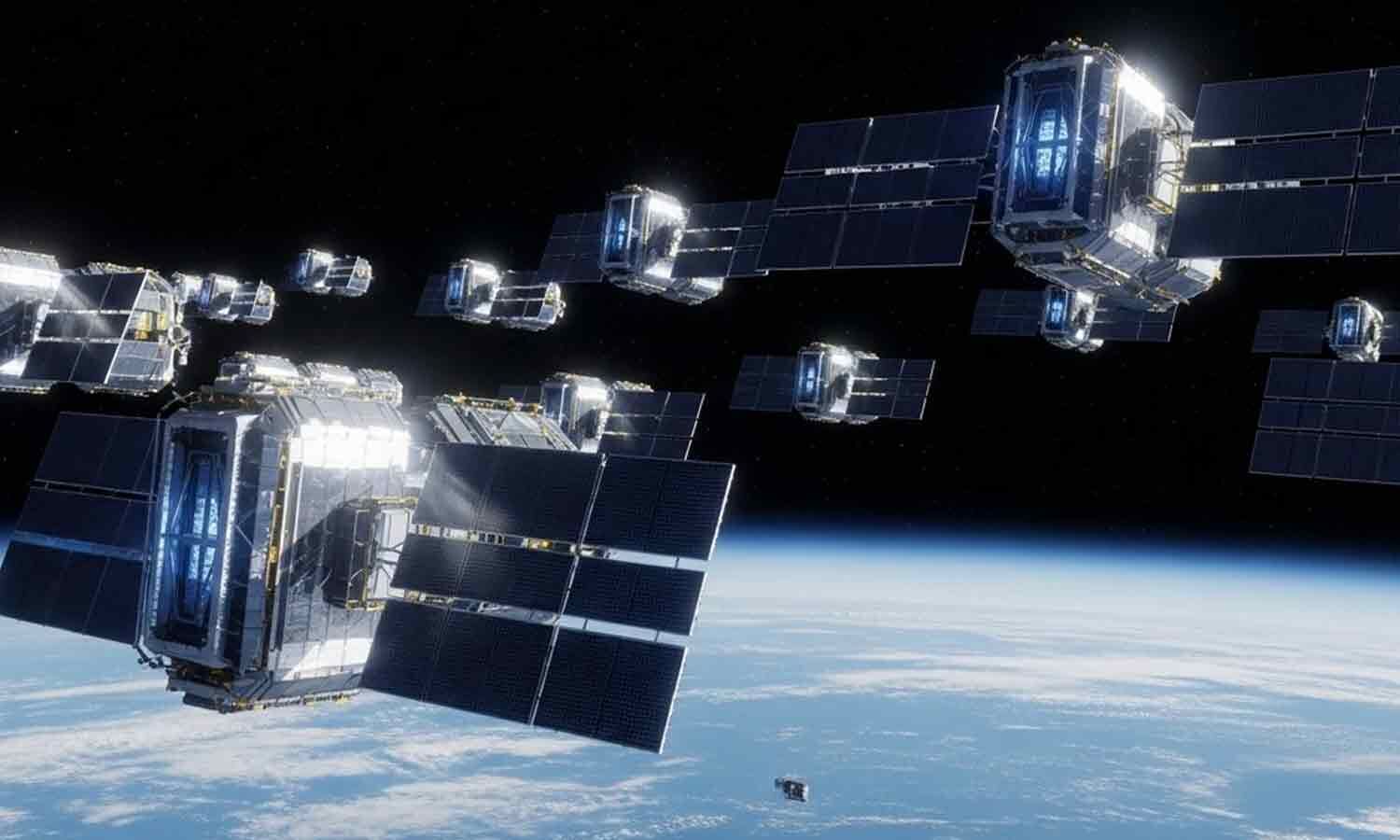
WeatherNext 3 is a computer system made by Google that predicts the weather.
It uses artificial intelligence to study information from satellites and weather stations.
The system can make new forecasts every hour instead of every six hours.
Some of its predictions can describe weather in areas as small as five kilometers across.
This may help it follow storms and changing rain more closely.
Google says it performed better than several other computer models and traditional forecasting systems in tests.
Google also says its rainfall forecasts improved, although the reported results used different comparison datasets.
The model may help Google show weather information in Search, Maps, Gemini, and other services.
It could also help wind and solar farms estimate how much electricity they may produce.

Google DeepMind and Google Research released WeatherNext 3, an AI model for global weather forecasting.
The model can forecast some surface variables at 5-kilometer resolution and update predictions hourly.
Google says WeatherNext 3 outperformed tested AI and traditional forecasting models on Brightband’s Operational Weather Bench.
The system uses real-time geostationary satellite data, weather-station observations, and precipitation datasets to improve forecasts.
Google says the model improves rainfall predictions and could support Google products and renewable-energy planning.
- Who
- Google DeepMind and Google Research developed WeatherNext 3, with testing conducted by Brightband.
- What
- Google unveiled an AI weather model that produces higher-resolution, hourly forecasts using real-time observations.
- Where
- It is intended for global forecasting and integration into Google Search, Google Maps, Gemini, Google Earth Engine, and Google’s cloud platform.
- When
- The articles describe the model as newly released or unveiled; no exact date is specified.
- Why
- The model is designed to provide faster, more detailed forecasts and improve information about rapidly changing weather.
AI Forecasting Benefits
Traditional Forecasting Cautions
Speed and detail
AI Forecasting Benefits
WeatherNext 3 can produce hourly forecasts and describe some surface conditions at 5-kilometer resolution, potentially improving tracking of storms, fronts, and precipitation systems.
Traditional Forecasting Cautions
Traditional government-operated systems are described as accurate but slower and more cumbersome because they rely on large mathematical simulations.
Performance claims
AI Forecasting Benefits
Google says Brightband’s evaluations found WeatherNext 3 more accurate than tested AI models from Google, Microsoft, NVIDIA, and the European Centre for Medium-Range Weather Forecasts, as well as traditional forecasts from the United States National Weather Service and the European Centre for Medium-Range Weather Forecasts.
Traditional Forecasting Cautions
The reported rainfall improvements use different comparison datasets, including IMERG, MRMS, and rain-gauge measurements, so the percentages are not all direct comparisons with the same system.
Data and limitations
AI Forecasting Benefits
The model directly uses real-time satellite observations and weather-station data, which Google says can provide a more continuously updated picture of the atmosphere and improve coverage in some regions.
Traditional Forecasting Cautions
The articles note that AI weather models can still have weaknesses, including difficulty forecasting rain, and depend partly on datasets produced by government weather agencies.
Key facts
- Surface resolution
- Temperature and humidity can be forecast at a 5-kilometer resolution; other surface variables are available at 10 kilometers.
- Atmospheric resolution
- Variables such as wind speed can be forecast at a 25-kilometer resolution.
- Forecast frequency
- WeatherNext 3 can generate updates hourly, compared with WeatherNext 2’s six-hour intervals.
- Satellite data
- The model uses continuously updated data from geostationary satellites.
- Rainfall evaluations
- Google reports up to a 60% improvement against IMERG, 30% against MRMS, and 10% against rain-gauge measurements for the most immediate forecast periods; another article compares rainfall evaluations with WeatherNext 2.
- Model size
- WeatherNext 3 has 2.4 times more parameters than its predecessors.
- Planned uses
- The model is being integrated into Google Search, Google Maps, Gemini, Google Earth Engine, and other Google platforms, and is intended for renewable-energy planning.
Quotes
Google DeepMind and Google Research
Google teams that developed and described the WeatherNext 3 forecasting model
“a global weather picture approximately five times sharper than that of our previous model, WeatherNext 2”
 thehansindia.com
“the most advanced and accurate global weather model to date”
thehansindia.com
Sources
Related news

Google DeepMind WeatherNext AI Predicts Hurricane Days Early
India operationalises three AI-based weather models for accurate forecasts

AI Weather Forecasts Save Telangana Farmers USD 560: World Bank

Google Launches Gemini 3.7 Flash; Flagship Pro Remains Delayed

AI Founders Leave Bezos-Backed Prometheus to Model Physics
Anima Anandkumar Bets on AI That Understands Physics
G20 Agrees on Principles to Guide Emerging Technology

Google Cloud Expert Urges Contextual AI Defenses Against Cyberattacks
Alphabet Shares Slide as AI Talent Departures Fuel Investor Concerns

US Urges G20 Lighter AI Rules as China Advances