

2 days ago
AI-Enabled Travel-Photo Analysis Gives Scammers Precise Clues
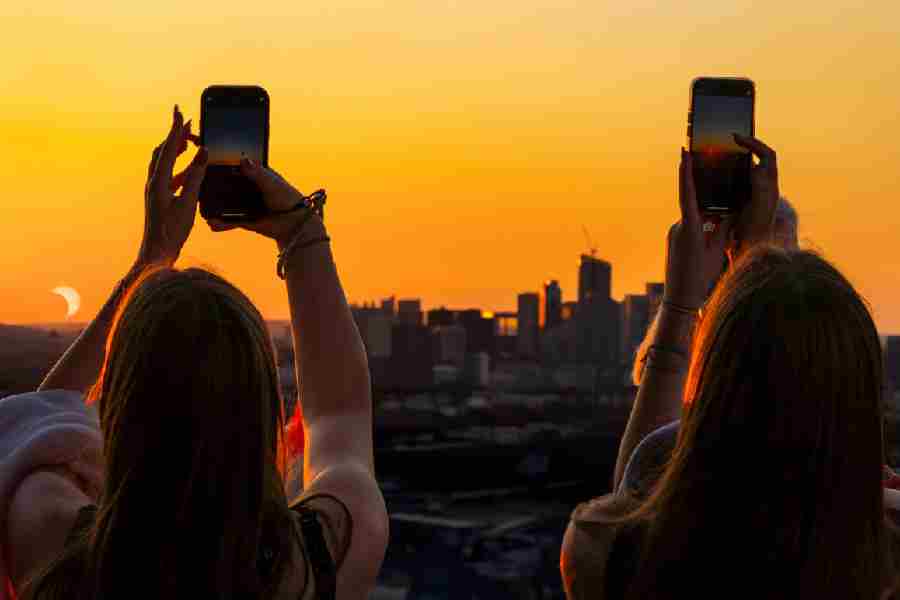
Scammers can use artificial intelligence to study holiday photos posted online.
They may notice signs, buildings, plants or other small clues in a picture.
By combining these clues, AI can sometimes work out where the photo was taken.
McAfee tested two freely available AI models on thousands of travel photos.
One identified the city and country correctly 87 percent of the time, and the other did so 91 percent of the time.
Scammers could use this information to make fake bank, hotel or airline messages seem believable.
Turning off location tags and removing photo metadata can still help protect privacy.
However, people should also think about what the picture itself shows.
If a message creates urgency, users should check directly through the company’s official app or website instead of clicking its link.

McAfee Labs found that AI can often infer a travel photo’s city and country from visual details alone.
In tests, Gemma3 27B reached 87% accuracy, while Qwen3 VL 30B reached 91%.
The research analyzed 21,236 public-domain travel images and separately reviewed 102 additional images.
AI can combine clues such as architecture, vegetation, mountain shapes, menus, signs and streetscapes.
McAfee advises avoiding urgent links and verifying travel, banking or booking messages through official apps and websites.
- Who
- McAfee Labs, including McAfee chief technology officer Steve Grobman, and two freely available AI vision models.
- What
- A McAfee study found that AI can infer travel-photo locations and potentially help scammers personalize phishing messages.
- Where
- The images depicted travel locations, including examples from Lisbon, Mumbai and Goa; the testing used images in the public domain.
- When
- The articles do not specify when the testing was conducted.
- Why
- AI can combine many visual clues in photos to identify locations and create more convincing scam messages.
Key facts
- Research organization
- McAfee Labs, McAfee’s threat research and intelligence division
- Primary dataset
- 21,236 travel images in the public domain
- Additional review
- 102 images in a separate controlled review
- Model accuracy: Gemma3 27B
- 87% for identifying a photo’s city and country
- Model accuracy: Qwen3 VL 30B
- 91% for identifying a photo’s city and country
- Potential scam context
- Messages may falsely cite unusual activity, card transactions or booking problems during travel
- Recommended response
- Verify messages through the official app or website of the bank, hotel, airline or travel company
Quotes
Steve Grobman
Chief technology officer at McAfee
“AI isn’t necessarily looking for one hidden clue. It’s connecting lots of different details. That could be the architectural style, the vegetation, the shape of a mountain range or even something on a restaurant menu. None of those clues is especially revealing on its own but when AI connects all of them, it can be enough to identify where a photo was taken.”
 telegraphindia.com
“The biggest thing to watch for is urgency. If a message tells you there’s a problem with your booking, asks you to make a payment or pushes you to click a link right away, slow down and verify it. Go directly to the hotel, airline or travel company’s official app or website rather than using the link or phone number in the message.”
telegraphindia.com
Sources
Related news

WhatsApp announces AI tool to detect scammers on platform

WhatsApp Begins Android Beta Testing of Scam Alert Feature
Phone Authenticity Tools May Not Solve The Fake Image Crisis
Experts Warn Innocent Social Media Posts Can Expose Users

Woman in Burqa Photographed on Train; Obscene AI Images Alleged
AI Slop Detector Excels at Text, Struggles With Images
Alphabet Shares Slide as AI Talent Departures Fuel Investor Concerns

US Urges G20 Lighter AI Rules as China Advances

Google Reportedly Moves 90 AI Safety Experts From DeepMind

Former Google Researchers Propose Human-AI Judges Against Rogue Models
