3 hrs ago
FCNR(B) Inflows Buy India Time, but Durable Capital Remains Key
India needed foreign money when other investment flows were weak and the rupee was under pressure.
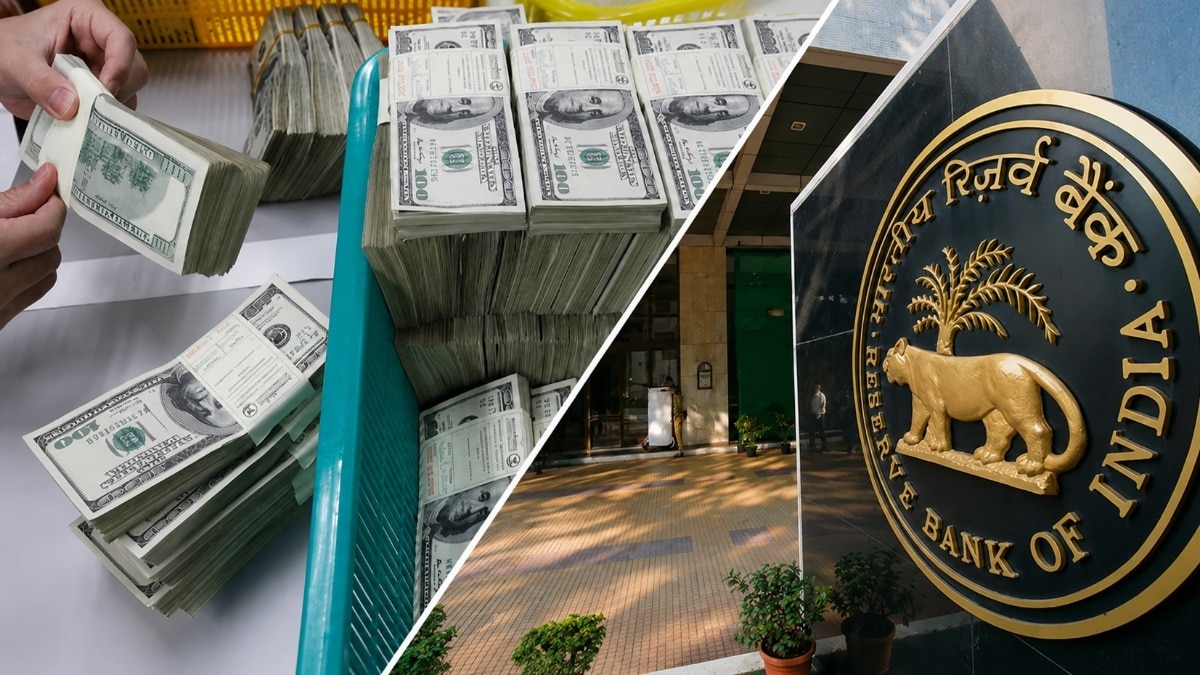
The central bank’s FCNR(B) scheme encouraged banks to bring in dollars from depositors abroad.
This helped strengthen India’s reserves and may have prevented a large payments shortfall.
But the dollars brought in also created extra rupees in the banking system, which the central bank had to manage.
That management and the currency hedges have costs.
The deposits are loans, not permanent investments, so banks will eventually have to repay them.
Repayments are expected over the next three to five years.
Economists say India should use this time to attract steadier, long-term investment.

Banks raised $133 billion through FCNR(B) deposits, while total inflows under special measures reached $143.59 billion including other borrowings.
Economists say the inflows helped avert a potential $60 billion balance-of-payments deficit and strengthened foreign-exchange reserves.
India’s system liquidity peaked at Rs 11.16 lakh crore on September 6 before falling to Rs 4.87 lakh crore by September 30.
The RBI faces hedging and liquidity-absorption costs; Gaura Sengupta estimates its net annual cost at about $1.6 billion.
Deposits mature over the next three to five years; Indranil Pan estimates nearly $80 billion in principal and interest could flow out.
- Who
- The Reserve Bank of India, banks, and economists commenting on the FCNR(B) scheme.
- What
- The scheme brought in substantial foreign-currency deposits, strengthening India’s external position while creating liquidity-management costs and future repayment obligations.
- Where
- India.
- When
- The window closed a month before its September 30 deadline; deposits are expected to mature over the next three to five years.
- Why
- It was introduced amid a balance-of-payments deficit risk, weak capital inflows, and pressure on the rupee.
Benefits and reassurance
Costs and future risks
Immediate external support
Benefits and reassurance
Gaura Sengupta said the scheme was necessary and helped avert a potential $60 billion balance-of-payments deficit while limiting pressure on the rupee.
Costs and future risks
The inflows are borrowed funds rather than permanent capital, and banks will have to repay deposits as they mature.
Scheme costs
Benefits and reassurance
Sengupta said the costs were relatively immaterial compared with the benefits, and foreign assets acquired with the inflows can generate interest income.
Costs and future risks
The RBI incurred hedging and liquidity-absorption costs and carries currency risk; negative carry could arise if sterilisation costs exceed investment returns.
What India needs next
Benefits and reassurance
The scheme provides time to shore up external buffers, and recent trade agreements could eventually support investment flows.
Costs and future risks
Anitha Rangan and Indranil Pan stressed the need for more resilient capital, noting that volatile flows and future repayments could pose risks.
Key facts
- FCNR(B) deposits mobilised
- $133 billion
- Total inflows under special measures
- $143.59 billion, including external commercial borrowings and overseas foreign currency borrowings
- Potential deficit averted
- Gaura Sengupta estimated the scheme helped avert a potential $60 billion balance-of-payments deficit.
- Peak system liquidity
- Rs 11.16 lakh crore on September 6
- System liquidity by September 30
- Rs 4.87 lakh crore
- Estimated RBI net annual cost
- Around $1.6 billion, according to Gaura Sengupta
- Potential future outflows
- Nearly $80 billion, including principal and interest, according to Indranil Pan
Quotes
Gaura Sengupta
Chief economist at IDFC FIRST Bank
“The FCNR(B) scheme was necessary, as it helped avert a potential $60 billion BoP deficit. Without it, the rupee could have depreciated much more sharply, triggering further outflows from foreign portfolio investors (FPIs).”
 financialexpress.com
“We need to watch particularly how the capital account evolves going ahead; the recent volatility in capital flows is a concern. After two months of inflows, September saw significant outflows again.”
financialexpress.com
Sources
Related news
FCNR(B) Inflows Leave RBI Facing Liquidity and Redemption Risks
RBI’s $136 Billion Dollar Strategy Faces Liquidity Risks

FCNR Inflows Cushion Rupee, But FII Flows Needed

FCNR(B) inflows reach $133 billion, boosting reserves but straining liquidity

FCNR Inflows Bring Immediate Rupee Liquidity and Future Risks

RBI Draws $133 Billion Through Special FCNR(B) Deposit Window

Latest Fixed Deposit Interest Rates Listed for October 2, 2026

RBI Bulk Deposit Disclosures Reshape Banks’ Pricing Competition

UAE Signals Additional $25 Billion Investment in India

History Favors October Stock Market Comeback; Stocks to Watch