1 week ago
World Mosquito Day: Which Mosquito Spreads Which Disease?
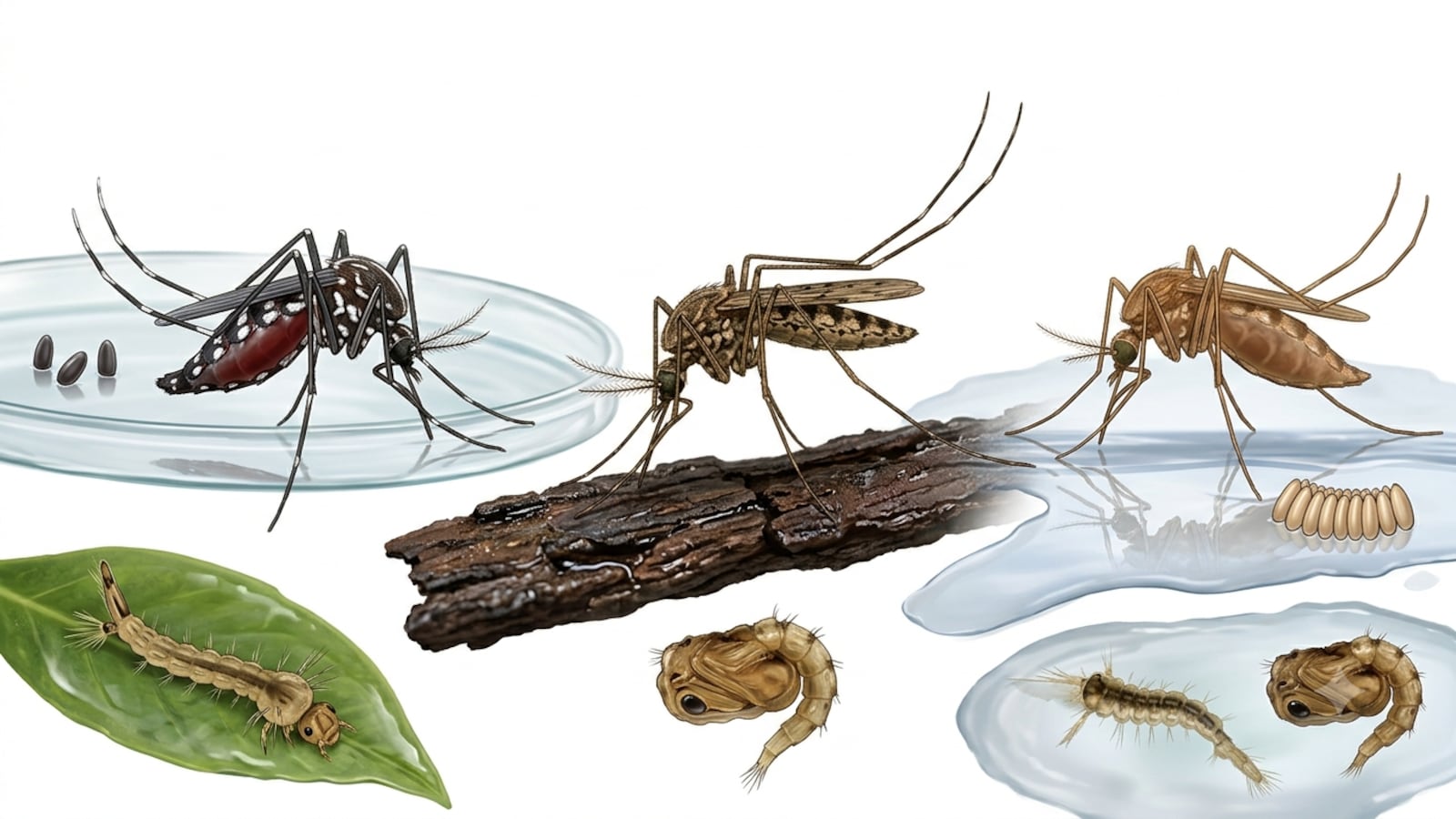
There are many kinds of mosquitoes, and they do not all spread the same illnesses.
Aedes mosquitoes can spread dengue and chikungunya and usually bite during the day.
Anopheles mosquitoes can spread malaria and usually bite at night.
Culex mosquitoes can spread Japanese encephalitis and lymphatic filariasis, mostly in the evening and at night.
A mosquito must first become infected before it can pass a disease to someone else.
A mosquito bite alone cannot tell you which species bit you or whether it carried a pathogen.
Removing standing water helps stop mosquitoes from growing near homes.
Repellent, long clothing, window screens and mosquito nets can provide additional protection.
World Mosquito Day on August 20 remembers Sir Ronald Ross’s discovery that mosquitoes transmit malaria.

Aedes aegypti mainly spreads dengue and chikungunya and usually bites during the daytime.
Anopheles mosquitoes transmit malaria, a Plasmodium parasite infection, and generally bite from evening through the night.
Culex mosquitoes can spread Japanese encephalitis and lymphatic filariasis, mainly during the evening and nighttime.
Mosquito bites cannot reliably identify the species or show whether a mosquito carried a disease-causing pathogen.
Removing stagnant water, covering stored water, using repellents, wearing protective clothing and using nets can reduce mosquito-borne disease risks.
- Who
- Sir Ronald Ross, Aedes, Anopheles and Culex mosquitoes, and people at risk of mosquito-borne diseases are central to the article.
- What
- The article explains which mosquito groups transmit dengue, chikungunya, malaria, Japanese encephalitis and lymphatic filariasis, and how to reduce exposure.
- Where
- The guidance focuses particularly on India, where Aedes, Anopheles and Culex mosquitoes transmit important diseases.
- When
- World Mosquito Day is observed every year on August 20; Aedes mosquitoes mainly bite during the day, while Anopheles and Culex are more active from evening through nighttime.
- Why
- World Mosquito Day commemorates Ronald Ross’s 1897 demonstration that mosquitoes transmit malaria and highlights prevention of mosquito-borne diseases.
Key facts
- World Mosquito Day
- Observed annually on August 20.
- Aedes aegypti
- Major vector of dengue and chikungunya; primarily a daytime biter.
- Anopheles species
- Transmit malaria, a disease caused by Plasmodium parasites; mainly bite at night.
- Culex species
- Can transmit Japanese encephalitis and lymphatic filariasis; generally active in the evening and at night.
- Malaria discovery
- Sir Ronald Ross demonstrated in 1897 that mosquitoes transmit malaria.
- Dengue estimate
- The World Health Organization estimates 100–400 million dengue infections occur globally each year.
- Prevention
- Recommended measures include removing stagnant water, covering stored water, using repellents, wearing protective clothing, using screens and sleeping under mosquito nets.
Sources
Related news

Why World Mosquito Day Honors Ronald Ross’s India Discovery
Doctors Warn Dengue and Malaria Risks Continue Beyond Monsoon
Kerala Reports 105 Confirmed Chikungunya Cases Amid Monsoon Spike

Imported Mosquito on Plane Linked to Two German Malaria Deaths