1 hr ago
Nona Ilish Keeps Bengal’s Salted Hilsa Tradition Alive
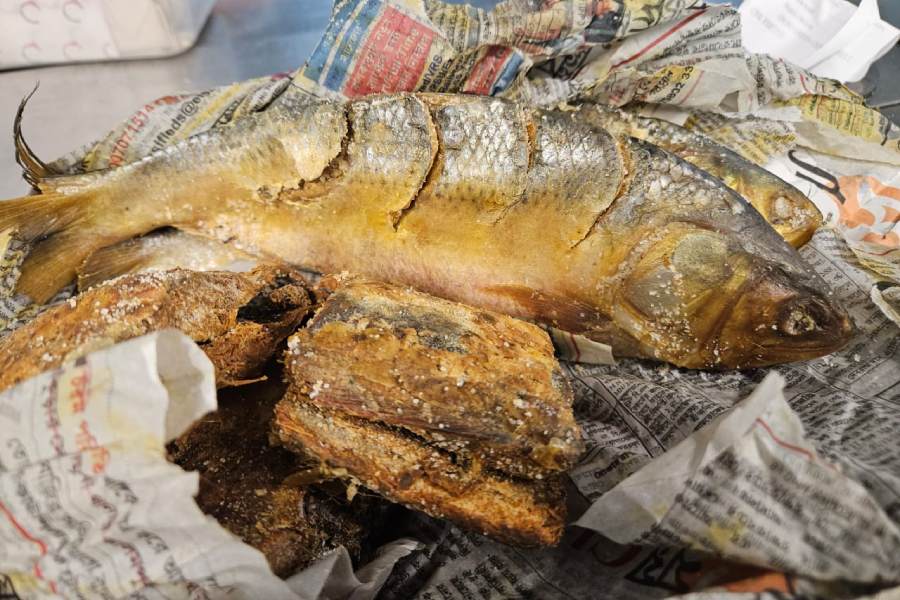
Nona ilish is a special way of preserving hilsa fish with lots of coarse salt.
The fish is cut, salted inside, and left to dry for several weeks.
This tradition began around Chandpur in Bangladesh, where many hilsa are caught.
The preserved fish was useful when it had to travel long distances.
It later became known in Kolkata and other parts of West Bengal.
People usually soak it for many hours before cooking to remove some salt.
It can be made into mashed dishes, fritters, curries or leaf-wrapped preparations.
Many Bengali families associate it with grandparents and older family kitchens.
Although its strong smell and taste are not for everyone, devotees consider it a treasured delicacy.

Nona ilish is hilsa scaled, gutted, heavily salted and dried for four to six weeks.
The preservation method is associated with Chandpur in Bangladesh and later spread to West Bengal.
Small 300- to 400-gram hilsa, called khoka ilish, are commonly used.
Preparation can require hours or an overnight soak because the fish is intensely salty.
The dish remains rare but cherished for its distinctive taste and family memories.
- Who
- Bengali families, food researchers, home chefs and cooks who prepare or remember nona ilish.
- What
- A traditional preparation preserves hilsa by salting and sun-drying it into nona ilish.
- Where
- The tradition is linked to Chandpur and the Meghna River in Bangladesh, and is also found in Kolkata and West Bengal.
- When
- The method dates to earlier generations; the fish is traditionally dried for four to six weeks, and nona ilish is now rare in local markets.
- Why
- Salting and drying helped preserve hilsa for transport across Bangladesh and into West Bengal.
Key facts
- Main ingredient
- Hilsa, often smaller fish weighing about 300 to 400 grams
- Local name
- Khoka ilish refers to the smaller hilsa used for the preparation
- Preservation method
- The fish is gutted, cut, packed with coarse salt and sun-dried
- Drying period
- Traditionally four to six weeks at room temperature
- Traditional storage
- Fish was sealed in earthen pots with straw and tied with jute twine
- Preparation time
- The salted fish may need hours or an overnight soak
- Current availability
- Nona ilish is now a rare sight in local markets and may require advance orders
Quotes
Samita Gopal Halder
Food researcher and home chef discussing the traditional preservation of Chandpur hilsa
“Its intense saltiness means hours, sometimes an overnight soak, before it is ready to cook. Even then, the salt lingers deep in the flesh, so most recipes, from bhorta to curries with jackfruit seed, need little to no seasoning with additional salt.”
 telegraphindia.com
“My grandfather was originally from Bangladesh and made nona ilish paturi wrapped in pumpkin leaves. We wouldn't eat anything else when he cooked it. It was rice and that only.”
telegraphindia.com
Sources
Related news

Rough Weather Lowers Hilsa Catch, Leaving Bengal Fishermen Facing Losses
Five Dried Fish Dishes Beyond Bengal Worth Cooking This Week
Two Indian Seafood Dishes Ranked Among World's 100 Most Iconic

Goalondo Steamer Curry Preserves a Taste of Undivided Bengal
Nankhatai’s Long Journey from Surat to Kolkata Bakeries

How India’s Fish Survive in Freshwater and the Sea
India, Bangladesh Expand Cultural, Parliamentary, Local Government Cooperation

Tarique Rahman Warns of Legal Action as Opposition Protests
Column Alleges Official Divisions Over India-Bangladesh Ties and Institutions

Bangladesh Hindu Community Celebrates Janmashtami at Dhakeshwari Temple