15 hrs ago
Microsoft executive’s AI training warning emerges in copyright court battle

New court documents revealed that a Microsoft executive strongly criticized how AI systems collect online work.
Brent Hecht said many creators did not agree to have their work used for AI training.
He also said they were not being paid for it.
He worried that AI tools could reduce the money earned by writers and other creators.
If that happens, fewer people might make the high-quality information that AI systems need.
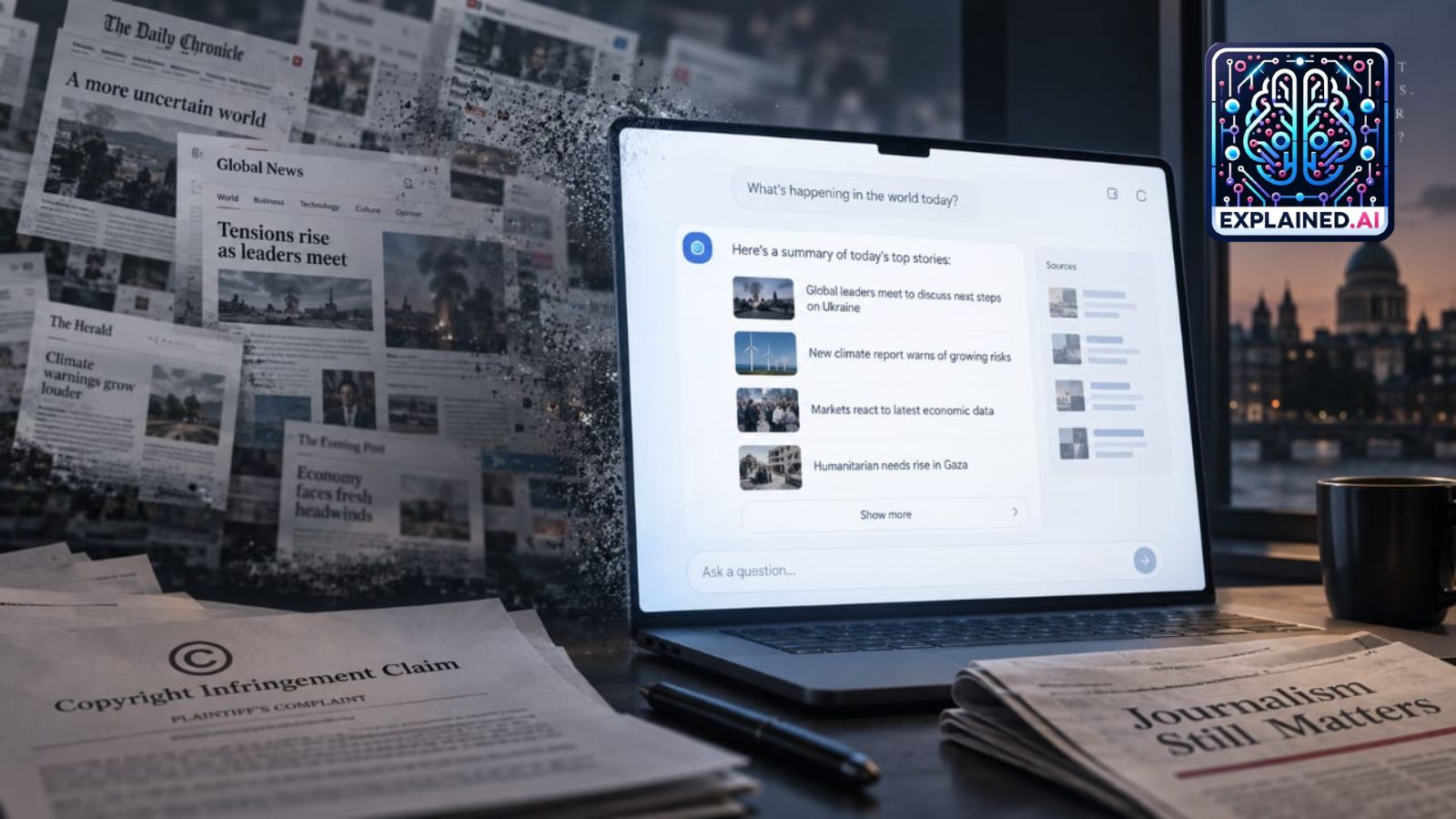
Chatbots may also give people answers directly, so they visit news websites less often.
Publishers say this could hurt their businesses.
Microsoft and OpenAI say using the material can be legal fair use because AI changes how the information is used, but the court has not decided the larger dispute.

Microsoft executive Brent Hecht called mass online-content collection for AI training the “largest theft of labour in human history.”
Hecht warned that creators were generally not consulted or compensated for their work being used to train AI systems.
He cautioned that AI products could create a “doom loop” by weakening the economic foundations of their own content supply chain.
Court documents said click-through rates to The New York Times and Daily News were 83 to 93 percent lower on Microsoft Copilot’s answer engine than on traditional Bing Search.
The New York Times, Microsoft and OpenAI continue to dispute whether using copyrighted material for AI training qualifies as fair use.
- Who
- Brent Hecht, Microsoft, OpenAI, The New York Times and other publishers are involved in the dispute.
- What
- Newly unsealed documents revealed Hecht’s criticism of AI companies’ collection and use of online content, amid a copyright lawsuit.
- Where
- The dispute is taking place in a United States copyright case.
- When
- Hecht’s comments were made in a 2023 internal document; the documents were later unsealed.
- Why
- Publishers argue that AI training and chatbot answers use their work without permission and may reduce their revenue, while Microsoft and OpenAI argue the practice can qualify as fair use.
Publishers and creators’ concerns
Microsoft and OpenAI’s defense
Use of copyrighted work
Publishers and creators’ concerns
Publishers argue that Microsoft and OpenAI trained AI systems on copyrighted journalism without permission, harming the businesses that produce the information.
Microsoft and OpenAI’s defense
Microsoft and OpenAI maintain that AI training can be protected by fair use because the systems transform the material rather than simply republishing it.
Effect on original content
Publishers and creators’ concerns
Hecht warned that uncompensated use and reduced publisher revenue could damage the economic foundations of the content supply chain.
Microsoft and OpenAI’s defense
The companies defend the legality of the training practice; the articles do not report a separate Microsoft or OpenAI response to Hecht’s personal assessment.
Traffic to news websites
Publishers and creators’ concerns
Publishers point to evidence that AI answer tools can provide information directly and reduce visits to original websites.
Microsoft and OpenAI’s defense
OpenAI executive Nick Turley described AI products as increasingly substitutive, while Microsoft CEO Satya Nadella acknowledged that chatbots can provide information without directing users to the underlying website.
Key facts
- Executive
- Brent Hecht, Microsoft’s director of applied science
- Key description
- Hecht called mass AI-training data collection the “largest theft of labour in human history.”
- Potential risk
- Hecht warned of a “doom loop” in which weaker creator revenues reduce the future supply of high-quality content.
- Traffic impact
- Court filings cited click-through rates to The New York Times and Daily News that were 83 to 93 percent lower on Copilot’s answer engine than on traditional Bing Search.
- Lawsuit filed
- The New York Times sued Microsoft and OpenAI in 2023 over alleged use of copyrighted journalism to train AI systems.
- Other publishers
- The New York Daily News, The Intercept and the Center for Investigative Reporting later joined the litigation.
- Current status
- The court has not resolved the broader copyright dispute.
Quotes
Brent Hecht
Microsoft director of applied science who criticized AI training practices in internal documents
“largest theft of labour in human history”
 wionews.com
Sources
Related news
Unsealed Filings Expose AI Copyright Dispute Over News Content

Unredacted Filings Expose AI Training Dispute Over Scraped News

New York Times Alleges AI News Training Was Theft

Seattle Times, Newsday Sue OpenAI, Microsoft Over Copyright

Trump Administration Backs OpenAI in New York Times Copyright Fight

Twitch, Amazon Sued Over Alleged AI Training Use
UK Workers Spend Nearly £1 Billion on Workplace AI

Grok Models Roll Out Across Microsoft Copilot and Workplace Tools

How Snapdragon PCs Aim to Deliver Smartphone-Like Experiences